
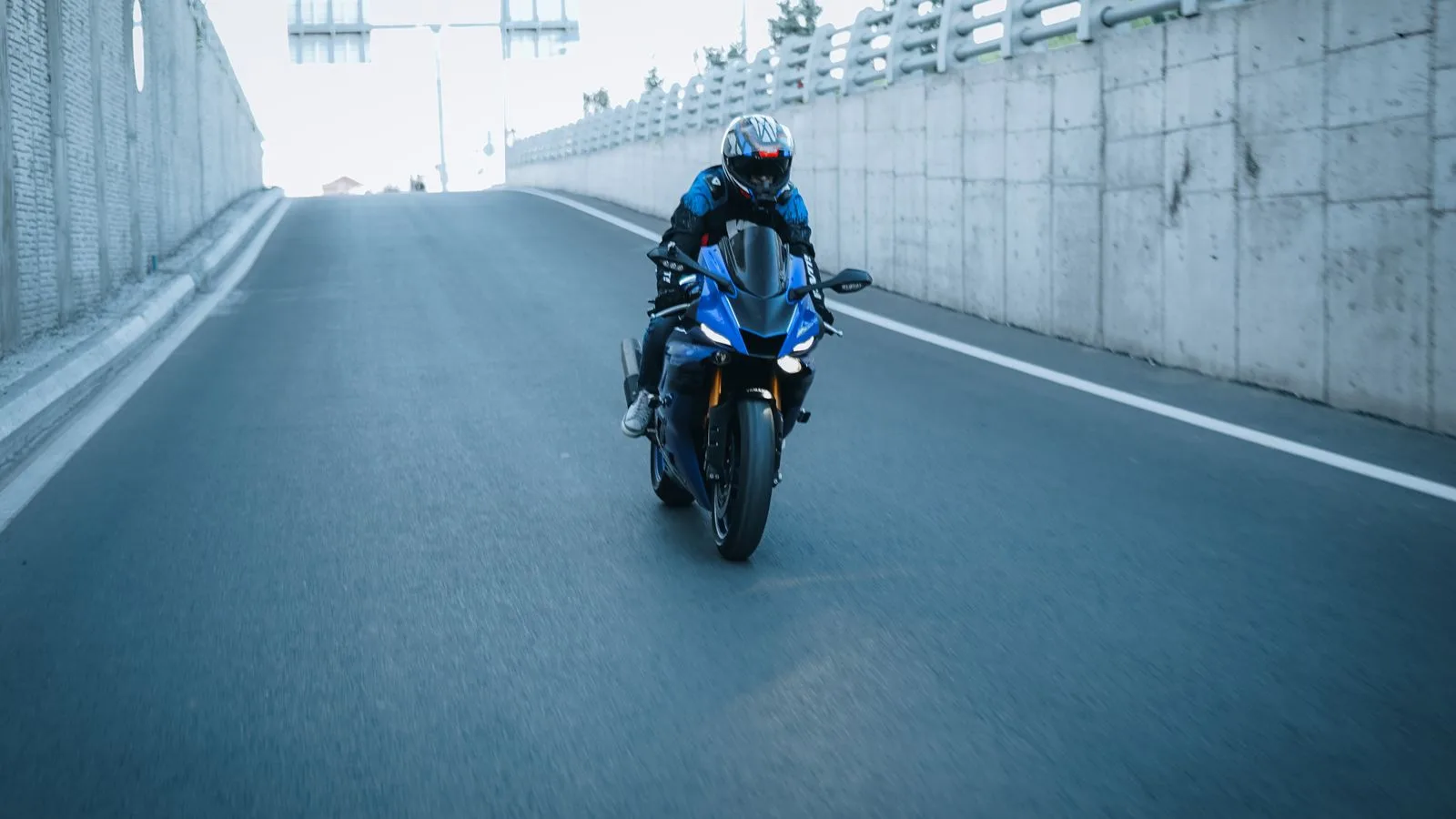
Tyler · Motorcycle Accident
Tyler Motorcycle Accident Lawyer
A motorcycle accident claim in Tyler is a Texas fault-based negligence case where the rider's lack of surrounding vehicle protection makes injuries predictably severe, and where downtown corridors like US-69 near Loop 323 produce classic left-turn failures while the two-lane US-271 northeast of the city produces higher-speed ejection crashes. Texas is not a no-fault state: the at-fault driver's negligence must be proven, and the rider's recovery is reduced by any comparative fault a jury assigns under Chapter 33. Smith County district courts in downtown Tyler will handle a case filed here, and the two-year filing deadline under Tex. Civ. Prac. & Rem. Code § 16.003 runs from the date of the crash.
Why Tyler cases are different
Riders on Tyler's roads face two distinct dangers: city-speed left-turn and lane-change crashes at the Loop 323 and US-69 signals downtown, and the higher-energy head-on and lane-departure wrecks that the two-lane US-271 corridor toward Gilmer produces. Both leave severe injuries and both invite bias against the rider.
Left-turn and lane-change crashes at Tyler's busy signals
The most common way a Tyler rider gets hurt is a driver who turns left across the rider's path or merges into a lane the rider already occupies. Around the Loop 323 signals on US-69 and the downtown grid, drivers routinely misjudge a motorcycle's speed and distance or simply do not register it at all. In a left-turn collision, the turning driver typically owes the rider the right of way, which makes liability favorable on paper, but the rider often carries the worst injuries and the largest medical bills. We document the geometry of the intersection, sightlines, and signal phase, because how the turn unfolded is what separates a clear-liability case from a disputed one when the driver claims the rider 'came out of nowhere.'
Rider bias and the rural-highway injury reality on US-271
Insurers and some jurors carry an unspoken assumption that a motorcyclist was speeding or riding recklessly, and that bias quietly inflates the rider's assigned fault under Chapter 33. On the four-lane corridors it is a nuisance; on US-271 northeast toward Gilmer, where lane departures and head-on crashes happen at higher rates than the wider highways, it becomes the central battle. The energy in a rural head-on means catastrophic injuries are common, so the stakes of every fault percentage are high. We push back on the stereotype with hard evidence: speed reconstruction, the at-fault driver's lane position, and the absence of any rider error. On a deliberate Smith County jury, neutralizing the bias before damages are ever discussed is what protects the recovery.



Frequently asked
Tyler motorcycle accident questions
- Often it helps. A driver who failed to see a visible motorcycle and turned or merged into its path generally violated the rider's right of way, which supports the driver's liability. The phrase is common in left-turn crashes at Tyler's signals. We use intersection sightlines, signal timing, and witness accounts to show the rider was there to be seen, undercutting any claim that the rider appeared from nowhere.
- There can be an unspoken assumption that riders are reckless, and insurers lean on it to push fault onto the rider under Texas's comparative-fault rule. We address it head-on with speed reconstruction, the at-fault driver's lane position, and evidence of safe riding. The goal is to neutralize the bias with facts before damages are discussed, because every point of fault assigned to you reduces the recovery.
- Yes. Rural crashes on corridors like US-271 toward Gilmer tend to produce catastrophic injuries, which means future medical care and lost earning capacity become major parts of the claim. We work with treating physicians to document long-term needs rather than settling on early estimates, and we make sure all available coverage, including the at-fault driver's limits and any UM/UIM on your own policy, is identified.
- Texas law allows riders 21 and older to ride without a helmet if they carry at least $10,000 in medical coverage or have completed an approved safety course. Helmet status is not automatically admissible to reduce damages for non-head injuries, and proving that a head injury was caused by the crash rather than the absence of a helmet requires specific causation evidence. The legal helmet-compliance question and the liability question are handled separately.
- Loop 49's ramp geometry and merge zones at the Old Jacksonville and Paluxy interchanges create contested-fault scenarios, particularly for motorcycle crashes where the ramp sight lines are limited. The most important evidence is the at-fault driver's lane position, speed relative to the posted limit, and whether the merge was completed safely. We document the physical evidence quickly, including any tire marks, and obtain traffic camera footage if the interchange is monitored.
- Two years from the date of the crash under Tex. Civ. Prac. & Rem. Code § 16.003, the same deadline that applies to all personal injury claims in Texas. Waiting until close to that deadline creates problems because physical evidence disappears, witnesses become harder to locate, and medical records take time to gather for a proper demand. We recommend contacting an attorney as soon as the immediate medical situation stabilizes.
Where we work from
Downtown Austin. Tyler clients welcome.
Our office is in downtown Austin; we represent Tyler-area clients statewide and travel to Tyler for case-specific needs (scene visits, medical-records consultations, court appearances). Home and hospital visits when injuries make travel difficult.
Talk to a Tyler motorcycle accident lawyer.
Free case review, no obligation. We'll tell you straight whether we can help.