
Practice area
Slip & Fall / Premises Liability Lawyers in Texas
Premises liability in Texas turns on what the property owner knew or should have known about a hazard, what duty that owner owed to the person on the property, and whether reasonable steps were taken to make the property safe or to warn of the danger. Texas categorizes visitors into three classes — invitee, licensee, and trespasser — and the level of duty owed scales sharply with status. The two-year limitations period under Tex. Civ. Prac. & Rem. Code § 16.003 governs, but the harder fight in most slip-and-fall files is proving notice: that the owner knew or, with reasonable inspection, should have known about the condition that caused the fall.
Invitee, licensee, trespasser — and why the label drives the case
An invitee is on the property for the mutual economic benefit of both parties: a customer in a grocery store, a guest at a hotel, a patient in a clinic. Owners owe invitees the highest duty: to make the premises reasonably safe and to inspect for, warn of, and correct dangerous conditions the owner knew about or, with ordinary care, should have known about. A licensee is on the property with permission but not for mutual benefit: a social guest, a friend stopping by. Owners owe licensees a lower duty: to warn of known dangers and not to injure them by willful, wanton, or grossly negligent conduct. A trespasser is on the property without permission; the only duty owed is not to injure intentionally or by gross negligence. The status determination is often the first and most important fight in the case.
Notice: actual versus constructive, and why it matters
Under Texas case law (CMH Homes v. Daenen, Wal-Mart Stores v. Reece, Wal-Mart Stores v. Gonzalez), the invitee plaintiff has the burden to prove the owner had actual knowledge of the dangerous condition or that the condition existed long enough that the owner should have known about it through reasonable inspection. Insurers and defense lawyers attack notice aggressively. The proof that wins notice cases is documentary: store sweep logs, security camera footage showing how long a spill existed before the fall, employee statements, prior incident reports for the same hazard. Without notice evidence, an otherwise clear liability case can fail at summary judgment.
Stores, landlords, contractors: figuring out who actually owes the duty
Many premises liability cases involve more than one defendant. In a leased commercial space, the tenant generally controls the interior and the landlord may control common areas, structural systems, or specific items under the lease. Janitorial or maintenance contractors hired to clean or repair the premises can owe duties to invitees through Texas's Chapter 95 framework and through general negligence. In apartment-complex falls, the landlord's duty under Texas Property Code obligations and lease terms may govern. We map every entity with control over the area of the fall and every applicable insurance policy before the demand goes out.
The 'open and obvious' defense and how it actually works
Texas premises law allows an owner to argue that a hazard was 'open and obvious,' meaning a reasonable invitee would have perceived and avoided it. That argument is heavily fact-dependent and has been narrowed by the Texas Supreme Court in cases like Austin v. Kroger and Henkel v. Norman, which clarify that even when a hazard is technically observable, the owner is not automatically off the hook if circumstances made the danger difficult to appreciate. Lighting, distractions inherent to the premises (signage, displays, store activity), and whether the invitee had a reasonable alternative all factor in. Defense counsel raises 'open and obvious' on nearly every store-fall case; the analysis is rarely as clean as the insurer pretends.




Frequently asked
Questions Texas accident victims ask us
- No. Texas premises law requires you to prove the store knew about the hazard or, with reasonable inspection, should have known about it. A puddle that appeared ten seconds before you fell may not support liability; the same puddle that existed for an hour while employees walked past almost certainly does. The most important early move is preserving the store's surveillance footage and sweep logs before the standard retention period runs out, because those documents are often dispositive on the notice question.
- An invitee is on the property for mutual benefit, typically a paying customer or business visitor, and is owed the highest duty: to make the premises reasonably safe and to inspect for and warn of dangerous conditions. A licensee is a permitted visitor not on the property for mutual economic benefit (a social guest, for example) and is owed a duty to warn of known dangers and not to be injured by willful, wanton, or grossly negligent conduct. A trespasser is uninvited and is owed only the duty not to be injured intentionally or by gross negligence. Status is determined by the facts of the visit, not by how the parties later characterize it.
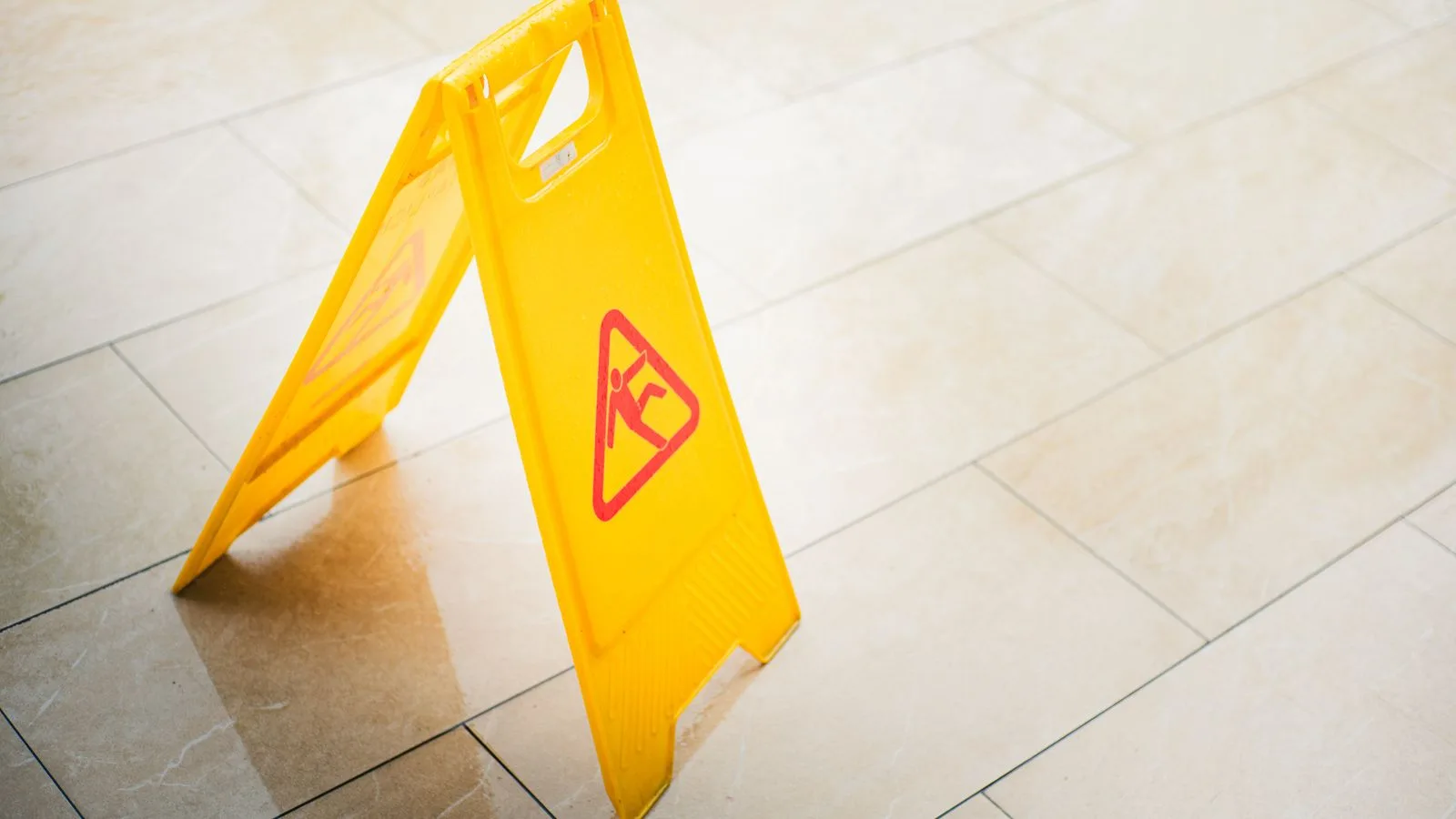
- It matters but it is not a complete defense. A warning that adequately puts an invitee on notice of a specific danger can reduce or eliminate liability, but courts look at whether the warning was actually visible, properly placed, and clearly applicable to the specific hazard that caused the fall. A 'Wet Floor' sign at one end of an aisle for a spill at the other end is not a meaningful warning. Defense counsel routinely overstates the legal effect of these signs at the early-offer stage.
- Often yes, depending on where the fall occurred and what the lease says. Landlords typically retain control of common areas — parking lots, stairwells, walkways, pools — and owe a duty of reasonable care to tenants and guests in those areas. Falls inside a leased unit generally implicate the tenant's control, with exceptions for latent defects the landlord knew about or for items the landlord agreed to maintain. The lease, the property's repair-and-maintenance history, and the specific location of the fall all drive the analysis.
- Claims against governmental entities in Texas are governed by the Texas Tort Claims Act (Tex. Civ. Prac. & Rem. Code Ch. 101), which adds two critical wrinkles: damage caps and a six-month notice requirement that runs from the date of injury. The notice requirement is a hard deadline; miss it and the claim is generally barred regardless of how strong the underlying facts are. Sidewalk and government-building falls require fast action, faster than ordinary premises cases.
- Two years from the date of the fall under Tex. Civ. Prac. & Rem. Code § 16.003. Practical preservation issues come up earlier: surveillance footage often overwrites in 30 days, store-incident reports become harder to obtain as employee turnover proceeds, and witness memories blur within weeks. If a government property or entity is involved, the six-month notice deadline under the Tort Claims Act runs separately.
- Not necessarily. An incident report can actually help: it documents the fall, the location, the time, and the initial conditions. What you want to avoid is giving a recorded statement to the store's adjuster days later, or signing a release of any kind before you understand the extent of your injuries. Soft-tissue and orthopedic injuries from a fall frequently take days or weeks to fully present, and any release signed in the first week is almost always premature.
- Hip fractures and acetabular fractures (especially in older adults), torn knee meniscus and ACL injuries, wrist and distal radius fractures from breaking the fall, shoulder rotator-cuff tears, lumbar disc injuries, and concussions or traumatic brain injuries when the head strikes a hard surface. Older invitees can sustain injuries that produce permanent functional decline, and the future-care projection in those cases — assisted living considerations, home modifications, long-term physical therapy — often drives the bulk of the damages claim.
Let's talk about your case.
Free case review, no obligation. We'll tell you straight whether we can help.