
Practice area
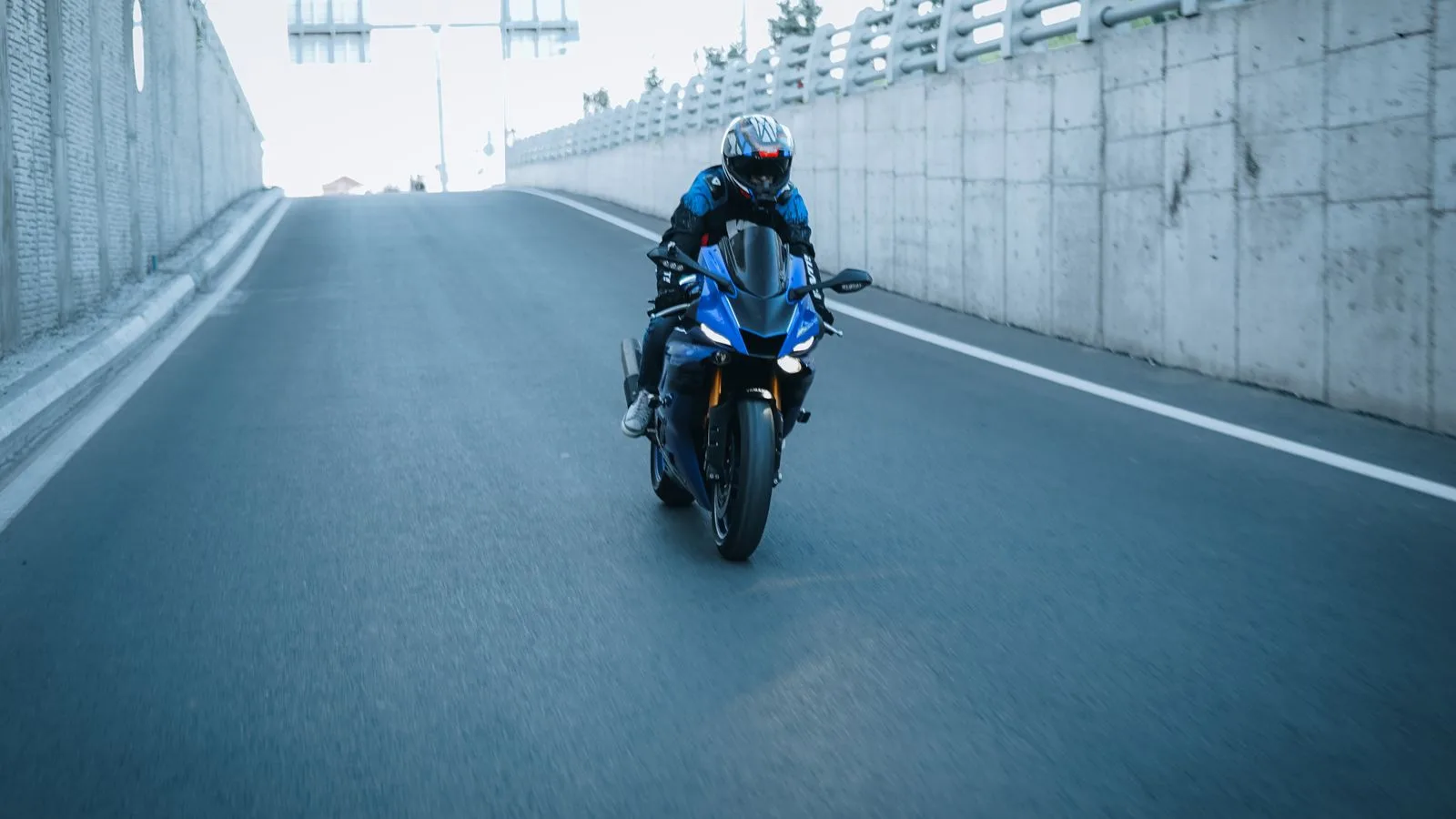
Motorcycle Accident Lawyers in Texas
Motorcycle crash claims in Texas follow the same fault-based liability rules as any other roadway negligence case, but the dynamic on the ground is different: riders are harder for drivers to see, jury attitudes toward motorcyclists tend to be skeptical, and the injury profile skews severe because there is no surrounding vehicle to absorb the impact. Texas is not a no-fault state — fault drives recovery — and the helmet statute at Tex. Transp. Code § 661.003 lets riders 21 and over operate without a helmet if they carry the qualifying insurance or have completed an approved safety course, a detail insurers misuse against riders constantly.
The left-turn collision and other recurring fact patterns
The single most common serious-injury pattern we see is the unprotected left turn: a driver waiting at an intersection misjudges the approaching motorcycle's distance or speed, turns across the rider's lane, and the rider has no realistic avoidance window. Lane-change sideswipes on MoPac, US-183, and the I-35 frontage roads are a second recurring pattern, usually involving a driver who never checked the blind spot. Rear-end strikes at stoplights, debris and gravel on rural FM roads, and dooring incidents in downtown bike-friendly corridors round out the typical mix. In every case, the liability story has to be built deliberately, because the rider isn't there to tell it the same way an unhurt driver would be.
Texas helmet law and the insurer's misuse of it
Tex. Transp. Code § 661.003 requires motorcycle operators and passengers under 21 to wear a DOT-approved helmet. Riders 21 and over may operate without a helmet if they (1) carry at least $10,000 in medical-payments coverage on the motorcycle policy, or (2) have completed a Department-approved motorcycle operator training course. The legal helmet status of the rider is not admissible to reduce damages for non-head injuries, and on head-injury claims the analysis is more nuanced than insurers represent. The carrier's first move is often to anchor low based on a no-helmet narrative; the legal answer is to make them prove relevance before that narrative reaches a jury.
Injuries that drive motorcycle case value
Road rash and degloving injuries, complex extremity fractures (tibia/fibula, wrist, clavicle), spinal cord injuries from being thrown, traumatic brain injuries even when a helmet was worn, and internal organ damage from the initial impact and secondary ground strike. Many of these injuries require staged surgical care over twelve to twenty-four months — orthopedic hardware, skin grafting, neurosurgical intervention — and a settlement built only on the first round of medical bills typically leaves substantial future medical and impairment exposure unrecovered. We don't close motorcycle files until the treating physicians have a credible picture of maximum medical improvement.
Jury bias and how it shapes settlement leverage
Texas juries pulled from urban and suburban counties skew toward viewing motorcyclists as risk-takers. Insurers know this and price their offers accordingly. The way to neutralize the bias is preparation: scene photography that shows the rider had right-of-way, witness statements taken while memory is fresh, accident reconstruction in cases where speed is disputed, and an honest medical chronology that documents what the rider actually went through. When the file is built well enough to try, settlement value moves. When the file looks like the carrier can roll the dice on a hostile jury, it doesn't.



Frequently asked
Questions Texas accident victims ask us
- Not automatically. Under Tex. Transp. Code § 661.003, riders 21 and over can legally ride without a helmet if they carry at least $10,000 in medical-payments coverage on the motorcycle policy or have completed a Department-approved safety course. Even when no helmet was worn, the absence of a helmet is only legally relevant to head-injury causation — not to leg fractures, road rash, or other injuries — and the defense has to establish causation before the evidence comes in. Insurers routinely overstate the impact of the helmet question on early offers.
- Two reasons. First, they assume jurors will assign comparative fault to a rider more readily than to a car driver, and they price offers accordingly. Second, they bet that injured riders, often facing months of orthopedic recovery and lost work, will accept less to close the file. Both assumptions are defeated by a thoroughly built file: scene evidence, independent witnesses, reconstruction where speed is contested, and a complete medical chronology before any demand goes out.
- The unprotected left turn, a car turning left across the path of an oncoming motorcycle, is the single most common serious-injury pattern. The driver typically tells officers they 'never saw the bike,' which is a function of motorcycles' smaller visual footprint, not an excuse that defeats liability. Behind left-turn crashes, the most common patterns are lane-change sideswipes from drivers who didn't check blind spots, rear-end strikes at signals, and single-vehicle losses of control on roads with sand or gravel in the curve.
- Texas law does not authorize lane-splitting or lane-filtering. Operating between lanes of traffic is generally a Transportation Code violation and the insurer will use it to argue comparative fault. That does not necessarily end the case. Texas applies modified comparative fault with a 51% bar, so as long as your share of fault is 50% or less, you can still recover (reduced by your share). The factual analysis matters: speed differential, the other driver's conduct, and visibility all factor in.
- Complex extremity fractures (tibia/fibula, wrist, clavicle, ankle), road rash and degloving injuries, traumatic brain injuries even when a DOT-compliant helmet was worn, spinal injuries from ejection, internal organ damage from initial impact plus secondary ground strike, and shoulder labral and rotator-cuff tears. Many of these require staged surgical care over twelve to twenty-four months and produce permanent impairment ratings that drive future-damages calculations.
- Two years from the date of the crash under Tex. Civ. Prac. & Rem. Code § 16.003, the same general limitations period that applies to other negligence claims. Practical evidence-preservation issues come up much earlier, particularly with traffic-signal data and intersection-camera footage that overwrites in two to four weeks at most jurisdictions. If the crash involved a governmental defendant (a city vehicle, a county road condition), the Texas Tort Claims Act notice requirement runs in six months and must be met separately.
- That statement is in roughly half the police reports we see in motorcycle cases. It is an admission, not a defense. Drivers in Texas owe a duty to maintain a proper lookout for all roadway users, including motorcycles, and the failure to see what was plainly there to be seen is itself evidence of negligence. We use the statement, not against it.
- Yes, if you bought it. Texas requires insurers to offer uninsured and underinsured motorist coverage on motorcycle policies, and unless you signed a written rejection, you likely have it. UM/UIM steps in when the at-fault driver had no coverage or insufficient coverage, and for motorcycle injuries, which often outstrip a Texas minimum 30/60 policy, UM/UIM coverage is frequently the difference between adequate recovery and severely capped recovery.
Let's talk about your case.
Free case review, no obligation. We'll tell you straight whether we can help.