
Motorcycle accidents · Subcategory
Motorcycle Accident Lawyer in Texas
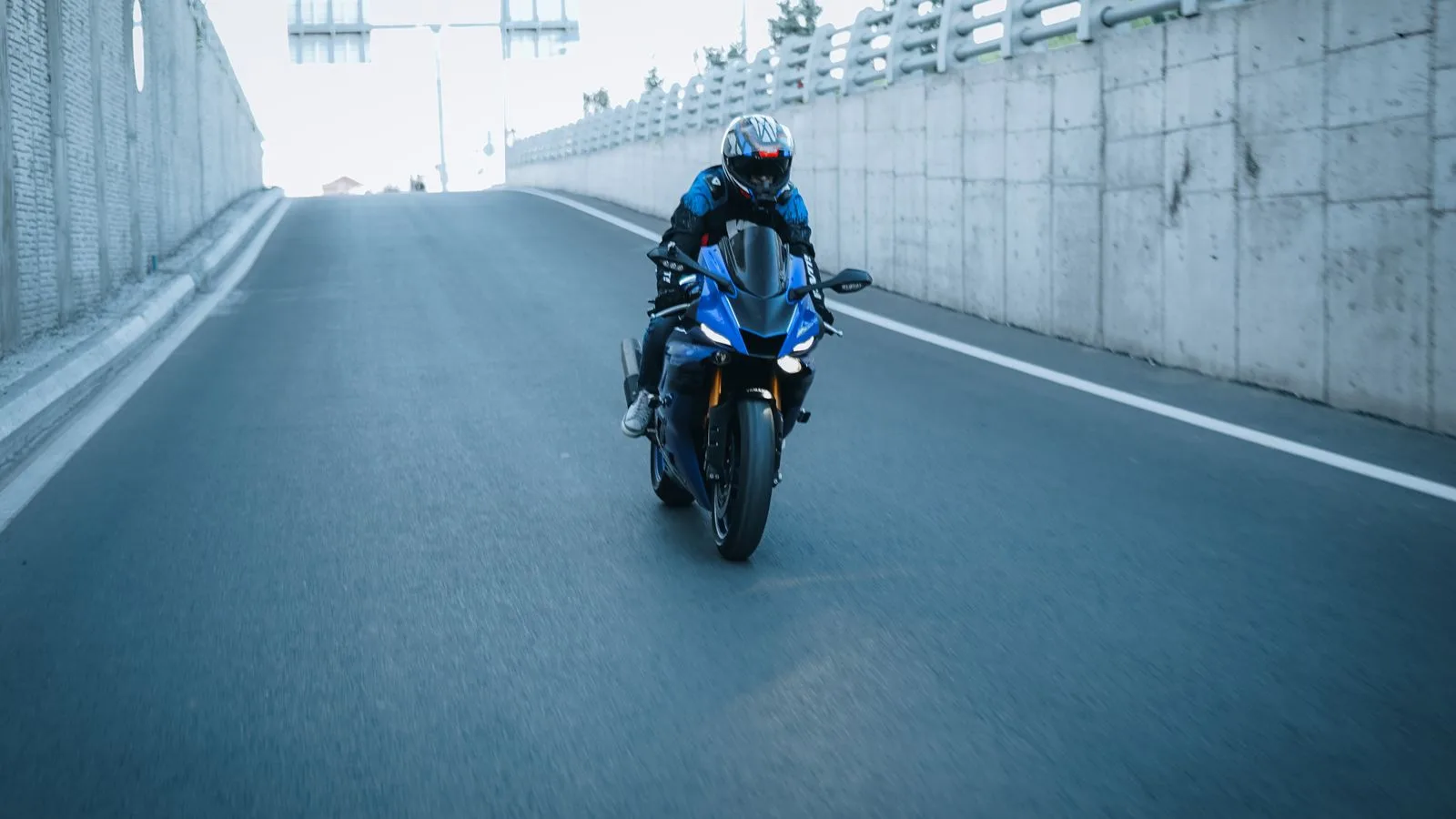
A motorcycle accident claim in Texas is a negligence case where an injured rider seeks recovery for medical care, lost income, and impairment after a crash caused by another road user, usually a driver who failed to see the motorcycle. Recovery is governed by Texas modified comparative fault: a rider can recover if they bear 50% or less of the responsibility, with damages reduced by their share. The practical reality of these cases is shaped by three forces the law itself doesn't fix: the severity of unprotected-rider injuries, the helmet provisions at Tex. Transp. Code § 661.003, and the predictable skepticism of Texas juries toward motorcyclists.
What makes a motorcycle case different from a car case
Same fault framework, completely different mechanics. A rider in a 40-mph collision faces the same forces a car occupant experiences in a 70-mph crash because there is no surrounding cabin, no seatbelt geometry, and no progressive crumple zone. The downstream effects are obvious in the medical record — multi-stage orthopedic care, neurosurgical workup, prolonged inpatient rehabilitation — and they're also obvious in the carrier's response. Insurers reserve motorcycle files larger than passenger-vehicle files of comparable severity, and they push harder on comparative fault to get them down. The whole posture of the case has to anticipate that.
Tex. Transp. Code § 661.003 and the helmet conversation
The Texas helmet statute is widely misunderstood, including by insurers who should know better. Riders under 21 must wear a DOT-compliant helmet. Riders 21 and over may legally ride without a helmet if they carry at least $10,000 in medical-payments coverage on the motorcycle policy or have completed a Texas Department of Public Safety-approved motorcycle operator training course. The legal status of the helmet question is narrow: it is only relevant to head-injury causation, not to fractures, internal injuries, or road rash. We move early to establish the rider's training-course completion or MedPay coverage on the record, which forecloses the helmet line of attack before the file matures.
Severity, future care, and how value is built
Building a motorcycle file means resisting the urge to settle on the first round of medical bills. The injury chain — tibia/fibula fracture with external fixator, staged orthopedic hardware, neurosurgical consult for a thoracic-level fracture, post-concussive workup, a skin-grafting course over a degloving injury — plays out over twelve to twenty-four months for serious cases. Treating physicians cannot honestly opine on impairment, future hardware-removal cost, or earning-capacity loss until the rider approaches maximum medical improvement. A file that demands before that point leaves significant value on the table and forecloses the future-medical and impairment categories that drive serious motorcycle recoveries.
Neutralizing Texas jury bias on motorcycle cases
Travis, Williamson, and Hays County jury panels tend to enter a motorcycle trial with a prior: that riders chose risk, that speed was probably involved, that the crash was at least partly the rider's fault. The carrier prices its offer to that prior. The work of the case is to make the prior expensive to keep: scene photography that documents right-of-way, independent witness statements, accident reconstruction in any speed-disputed case, intersection-camera and traffic-signal footage preserved before overwrite, and a medical chronology that reads cleanly. Files built that way settle on different numbers than files that look like the carrier can roll dice on a hostile panel.


Frequently asked
Questions Texas accident victims ask us
- Generally yes, because the injury severity is generally greater: unprotected rider, no crumple zone, no seatbelt geometry. But 'worth more' is misleading: the case is worth what the medical record, the future-care projection, the wage and impairment evidence, and the available coverage will support. A serious motorcycle case with limited insurance coverage may resolve for less than a moderate car case with deep commercial coverage behind it. Severity drives potential value; coverage controls realized value.
- Accept EMS transport if it is offered. Riders frequently decline transport at the scene because adrenaline is masking pain, then present at an ER hours later with injuries they minimized. The early medical record is a foundational document; gaps in the first 24 hours give the carrier room to argue causation. Beyond the medical step, get the bike to a controlled storage location (not back on the road), preserve the helmet and protective gear, and avoid any recorded statement to the at-fault driver's insurer until you have counsel.
- Yes. Texas requires the same financial-responsibility minimums for motorcycles as for cars: $30,000 per person, $60,000 per accident, $25,000 property damage. Most riders carry more, and many add MedPay (often $10,000) on the policy to satisfy the helmet-exception requirement under § 661.003. Uninsured/underinsured-motorist coverage on the motorcycle policy is not mandatory but is offered by statute and is typically present unless rejected in writing, and in serious motorcycle cases the UM/UIM layer is frequently the most important coverage in the file.
- Under Tex. Civ. Prac. & Rem. Code § 33.001, an injured plaintiff who bears more than 50% of the responsibility recovers nothing. Below that bar, damages are reduced by the plaintiff's percentage of fault. In motorcycle cases the defense routinely tries to push the rider's share up — through speed allegations, lane-position arguments, gear or training criticism — to either bar recovery entirely or substantially shrink it. Containing the comparative-fault attack is one of the most important early jobs in any motorcycle file.
- A CR-3 report's opinion about cause is not binding on the civil case. Officers arrive after the fact, often interview drivers who are conscious before riders who have been transported, and frequently rely on the surviving driver's account by default. We pull the report, identify the assumptions the officer made, and develop the evidence that the report didn't have at the scene: signal-timing data, camera footage, independent witnesses, reconstruction. Civil liability is decided by the evidence, not by the box the officer checked.
- Insurers try. They argue lack of high-visibility gear, lack of armored protection, lack of formal MSF training. These arguments rarely hold up as comparative-fault evidence in Texas; there is no statutory duty to wear high-visibility gear or to complete any course beyond what § 661.003 requires for the helmet exception. The arguments do appear in carrier-side reserve analysis and in early-offer anchoring, which is why we surface the rider's actual training, license endorsement, and gear history early to defuse them.
- Plan on twelve to twenty-four months for a case involving any orthopedic surgical care, neurosurgical workup, or multi-stage rehabilitation. Files that settle faster usually settle for less because the future-care and impairment categories aren't ripe. Cases that involve commercial defendants, multiple coverage layers, or litigated comparative-fault disputes can run longer. We tell clients early what the realistic timeline looks like and we don't push to close the file for the sake of closing it.
- Texas hit-and-run cases turn on uninsured-motorist coverage from the rider's own motorcycle policy. UM coverage is designed to step in when the at-fault driver is unknown or uninsured, and a hit-and-run with no identifiable driver typically qualifies under the policy if reported promptly to law enforcement. We also work the file to identify the fleeing vehicle: nearby business cameras, witness license-plate captures, paint-transfer evidence on the bike, and Austin Police Department hit-and-run unit follow-up. Recovering against a UM policy doesn't require finding the driver, but finding the driver often opens additional coverage.
Let's talk about your case.
Free case review, no obligation. We'll tell you straight whether we can help.