
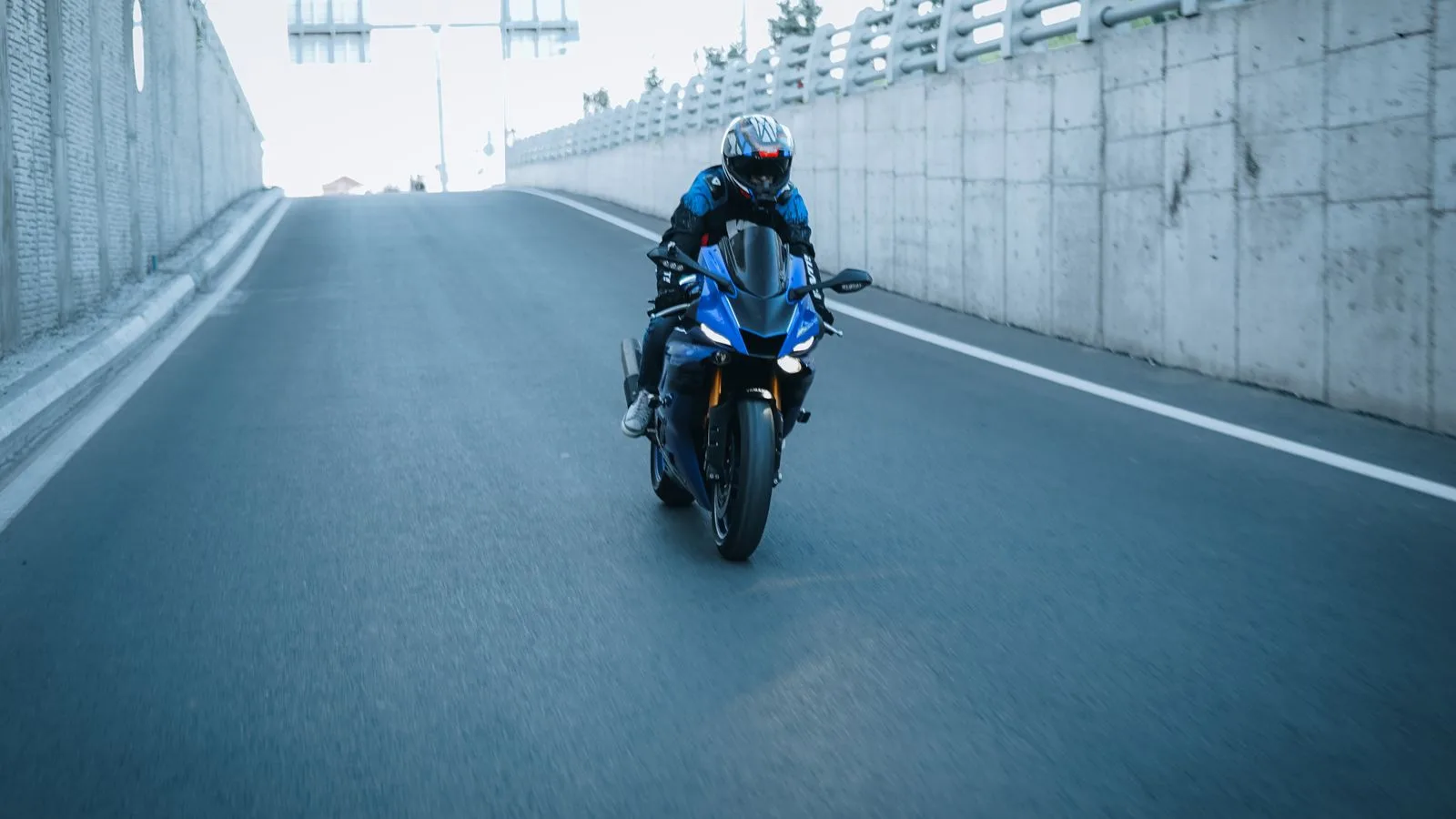
Plano · Motorcycle Accident
Plano Motorcycle Accident Lawyer
A motorcycle accident claim in Plano arises when a motor vehicle strikes or forces off a rider on Collin County roadways, commonly a turning collision at a signalized intersection on Preston Road or Legacy Drive, or a lane-change sideswipe on US-75. Texas is a fault-based state, not a no-fault state, so the injured rider must establish the other driver's negligence and can recover even if partially at fault as long as the rider's share does not exceed 50 percent under § 33.001. Because juries in Collin County can carry an unstated bias that riding is inherently dangerous, documentation of lawful riding behavior and complete medical imaging from Medical City Plano becomes decisive to anchoring both liability and the long-term injury picture.
Why Plano cases are different
Plano riders share US-75 and the Sam Rayburn Tollway with dense commuter traffic and surface arterials like Preston Road, Legacy Drive, and Plano Parkway with heavy turning movement, where drivers routinely fail to see them. In defense-leaning Collin County, rebutting rider bias is as important as proving the crash itself.
Left-turn and lane-change crashes on Plano's arterials and corridors
Preston Road, Legacy Drive, and Plano Parkway carry the city's heaviest signalized turning movement, and the recurring fact pattern on these roads is the left-turn collision: a driver crossing a rider's right-of-way at a high-volume intersection without clearing the lane. On US-75 and the Sam Rayburn Tollway, the freeway-speed equivalent is the unsafe lane change into a motorcycle's blind-spot position, the same drift-without-signaling pattern that produces sideswipes in the denser tollway commercial mix. These crashes are rarely the rider's fault, but Texas comparative-fault rules under Section 33.001 still let insurers argue the rider was speeding or lane-splitting. Proving the driver's failure to yield with intersection video, signal timing, and independent witnesses keeps the proportionate-responsibility share off the injured rider. Signal-camera footage and any nearby commercial-property video are decisive, and they overwrite on a short cycle, so preservation cannot wait.
Severe injuries and overcoming rider bias before a Collin County jury
Motorcyclists absorb crash energy directly, so the injury profile skews toward orthopedic fractures, road rash, and traumatic brain injury even at moderate speeds. Medical City Plano, a Level I trauma center, is the primary destination for serious rider injuries from the US-75 and tollway corridors, with Texas Health Presbyterian Plano picking up moderate-acuity volume. The legal challenge is that Collin County jury pools are widely recognized as more defense-friendly on damages, and jurors can carry an unspoken assumption that riders are reckless. The counter is documentation: helmet-use evidence, scene reconstruction showing the rider was lawful, and treating-physician future-care projections that anchor the long-term cost. The records that move a rider's case often sit in the orthopedic and physiatry follow-ups completed in the week after the ER visit, when imaging finally shows the full injury, not in the discharge summary alone.


Frequently asked
Plano motorcycle accident questions
- They can try. Left-turn drivers who fail to yield are typically at fault, but under Texas comparative fault the insurer may argue you were speeding or inattentive to shift blame onto you. Intersection video, signal timing, and witness statements usually defeat that. Because rider bias is real in Collin County, building a clear right-of-way record early is critical.
- Texas does not require helmets for all adult riders, and the absence of one does not bar your claim. An insurer may still raise it to argue a head injury was worse than it should have been. We address that directly with medical causation evidence. The driver who caused the crash remains responsible for the harm they caused.
- Collin County juries are widely viewed as more defense-leaning on damages, and riders can face an unstated assumption that motorcycling is inherently reckless. That makes documentation decisive: scene reconstruction, lawful-riding evidence, and detailed treating-physician projections. A thin file is penalized harder here than in Dallas or Travis, so we overbuild the record before any demand goes out.
- Lane-splitting and lane-filtering are not authorized under Texas law, so if you were splitting lanes at the time of the crash, an insurer will raise it to push comparative fault onto you. If you were riding in a normal lane position and a driver struck you, that argument is not available. Texas comparative fault under § 33.001 is a proportionate rule, so even a partial fault finding does not bar recovery unless you are assigned more than 50 percent.
- Two years from the date of injury under Tex. Civ. Prac. & Rem. Code § 16.003. The deadline is the same whether the suit is filed in Collin County or elsewhere in Texas. The practical deadline for scene evidence — signal-camera footage on Legacy Drive and US-75, commercial-property feeds in Legacy West — is measured in days to weeks, not years, which is why contacting a lawyer promptly matters regardless of where the two-year clock stands.
- It is effectively an admission, not a defense. A driver has a duty to look before turning or changing lanes, and 'I never saw the motorcycle' confirms the failure to yield rather than excusing it. Texas courts treat that statement as evidence of negligence, not an explanation that removes liability. We document it and use it.
Where we work from
Downtown Austin. Plano clients welcome.
Our office is in downtown Austin; we represent Plano-area clients statewide and travel to Plano for case-specific needs (scene visits, medical-records consultations, court appearances). Home and hospital visits when injuries make travel difficult.
Talk to a Plano motorcycle accident lawyer.
Free case review, no obligation. We'll tell you straight whether we can help.