
Lewisville · Pedestrian Accident
Lewisville Pedestrian Accident Lawyer
A pedestrian or bicycle accident claim in Lewisville arises when a motor vehicle strikes a person on foot or on a bicycle, most commonly in the FM-3040 retail corridor or near the Lake Lewisville park approaches where foot traffic and vehicle traffic mix heavily. Texas Transp. Code Ch. 552 requires drivers to yield to pedestrians in crosswalks, and a cyclist on a Texas road has the rights and duties of a motor-vehicle operator under § 551.101. Because no vehicle surrounds the victim, even a moderate-speed strike produces the severe injury chain — lower-extremity fractures on bumper contact, head and cervical trauma on hood or ground impact — that sends serious cases past Medical City Lewisville to regional trauma centers. Modified comparative fault applies, and the two-year limitations period under § 16.003 governs filing in Denton County district court.
Why Lewisville cases are different
Pedestrians and cyclists in Lewisville share space with heavy retail and recreational traffic: the FM-3040 commercial spine, the signalized crossings near Vista Ridge, and the lake-park approaches that draw weekend crowds. With no vehicle around them, a single inattentive driver causes catastrophic harm.
Crosswalks, right-of-way, and driver inattention
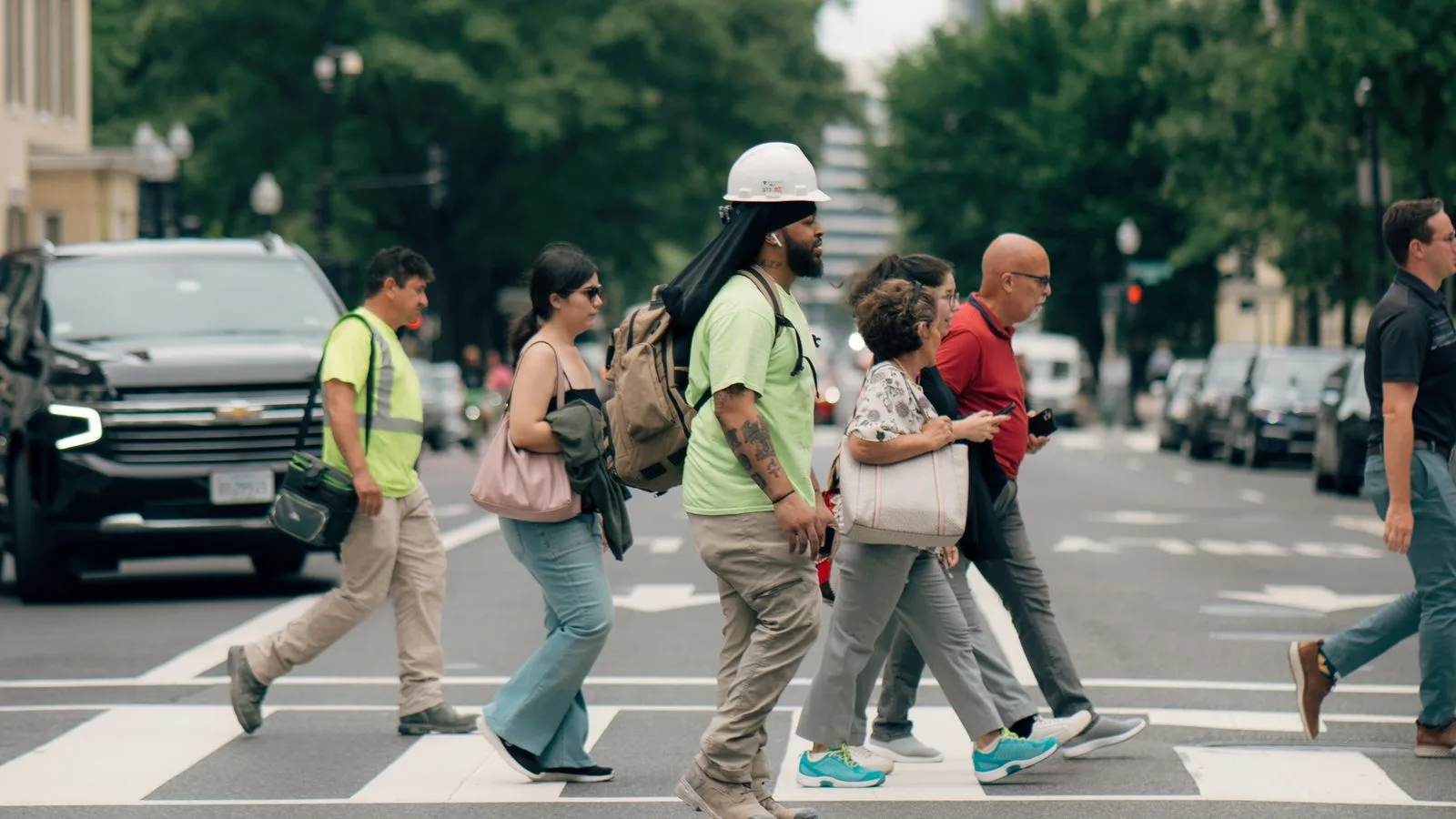
Texas law gives a pedestrian in a crosswalk the right-of-way and requires drivers to yield, but the FM-3040 retail corridor is built for cars: wide signalized intersections, constant turning movements into and out of the big-box and mall parking, and drivers watching for gaps in vehicle traffic rather than people on foot. The recurring pedestrian crash here is the turning driver who rolls through a crosswalk while looking the other way, or the right-on-red that never checks the curb. Around the lake-park approaches and event weekends, foot and rideshare traffic spikes well above the road's normal pedestrian load. We treat these as right-of-way cases first, pulling signal phasing, walk-signal timing, and any corridor or business camera footage to fix exactly who had the right to be where at the moment of impact.
Severe injuries and proving the driver's fault
An unprotected person struck by a vehicle absorbs the full force, so even a low-speed strike in a Lewisville parking lot or crosswalk can mean fractures, internal injuries, or a traumatic brain injury, with serious cases routed to the trauma centers the metro relies on. Texas comparative fault means the defense will argue the pedestrian or cyclist darted out, crossed against the signal, or wore dark clothing: anything to push responsibility past the 51% bar and defeat the claim. Camera and signal evidence near the lake parks and along FM-3040 is genuinely useful here, but marina security and many business systems overwrite footage within a short window. Moving fast to preserve that footage often makes the difference between a clear right-of-way case and a swearing match the injured person loses.
More in Lewisville
Other ways we help Lewisville injury victims.
Frequently asked
Lewisville pedestrian accident questions
- Generally the driver's. Texas requires drivers to yield to pedestrians lawfully in a crosswalk, and a turning or right-on-red driver who fails to check the crossing is typically negligent. The insurer may still argue you contributed. We secure signal and walk-phase timing plus any nearby camera footage quickly to establish that you had the right-of-way when you were struck.
- Not necessarily. Pedestrians have rights outside marked crosswalks too, and drivers must exercise due care to avoid hitting anyone on the roadway. Your crossing location affects the comparative-fault analysis but does not automatically bar recovery. We look at the full picture — driver speed, attention, sightlines, and signal status — rather than letting crossing location end the case.
- Immediately. The most useful proof in Lewisville pedestrian and bicycle cases is camera footage from nearby businesses, marinas, or the lake parks, and much of it is overwritten within days or weeks. The sooner counsel sends preservation requests, the more likely that footage and the related signal data still exist to show the driver was at fault.
- Yes, if the driver was working at the time. An employer is liable for an employee's negligence in the course and scope of employment under respondeat superior. Delivery companies also carry commercial auto policies with limits that exceed state-minimum coverage. We identify both the driver and the employer at intake and review the vehicle's commercial policy before valuing the claim.
- It can strengthen the case. Texas imposes heightened duties in school zones, and very young children cannot legally be assigned contributory negligence. A driver who violated a school-zone speed limit or failed to yield to a child crossing may face a stronger negligence finding. The limitations period for minor plaintiffs is also tolled under Texas law, which gives more time to build the case properly.
- Possibly. Texas personal injury protection (PIP) and uninsured motorist coverage can extend to you as a pedestrian or cyclist under your own auto policy, depending on the policy language. UM/UIM is particularly important if the driver who hit you had no insurance or insufficient limits. We review your declarations page at intake rather than assuming the only recovery is from the other driver.
Where we work from
Downtown Austin. Lewisville clients welcome.
Our office is in downtown Austin; we represent Lewisville-area clients statewide and travel to Lewisville for case-specific needs (scene visits, medical-records consultations, court appearances). Home and hospital visits when injuries make travel difficult.
Talk to a Lewisville pedestrian accident lawyer.
Free case review, no obligation. We'll tell you straight whether we can help.