
Houston · Pedestrian Accident
Houston Pedestrian Accident Lawyer
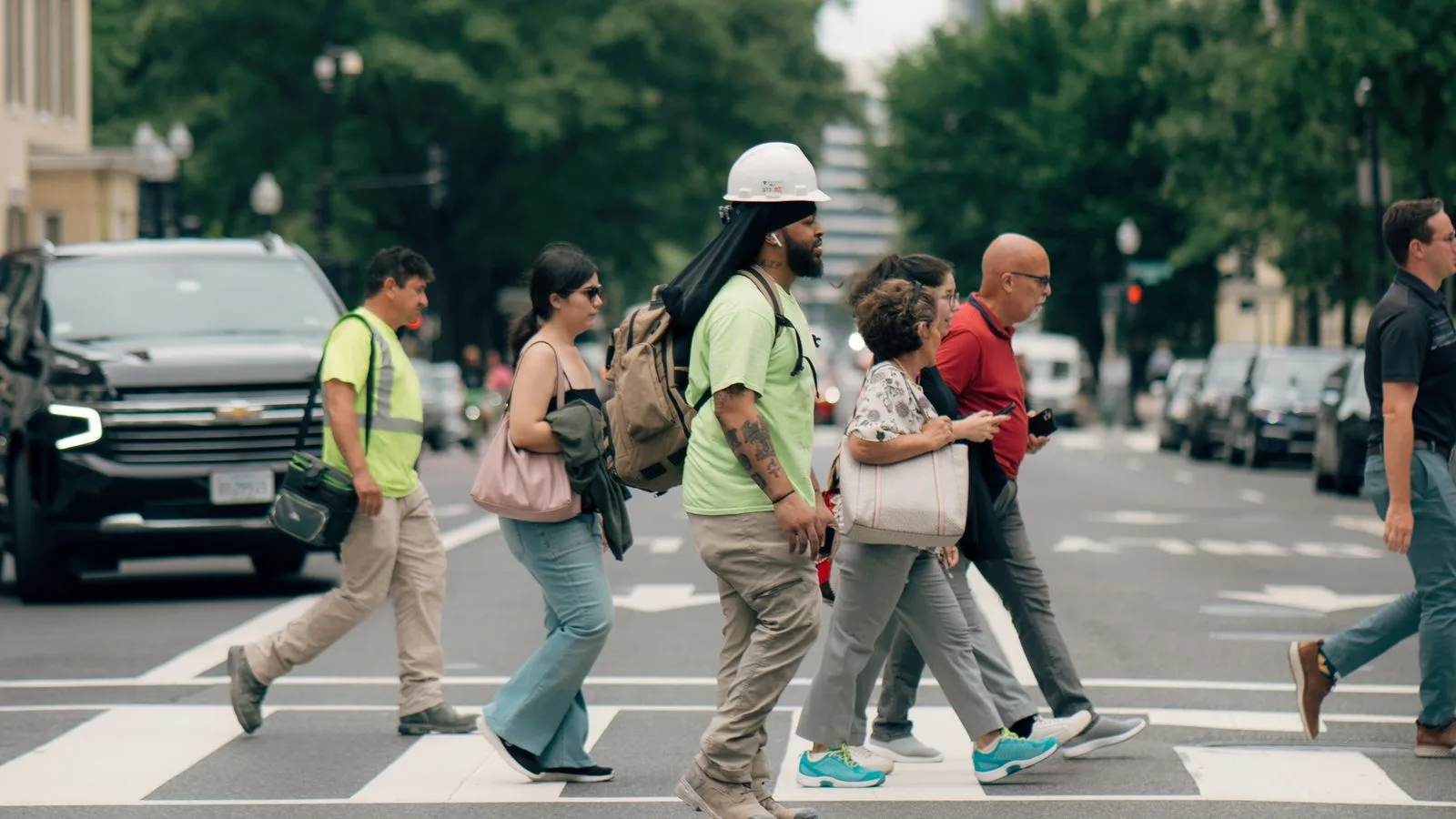
A pedestrian or bicycle accident claim in Houston arises when a motor vehicle strikes a person on foot or on a bike at one of the metro's feeder-road crossings, wide arterials, or gaps in the sidewalk and bike-lane network, patterns concentrated along the frontage roads of I-10, I-45, and the 610 Loop. Texas law treats a cyclist as a vehicle operator with full lane rights, and drivers owe pedestrians the right of way in marked crosswalks. Because nothing protects a person from the force of a multi-thousand-pound vehicle, even moderate-speed impacts on Houston surface streets produce lower-extremity fractures, traumatic brain injuries, and internal injuries that send victims to Level I trauma care at Ben Taub General or Memorial Hermann-TMC. The two-year deadline under Tex. Civ. Prac. & Rem. Code Section 16.003 applies, with a six-month Tort Claims Act notice window when a governmental entity's road design or signal failure contributed.
Why Houston cases are different
Houston's car-first freeway grid leaves pedestrians and cyclists exposed at feeder-road crossings, wide arterial intersections, and the gaps where sidewalks and bike lanes simply end. We represent injured pedestrians, cyclists, and their families statewide from our Austin office.
Where Houston pedestrians and cyclists get hit
Houston was built around its freeways, and the result is dangerous for anyone on foot or on a bike. The frontage-road system that parallels I-10, I-45, I-69, the 610 Loop, and Beltway 8 funnels high-speed traffic across crossings that were designed for cars turning on and off the freeway, not for people walking. Drivers exiting or entering the main lanes are watching merging traffic, not the crosswalk, and that inattention is the dominant cause of the pedestrian files we see. Wide multi-lane arterials with long signal cycles tempt mid-block crossings, and the inconsistent sidewalk and bike-lane network forces cyclists into traffic lanes where drivers do not expect them. Texas gives pedestrians the right of way in marked crosswalks and at intersections, but a pedestrian outside a crosswalk must yield, which is exactly the line defense insurers exploit under Chapter 33 to shift fault.
Right of way, driver inattention, and severe injuries
When a vehicle strikes a person, the human body absorbs the full energy, so even a low-speed Houston feeder-road impact can cause fractures, internal injuries, or a traumatic brain injury, and a higher-speed arterial strike is frequently catastrophic or fatal. These victims usually arrive at Memorial Hermann-TMC or Ben Taub, the metro's Level I trauma centers, often by Life Flight. The legal fight typically turns on right of way: who had the signal, whether the crossing was marked, and whether the driver was looking. We pull the signal-timing data, any TxDOT or business surveillance footage, and witness accounts quickly, because the short retention windows on Houston camera systems can erase the proof that the driver ran a light or never slowed. Even when the defense argues the pedestrian crossed improperly, Chapter 33 allows recovery as long as the injured person is fifty percent or less at fault, so apportioning the driver's inattention accurately is central to the case.
More in Houston
Other ways we help Houston injury victims.


Frequently asked
Houston pedestrian accident questions
- Often yes. A pedestrian outside a marked crosswalk has a duty to yield, but that does not erase a driver's duty to keep a proper lookout. Under Chapter 33, you can still recover as long as you are fifty percent or less at fault, reduced by your share. We work to document the driver's inattention, speed, and failure to react, which frequently carries most of the fault even in a mid-block crossing.
- Right away. Signal-timing records, TxDOT camera footage, and nearby business surveillance often capture whether the driver ran a light or failed to slow, but Houston retention windows can be short, sometimes around thirty days. A preservation letter in the first two weeks is routinely the difference between a disputed crossing and a clear liability picture. We send those letters at intake.
- Texas treats a cyclist as a vehicle operator with the right to use the lane, especially where bike lanes end or are unsafe. A driver still owes a duty to pass safely and keep a lookout. The defense may argue lane position under Chapter 33, but documenting the driver's conduct and the road's lack of safe bicycle infrastructure usually anchors fault on the driver. We build that record early.
- Yes. Your own Texas uninsured and underinsured motorist coverage extends to you as a pedestrian and as a cyclist, not just when you are inside a vehicle. If the driver who hit you had no insurance or minimal coverage, your own UM/UIM policy may be the primary source of real compensation. We pull every applicable policy before structuring the claim.
- Claims against governmental entities follow a different path. The Texas Tort Claims Act applies, which means a six-month pre-suit notice requirement and different damage caps. The City of Houston and Harris County each have their own notice procedures. Missing the notice window can forfeit the claim, so if road design, a broken signal, or a governmental vehicle was involved, we identify it at intake and move on that notice deadline immediately.
- Cases against private defendants are typically filed in a Harris County civil district court at 201 Caroline under the two-year deadline of Tex. Civ. Prac. & Rem. Code Section 16.003. If the defendant is an out-of-state company and the amount exceeds $75,000, removal to the U.S. District Court for the Southern District of Texas at the Bob Casey Courthouse on Rusk Street is possible. Government-entity claims are governed by the Tort Claims Act venue rules and the pre-suit notice requirements described above.
Where we work from
Downtown Austin. Houston clients welcome.
Our office is in downtown Austin; we represent Houston-area clients statewide and travel to Houston for case-specific needs (scene visits, medical-records consultations, court appearances). Home and hospital visits when injuries make travel difficult.
Talk to a Houston pedestrian accident lawyer.
Free case review, no obligation. We'll tell you straight whether we can help.