
Dallas · Pedestrian Accident
Dallas Pedestrian Accident Lawyer
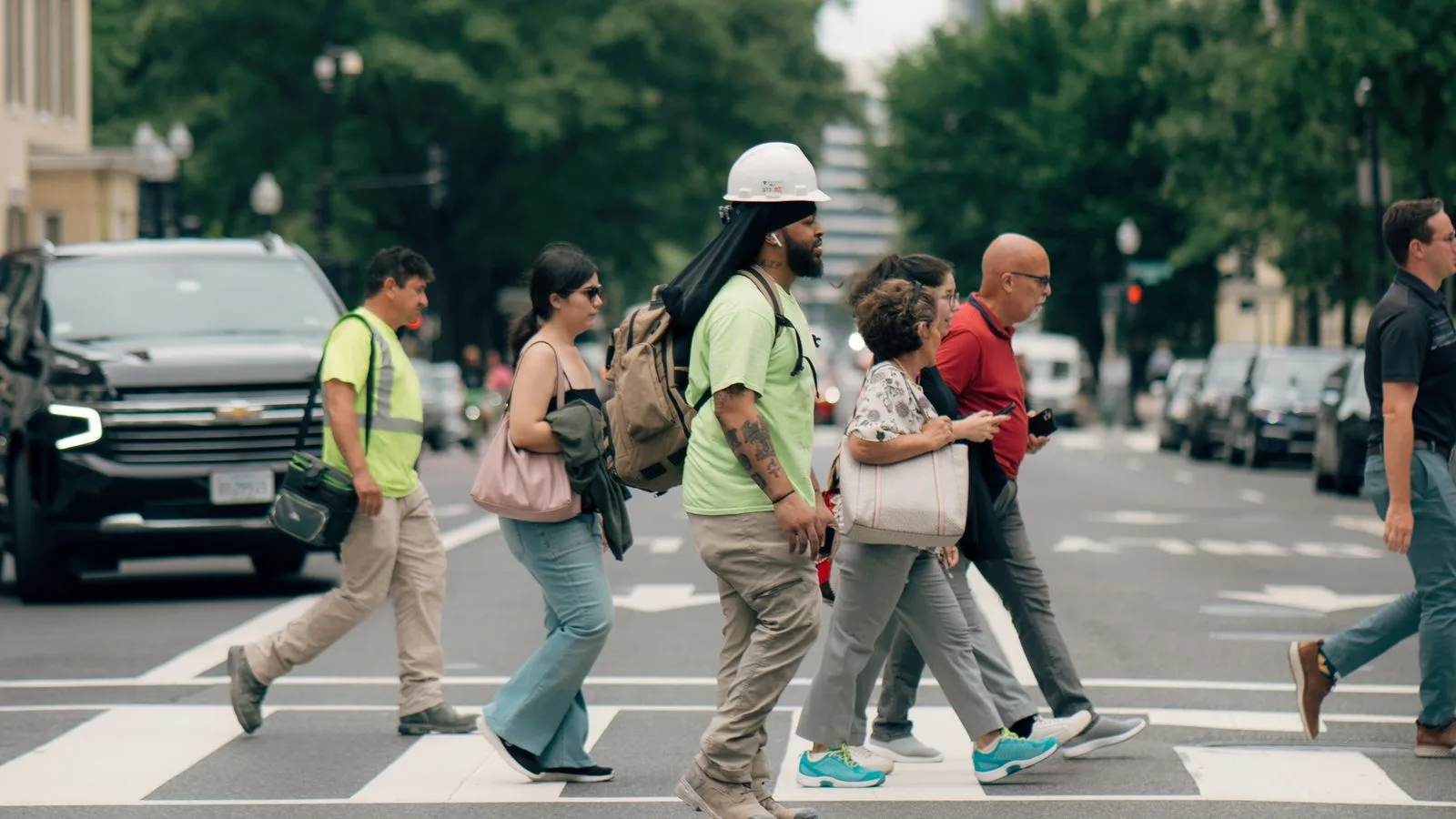
A pedestrian and bicycle accident claim in Dallas arises when a motor vehicle strikes a person on foot or on a bicycle, governed by driver duties under Tex. Transp. Code Chapter 552 for pedestrians and the cyclist-as-vehicle framework of Section 551.101. Because nothing protects the victim from direct vehicle impact, injuries are severe even at low speeds. Texas modified comparative fault under Chapter 33 still applies, so the victim can recover even if crossing outside a marked crosswalk, as long as fault is fifty percent or less. Cases filed in Dallas land in Dallas County district court at the George L. Allen Sr. Courts Building, and the two-year filing window under Section 16.003 governs, though the short video-retention cycles in Deep Ellum and along McKinney Avenue make early evidence preservation as urgent as the legal deadline.
Why Dallas cases are different
Dallas concentrates dense weekend foot traffic into Uptown, Deep Ellum, and the Bishop Arts crossings, where rideshare staging and distracted drivers leave people on foot and on bikes routinely overlooked. We represent those struck while walking or biking for clients across Texas from our Austin office.
McKinney Avenue, Deep Ellum, and Bishop Arts crossings
Downtown and Uptown carry dense pedestrian volume on weekends, with rideshare-related injuries concentrated along McKinney Avenue, Deep Ellum, and the Bishop Arts crossings. Drivers maneuvering for pickups, rideshare operators staging at the curb, and visitors unfamiliar with the streets create a distracted environment where pedestrians and cyclists are overlooked at intersections and crosswalks. Surge windows around Arts District events, American Airlines Center crowds, and State Fair traffic at Fair Park each October sharpen the risk. Texas gives pedestrians the right of way in marked crosswalks and at intersections, and a driver who fails to yield breaches a clear duty. The defining evidence problem in these districts is timing: private surveillance footage is dense but short-lived, with most cameras overwriting within two to four weeks. Getting witness identification and a preservation request to nearby businesses in the first days is what holds the case together.
Driver inattention, severe injuries, and short-window evidence
Pedestrian and bicycle cases almost always come down to driver inattention, a turn taken without looking, a curb pulled away from without checking, a phone glance at the wrong moment. The injuries are disproportionately severe because there is nothing between the person and the vehicle, so even low-speed contact can fracture bones or cause a brain injury the emergency room misses on the first visit. In the Uptown and Deep Ellum corridors, the surveillance picture is unusually dense because of the bar and restaurant cameras, but the retention windows are short, often two to four weeks, which is the single most common reason a strong liability case loses its best evidence. A preservation request sent in the first days saves footage the same request a month later cannot. Where a rideshare driver struck a pedestrian, the trip status at impact controls which policy layer applies, so we pull those trip records early too.

Frequently asked
Dallas pedestrian accident questions
- It depends on the trip status at the moment of impact. A rideshare driver's personal policy applies when the app is off, a smaller contingent policy when the app is on but no ride is accepted, and a one-million-dollar commercial policy once a ride request is accepted or a passenger is aboard. That timestamp is the entire claim's value driver, so we pull the rideshare trip records early in the heavily rideshare-driven Uptown and Deep Ellum corridors.
- It strongly supports your claim but does not guarantee recovery. Texas gives pedestrians the right of way in marked crosswalks and at intersections, and a driver who fails to yield breaches that duty. The insurer may still argue you stepped out suddenly or crossed against a signal, so the crash report, witness accounts, and any Bishop Arts or Deep Ellum camera footage matter. Comparative fault can reduce recovery if you share blame.
- Probably not, but get evaluated now. Adrenaline routinely masks injuries for hours, and pedestrian impacts often produce fractures or head injuries that surface after the fact. Follow-up imaging days later frequently clarifies the real picture. Prompt documentation links the injury to the crash. The two-year filing deadline under Tex. Civ. Prac. & Rem. Code Section 16.003 still applies, so do not delay seeking advice.
- Under Tex. Transp. Code Section 551.101, a cyclist has the rights and duties of a motor-vehicle driver, which means the comparative-fault analysis applies to you the same way it does to the car that struck you. A driver who passes unsafely or fails to yield while you are in a designated lane or travel lane breaches a clear duty. In Dallas corridors where freight volume is high and awareness of cyclists is lower, documenting your lawful position matters.
- Most private cameras in Deep Ellum, Uptown, and the Bishop Arts crossings overwrite footage within two to four weeks, and some larger venue systems run a thirty-to-ninety-day cycle. Because that window closes faster than insurance investigations typically move, we send written preservation letters to nearby businesses and the property owner within days of intake. A letter sent a month after the crash frequently arrives too late.
- Delivery operators are common in the Uptown and Deep Ellum areas, and a company vehicle in the course of employment triggers the employer's commercial liability policy in addition to the driver's own coverage. We identify the company and its insurer, pull fleet records if the vehicle is a known company asset, and evaluate whether the employer's negligent supervision or hiring contributed to the strike. Company coverage limits are typically far higher than individual policy limits.
Where we work from
Downtown Austin. Dallas clients welcome.
Our office is in downtown Austin; we represent Dallas-area clients statewide and travel to Dallas for case-specific needs (scene visits, medical-records consultations, court appearances). Home and hospital visits when injuries make travel difficult.
Talk to a Dallas pedestrian accident lawyer.
Free case review, no obligation. We'll tell you straight whether we can help.