
By Cap City Injury Attorneys11 min read
Rideshare Accident Lawyers: Two-App Crashes
Rideshare accident lawyers explain an Uber and Lyft crash in Austin: each driver's app status can point to a different Texas policy.
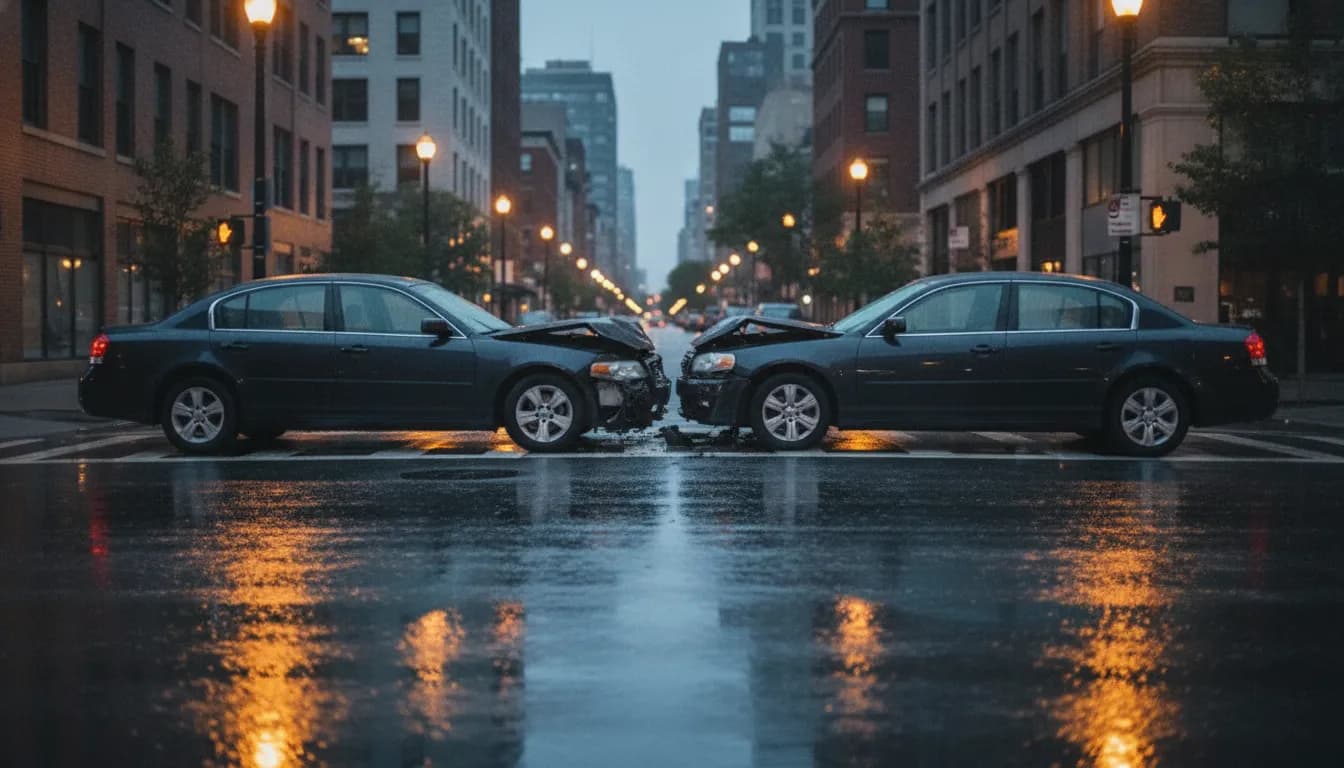
Rideshare accident lawyers get a harder insurance question when an Uber driver and a Lyft driver hit each other in Austin. The wreck is one event. The coverage questions are not. Each driver can be in a different stage of work. One may be carrying a rider. The other may only be logged in and waiting. Texas law sets different minimum insurance for those stages, and each company keeps its own trip record.
Call to discuss your situation with an attorney
The useful first step is to write down which app each driver was using and what that driver was doing. Do not assume both cars were on a ride just because both phones were mounted. A passenger, another driver, or a person on foot can all be hurt in the same crash, and each person may look to a different policy.
What Should Rideshare Accident Lawyers Check First?
Start with two separate questions. Was the Uber driver logged in, on the way to a pickup, or carrying a rider? Then ask the same thing about the Lyft driver. The answers do not have to match.
Texas calls Uber and Lyft transportation network companies. A prearranged ride starts when the driver accepts a request and ends when the last requesting rider leaves the car. That definition is in Texas Insurance Code Chapter 1954. Time spent logged in but waiting for a request is a different period.
Picture a crash on South Congress. The Uber driver has a rider in the back seat and is heading toward the river. The Lyft driver is online a block away, waiting for a request, and turns across traffic. Those are two different insurance periods, even though the cars hit at the same second.
Fault is still a separate question. App status tells you which policy to look at. It does not decide who ran the light, who was speeding, or who changed lanes. Police reports, photos, and witness notes still matter.
If you were in one of the cars, say so early. A rider's claim is not the same as a claim by the other driver. A person walking or riding a bike near the crash has a third path. Cap City's rideshare accident lawyer page explains the general Texas framework. This article stays on the two-company crash.
How Does Each Driver's App Status Change the Insurance?
Texas sets two minimum layers while a driver is using a network. The layer depends on whether a prearranged ride is underway.
While a driver is logged on and waiting, but has not accepted a ride, section 1954.052 sets a lower floor. It requires at least $50,000 for injury or death of one person. It requires $100,000 per incident for injury or death. It also requires $25,000 for property damage.
Once the driver is engaged in a prearranged ride, section 1954.053 requires at least $1 million in total liability for death, bodily injury, and property damage for each incident. The Texas Department of Insurance tells drivers that most personal auto policies do not cover ride sharing, and that the company must explain its own coverage. That guide is TDI's ride-sharing questions page.
Those minimums are floors, not a promise of what a given policy will pay. A company can carry more. A personal policy can exclude ride-share use. Section 1954.151 lets a personal auto insurer exclude losses that happen while the driver is logged on or on a prearranged ride.
| What the driver was doing. | Texas minimum to look for. | What to confirm. |
|---|---|---|
| App off, not working. | Ordinary personal auto policy. | Whether a ride-share exclusion even applies. |
| Logged in and waiting, with no ride accepted. | At least $50,000, $100,000, and $25,000. | Login time, and that no request was accepted. |
| Request accepted, driving to the pickup. | $1 million aggregate liability. | Accept time, and that the rider was not yet in the car. |
| Rider in the car. | $1 million aggregate liability. | Pickup time, and that the ride had not ended. |
In a two-company crash, build this table twice. The Uber side can be in the $1 million ride period while the Lyft side is still in the waiting period. Mixing those rows is how a claim gets pointed at the wrong policy.
Which Company Has to Cover Its Own Driver?
Each company is tied to its own driver and its own digital network. Uber's insurance rules attach to the person logged into Uber. Lyft's rules attach to the person logged into Lyft. One company's policy does not automatically step into the other company's shoes.
Section 1954.051 says the required insurance can come from the driver, the company, or both. If the driver's policy has lapsed or does not meet the chapter, section 1954.054 says the company shall provide the required coverage beginning with the first dollar of a claim against that driver.
That first-dollar rule is about the company the driver was using. It is not a rule that the larger company, or the company with a rider in the car, pays everyone's damages. If the waiting Lyft driver caused the crash, you still look first at that driver's status and Lyft's duties for that status.
Section 1954.055 also says company coverage is not contingent on the driver's personal insurer denying the claim first. An adjuster who tells you to finish the personal-policy denial before anyone will look at the ride-share file is describing a sequence the statute does not require.
The Texas Department of Licensing and Regulation says a company must not restrict a driver from using other companies' networks if it wants the driver treated as an independent contractor. TDLR explains that point on its transportation network company operations page. Being allowed to drive for more than one company is not the same as having one blended insurance policy.
What If Both Drivers Say the Other App Was Active?
Drivers sometimes remember the crash in the way that protects a personal policy. One may say the app was off. The other may say a ride was already accepted. Passengers may only know that a phone was mounted and a map was open.
Texas gives you a paper trail for that dispute. Section 1954.154 covers claim investigations. The company, and any insurer providing the required coverage, must help the other insurers. They must also share facts with directly interested people.
Two items matter most. First, the precise times the driver logged on and off. That window is the 12 hours before the accident and the 12 hours after it. Second, a clear description of the coverage, exclusions, and limits for that work.
Ask for that record from each company, not just the one whose car you were in. A login time without an accept time points to the waiting period. An accept time before the crash points to the $1 million ride period, even if the pickup had not happened yet.
Section 1954.056 also says a driver using a network must carry proof of the required insurance. On request, the driver must say whether they were logged on or on a prearranged ride. That disclosure goes to a directly interested person, an insurer, and the investigating officer. Write down what each driver says at the scene. Later records can be compared with that first account.
Do not post those screenshots on social media. Save them. A trip screen can disappear from the app even when the company still has the server log.
Who Can Be Hurt, and Who May Have a Claim?
A crash between an Uber driver and a Lyft driver can injure more than the two people behind the wheel. Sort the people before you sort the policies.
The rider in the Uber, if there is one, was on a prearranged ride. That rider looks to the at-fault driver's coverage and also asks what the Uber period provides. The rider in the Lyft, if there is one, does the same on the Lyft side. Two riders in two cars means two trip records.
The Uber driver and the Lyft driver can each be hurt too. A driver's own injuries raise a different set of questions than a rider's injuries, including whether a personal policy excludes ride-share use. This article does not decide whether either driver is an employee. TDLR treats that label as a separate test.
People outside both cars matter just as much. A driver in a third car, a person in a crosswalk, or a cyclist in the bike lane may have a claim against whichever ride-share driver was negligent. Their path follows the at-fault driver's period. It does not depend on which logo was in the window.
Uninsured and underinsured motorist questions come up when the at-fault layer is too small or a personal policy denies the claim. Cap City's guide to an uninsured motorist accident lawyer in Austin covers that separate problem. Do not treat it as a substitute for the app-status question above.
What Should You Save After the Crash?
The scene gets cleared fast on a busy Austin road. A short list, done in order, holds up better than a long speech to either insurer.
- Get medical care first if anyone is hurt, and tell the officer there were two ride-share cars.
- Photograph both cars, both plates, both phone mounts, and the street, including signals and skid marks.
- Ask each driver which app was open and whether a rider was in the car or a pickup was underway.
- Save your own trip screen if you were a rider, including the car, driver first name, and time.
- Get the crash report number before you leave the block.
- Call each company through the app's crash flow, and write down the claim numbers.
- Keep medical bills, missed-work notes, and repair estimates in one folder.
Report the crash, but do not guess about fault while you do it. A practical walk-through of the report itself is in how to report an Uber accident. Use the same care on the Lyft side: names, times, and photos, not theories.
Give each insurer only what that insurer asks for, and keep a copy. A recorded statement on the day of the crash is a poor place to estimate speed or to say you are fine before a doctor has seen you.
What Can Go Wrong If You File Too Quickly?
The most common mistake is filing both drivers under one company's claim. A single claim number feels simpler. It also lets the other company's clock run while nobody has asked for that company's login record.
The second mistake is accepting the waiting-period limits before anyone checks the accept time. The gap between the $50,000 per-person floor and the $1 million ride-period floor is large. An early offer that assumes the smaller floor should be compared with the trip log, not just with the repair estimate.
A third mistake is letting a personal insurer close the file with a ride-share exclusion and stopping there. The exclusion may be real under section 1954.151. The company's duty under sections 1954.052 and 1954.053 can still remain. Ask which period the company says applied, and ask for the 12-hour login record that section 1954.154 describes.
None of this is a promise about what a case is worth. Medical care, fault, and the real policy language still control. If you want help sorting the two files, call Cap City Injury Attorneys in Austin at (512) 612-3110.
Call to discuss your situation with an attorney
Frequently Asked Questions
Does one company pay for both drivers?
No. Each company's insurance duties follow its own driver and that driver's app status. You may need a claim with Uber and a separate claim with Lyft.
What if one driver had a rider and the other was only waiting?
Treat them as two periods. The driver on a prearranged ride points toward the $1 million minimum. The driver who was only logged in and waiting points toward the lower 1954.052 limits.
Can both drivers be partly at fault?
Yes. Texas still looks at each driver's driving, not just at the apps. One driver can be logged into Lyft and still be the person who had the green light.
What record shows whether a ride had been accepted?
Ask each company for the log-on and log-off times required by Insurance Code section 1954.154, and ask whether a request was accepted before the crash. Your own rider screen is a backup, not a substitute.
Should I talk to both insurers the same day?
Report the crash and get claim numbers. Wait to give a recorded story about speed, fault, or injuries until you have medical care and the basic trip facts written down.
More on the blog
Keep reading.
15 min read
Delivery Truck Accident Lawyer: Who May Be Liable for a Crash?
Learn who may be responsible after a Texas delivery truck crash, what evidence matters, how insurance can differ, and what steps to take next.
By Cap City Injury Attorneys
14 min read
How Many Motorcycle Accidents Per Year in Austin and Texas?
Learn why motorcycle crash totals vary, how to find a reliable Texas or Austin count, and what annual statistics can tell you after a collision.
By Cap City Injury Attorneys
Let's talk about your case.
Free case review, no obligation. We'll tell you straight whether we can help.