
By Cap City Injury Attorneys11 min read
Underinsured Motorist Claims in Texas: Coverage Falls Short
Learn how to file an underinsured motorist claim in Texas, protect UIM coverage, document damages, and evaluate next steps after a crash. Read the guide.

When a Texas driver causes a crash but does not carry enough liability insurance to cover your medical bills and other losses, an underinsured motorist claim in Texas may help address the shortfall. The process is different from simply accepting the other driver's policy limits. You must protect your coverage, document the full value of the claim, and follow your policy's notice and settlement requirements.
Request a consultation with Cap City Injury Attorneys about your UIM claim.
What Is Underinsured Motorist Coverage Under Texas Law?
Underinsured motorist coverage, commonly called UIM coverage, may apply when the at-fault driver's liability policy exists but cannot cover the injured person's legally recoverable damages. Texas auto insurers generally must offer uninsured and underinsured motorist coverage, and a rejection is generally required in writing. The exact limits and exclusions come from the policy.
UIM coverage is not the same as the other driver's liability insurance. A liability claim is made against the person who caused the crash and their insurer. A UIM claim is made under your own policy after the at-fault driver's available coverage is inadequate. That does not mean your insurer will automatically agree with your account of fault or the value of your injuries.
| Coverage or claim | When it may apply | What it addresses |
|---|---|---|
| At-fault driver's liability coverage | The other driver has insurance and is legally responsible | Damages up to the available policy limits |
| Underinsured motorist coverage | The other driver's limits are too low for the covered damages | The covered gap, subject to your UIM limits and policy terms |
| Uninsured motorist coverage | The at-fault driver has no applicable insurance or cannot be identified | Covered losses, subject to the UM limits and policy terms |
The Texas Department of Insurance explains that UM/UIM coverage can help with losses such as medical expenses, vehicle damage, and pain and suffering, depending on the policy and facts. Review the declarations page, policy booklet, endorsements, and any written rejection before assuming that coverage is available or unavailable.
How Do You Know If You Have a UIM Claim?
A UIM claim may exist when another driver caused the collision, that driver's liability limits are lower than the value of your legally recoverable damages, and your own policy provides UIM coverage. The key question is not whether the other driver had insurance. It is whether the available coverage is enough for the harm caused.
For example, a driver may have a liability policy that covers part of your losses but leaves unpaid medical treatment, lost income, future care, or other damages. A UIM claim does not guarantee payment of every remaining bill. The insurer can dispute fault, causation, the amount of damages, or whether a particular loss is covered.
Start by gathering:
- Your auto policy declarations page and UIM endorsements.
- The at-fault driver's insurance information and policy-limit communications.
- The crash report, photographs, video, witness information, and vehicle records.
- Medical records, bills, treatment recommendations, and information about future care.
- Pay records or other documentation of income lost because of the crash.
- Notes describing pain, limitations, missed activities, and how recovery affects daily life.
Do not assume that an initial liability settlement resolves the entire claim. A release can affect your ability to pursue UIM benefits, particularly if the carrier has not had an opportunity to protect its subrogation rights. Before signing a release or accepting policy limits, notify your UIM carrier and review the required consent process.
How Do You File an Underinsured Motorist Claim in Texas?
Filing a Texas UIM claim usually begins with prompt notice to your own insurer, followed by a complete review of the policy, the collision evidence, and the damages. The insurer may request a recorded statement, medical authorizations, bills, records, a demand package, or proof of the other driver's limits. Respond carefully and keep copies of everything.
- Locate the policy. Confirm the named insured, covered vehicle, UIM limits, deductibles, exclusions, and any notice provisions.
- Give notice. Tell your carrier about the collision and the potential UIM claim as soon as reasonably possible under the policy terms.
- Protect the settlement process. Ask what written consent is required before settling with or releasing the at-fault driver.
- Prove liability. Preserve the evidence showing how the crash happened and why the other driver is responsible.
- Document damages. Organize past medical care, projected treatment, lost earnings, property damage, and personal effects.
- Present the claim. Send a focused demand that explains liability, the damages, the available third-party limits, and the UIM shortfall.
- Evaluate the response. Compare the insurer's position with the policy, evidence, and reasonable value of the claim before accepting or rejecting an offer.
Talk with Cap City Injury Attorneys before you sign a release or respond to a UIM settlement offer.
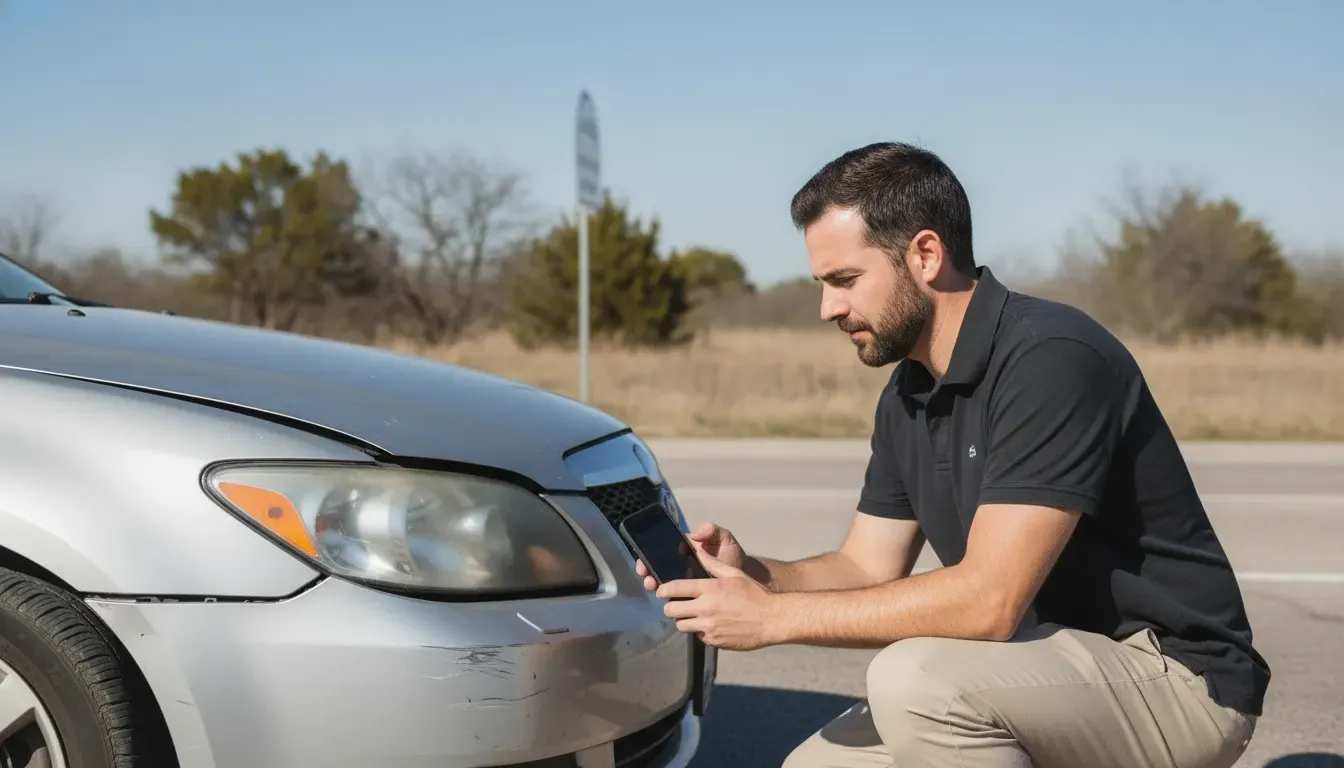
Photographs, records, and timely notice can help preserve the evidence needed for a Texas UIM claim.
A UIM demand should not be a list of bills alone. It should connect the crash to the injuries, explain the treatment course, identify future concerns supported by medical evidence, and show why the available liability limits do not fully address the losses. Avoid exaggeration. A clear, supported presentation is more useful than a long package with unsupported conclusions.
What Deadlines Apply to a Texas UIM Claim?
Texas UIM claims can involve separate deadlines. Your policy may require prompt notice, while a lawsuit may have a different limitations period. Texas Supreme Court precedent treats a judgment establishing liability and damages as the predicate for the insurer's contractual duty to pay UIM benefits. That rule does not excuse delayed notice, so review the policy and claim history promptly.
Calendar the crash date, every notice and demand, the date of any settlement offer, and any limitations date discussed by counsel. Keep written proof that notice was sent and received. If the insurer asks for more time, obtain any extension in writing, but remember that an insurer's written extension does not necessarily change a statutory deadline. Do not treat silence as permission to delay.
There is also a practical timing issue. Medical treatment, wage documentation, and future-care opinions may develop over time, but waiting too long can make records harder to obtain and can create questions about gaps in treatment. Continue reasonable medical care, follow provider instructions, and keep an organized claim file while the legal issues are evaluated.
What Happens When the At-Fault Driver Has No Insurance?
An uninsured motorist claim is related to a UIM claim but addresses a different coverage situation. UM coverage may apply when the responsible driver has no applicable insurance, is unidentified in a hit-and-run, or cannot provide collectible liability coverage. The policy still controls, and the claimant generally must establish the other driver's fault and the covered damages.
After a hit-and-run, report the collision promptly, seek medical care, preserve vehicle and scene evidence, and notify your insurer. Policies may impose specific requirements for hit-and-run claims, including prompt reporting and cooperation with an investigation. Do not assume that a missing driver makes proof of fault unnecessary. Video, witnesses, vehicle damage, physical evidence, and the crash report may all matter.
When the at-fault driver has some insurance, the order of operations can be more complicated. The liability carrier's limits, your UIM limits, other available policies, and the language of any release should be reviewed together. In many cases, it is safer to coordinate the liability settlement and the UIM notice rather than treating them as unrelated claims.
How Is a UIM Settlement Evaluated?
A fair UIM settlement evaluation compares the legally supported value of the injury claim with the amount already available from the at-fault driver's policy and the limits of your own UIM coverage. It also considers disputed liability, comparative responsibility, medical causation, preexisting conditions, future care, wage loss, and the evidence supporting non-economic damages.
Ask these questions when reviewing an offer:
- Does the offer account for all documented treatment and related expenses?
- Does it address future care that a qualified provider has supported?
- Is the wage-loss calculation tied to reliable employment or tax records?
- Has the insurer made a clear position on fault and comparative responsibility?
- Does the release cover only the intended parties and claims?
- Will accepting the offer affect other insurance, healthcare, or reimbursement rights?
Texas UIM disputes can require a formal process to establish the other driver's liability and the amount of damages. The Texas Supreme Court's decision in Brainard v. Trinity Universal Insurance Co. is frequently discussed in this context because it explains why a UIM insurer's obligation is not treated like an ordinary obligation to pay a fixed amount immediately after a demand. The case is one reason policyholders should obtain legal advice before making a release or assuming that a demand alone requires payment.
Negotiation can resolve some claims, but an insurer may deny or undervalue a claim. If that happens, review the denial letter, policy, evidence, and available procedural options. Keep communications professional and accurate. Do not make statements that minimize your injuries or concede fault simply to move the claim forward.
When Should You Talk With a Texas UIM Lawyer?
Consider speaking with a Texas UIM lawyer when the insurer disputes fault, requests a broad release, questions your treatment, offers policy limits without addressing the full claim, delays a response, or denies that coverage applies. Legal review can also be useful before settling with the at-fault driver because the release and consent requirements may affect the UIM claim.
Cap City Injury Attorneys serves Austin-area clients in motor vehicle injury matters. The firm's Austin car accident lawyer resource provides broader information about crash claims, while this guide focuses on the narrower UIM process. The existing guide on suing an uninsured or underinsured driver in Texas addresses the separate question of whether a lawsuit against the at-fault driver may be available.
Bring the policy, declarations page, crash report, medical records, insurer letters, settlement offers, and a timeline of events to the consultation. The more complete the file, the easier it is to identify coverage questions, missing evidence, and deadline risks.
Contact Cap City Injury Attorneys to review the next step in your Texas UIM claim.
Frequently Asked Questions
Can I file a UIM claim with my own insurance company?
Possibly. If your policy includes UIM coverage and the at-fault driver's available liability insurance does not cover the legally supported value of your damages, you may have a UIM claim. Coverage, notice, consent, and proof requirements depend on the policy and facts.
Do I have to accept the other driver's policy limits before filing a UIM claim?
Do not assume that you must accept or release the at-fault driver before speaking with your own UIM carrier. Many policies require notice and consent before a settlement or release. Coordinate the liability claim and UIM claim so that you do not unintentionally impair coverage.
What damages can UIM coverage address in Texas?
Depending on the policy and evidence, UIM coverage may address covered bodily injury damages such as medical expenses, lost income, and pain and suffering that exceed the at-fault driver's available limits. The policy limits and legal proof of damages still apply.
Can a UIM insurer deny my claim?
An insurer may dispute coverage, fault, causation, the extent of injuries, the value of damages, or compliance with policy conditions. A denial is not the end of the analysis. Review the policy, denial explanation, evidence, and applicable deadlines before deciding what to do next.
Is a UIM claim the same as suing the uninsured driver?
No. A lawsuit against the at-fault driver and a claim under your own UM/UIM policy involve different parties and legal questions. The other driver's ability to pay may also affect the practical value of a lawsuit. The options can overlap, so evaluate them together.
How long do I have to file a UIM claim in Texas?
There is no single deadline that applies to every UIM situation. Policy notice provisions and lawsuit limitations rules may both matter. Texas Supreme Court precedent generally treats a judgment establishing liability and damages as the predicate for the insurer's contractual duty to pay UIM benefits, but that rule does not eliminate prompt-notice requirements or necessarily extend a statutory deadline. Review the crash date, policy language, and claim history promptly.
This article provides general information, not legal advice. Insurance policies and injury claims are fact-specific. A qualified Texas lawyer can review the policy and facts of a particular claim.
Sources: Texas Department of Insurance guidance on uninsured motorist coverage; Texas Insurance Code Section 1952.101; Brainard v. Trinity Universal Insurance Co..
More on the blog
Keep reading.
10 min read
Suing a Drunk Driver in Texas: Victim Guide
Can you sue a drunk driver in Texas? Learn how civil claims, evidence, damages, dram shop rules, and filing deadlines may affect your case.
By Cap City Injury Attorneys
11 min read
Distracted Driving Accident Lawyer Austin: Proving Fault
A distracted driving accident lawyer Austin victims can call can help prove phone use, preserve crash evidence, and build a Texas injury claim.
By Cap City Injury Attorneys
Let's talk about your case.
Free case review, no obligation. We'll tell you straight whether we can help.