
By Cap City Injury Attorneys10 min read
Suing a Drunk Driver in Texas: Victim Guide
Can you sue a drunk driver in Texas? Learn how civil claims, evidence, damages, dram shop rules, and filing deadlines may affect your case.
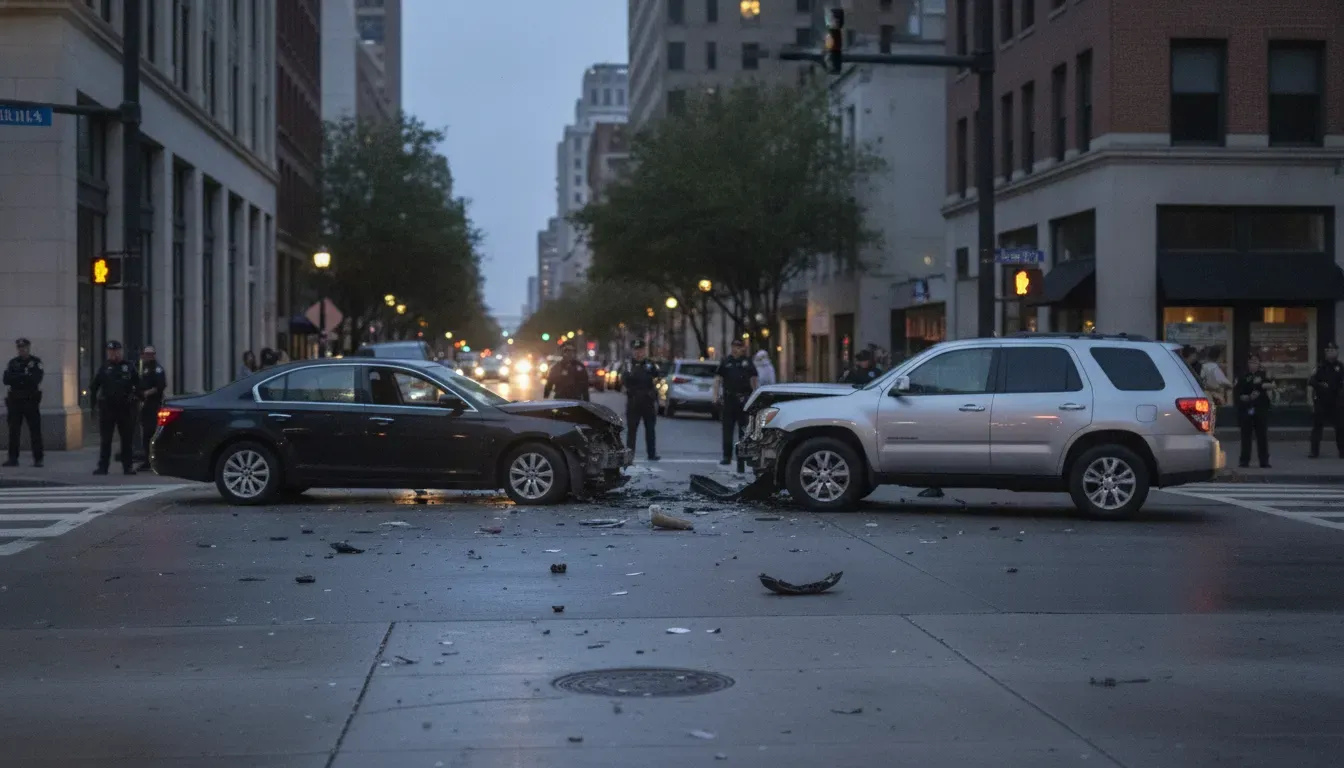
Yes. If a drunk driver causes a crash that injures you or damages your property, you can generally pursue a civil claim against the driver in Texas. For the broader collision-response framework, see Cap City Injury Attorneys' Austin motor vehicle accident guide. Suing a drunk driver in Texas is separate from the state's DWI prosecution. Your civil case may seek compensation for medical care, lost income, property damage, pain, and other losses even if the criminal case is pending or does not result in a conviction.
Request a confidential case review about your Texas crash.
Can You Sue a Drunk Driver Directly in Texas?
In most situations, an injured person can file a negligence lawsuit directly against the driver who caused the crash. The civil claim is based on proving that the driver owed a duty to operate safely, breached that duty by driving while impaired or otherwise driving negligently, caused the collision, and caused legally compensable losses.
Texas is an at-fault state. That means the person whose conduct caused the crash can be responsible for the resulting damages. A driver's insurance company may investigate and negotiate the claim, but the driver remains the person whose conduct is at issue. Depending on the facts, other parties may also be relevant, including an employer, vehicle owner, or alcohol provider.
The driver's arrest or conviction can provide useful evidence, but it is not the only way to prove a civil case. A person may still have a claim when police did not make an arrest, the prosecutor declined to file charges, or the criminal case ended without a conviction. Civil cases use a different burden of proof and focus on the victim's losses.
- Duty: Drivers must use reasonable care around other people on Texas roads.
- Breach: Driving while intoxicated, speeding, running a light, or making another unsafe maneuver may support a negligence claim.
- Causation: The unsafe conduct must have caused the collision and the resulting injuries or losses.
- Damages: The claim must identify losses supported by medical, employment, property, or other evidence.
For broader crash-response steps, see Cap City Injury Attorneys' Austin motor vehicle accident guide. This article focuses on the additional civil issues that can arise when impairment is involved.
What Is the Difference Between a Criminal DWI Charge and a Civil Lawsuit?
A criminal DWI case is brought by the State of Texas to punish an alleged offense, including the offense described in Texas Penal Code Section 49.04. A civil lawsuit is brought by the injured person to seek financial compensation. The cases may involve the same crash and evidence, but they have different parties, goals, procedures, and burdens of proof.
| Criminal DWI case | Civil injury case |
|---|---|
| The State prosecutes the driver. | The injured person brings the claim against the responsible parties. |
| The focus is punishment for an offense. | The focus is compensation for legally recognized losses. |
| The State must prove the charge beyond a reasonable doubt. | The claimant generally must prove the civil case by a preponderance of the evidence. |
| The result may include criminal penalties. | The result may include monetary damages or a negotiated settlement. |
A civil claim does not need to wait for the criminal case to end. Waiting can create risk because surveillance video may be overwritten, vehicles may be repaired, and witnesses' memories may fade. A conviction or guilty plea may strengthen the civil case, but an acquittal does not automatically eliminate civil liability. The civil court evaluates the evidence under its own legal standard.
Tell your civil attorney about any police contact, citation, arrest, court date, plea offer, or request to provide a statement. Do not assume the criminal prosecutor is preserving every item needed for your civil claim. Your attorney may need to request records, identify witnesses, send preservation notices, and coordinate the timing of civil discovery.
What Evidence Proves the Driver Was Legally Impaired?
Evidence of impairment can come from many sources, not just a breath or blood test. The question in a civil case is whether the available evidence shows that the driver's intoxication or other negligent conduct contributed to the crash and your losses. A thorough investigation usually compares the driver's conduct, the collision mechanics, and the timeline before and after impact.
- Crash-scene evidence: Photographs, vehicle damage, skid marks, debris, traffic-camera footage, and the location of the vehicles.
- Official records: The crash report, officer observations, field sobriety testing, citations, arrest records, and available breath or blood test results.
- Witness accounts: Statements from passengers, other drivers, first responders, nearby residents, and people who saw the driver before the crash.
- Digital evidence: Dashcam footage, phone video, 911 calls, rideshare or delivery records, and surveillance from nearby businesses.
- Statements and conduct: Admissions, messages, social media posts, erratic driving, and observations of speech, balance, coordination, or smell.
- Alcohol-service evidence: Receipts, payment records, server testimony, surveillance footage, and evidence of how long the driver was at a bar or restaurant.
Preserve what you have without altering it. Save original video files, keep photographs in their original format, and write down what you remember while the details are fresh. Do not confront the driver, contact a bar employee to demand records, or post accusations online. Those steps can complicate the investigation and create statements that may later be taken out of context.

Preserving records and documenting the crash can help clarify what happened.
Contact Cap City Injury Attorneys to discuss how the available evidence may affect your claim.
What Damages Can Drunk Driving Victims Recover in Texas?
Compensatory damages are intended to address the losses caused by the crash. The amount depends on the injuries, treatment, effect on work and daily life, property damage, available insurance, and evidence. No article can predict an individual recovery, and an intoxicated driver does not automatically mean a particular settlement amount.
| Loss category | Examples of supporting evidence |
|---|---|
| Medical expenses | Emergency care, hospital treatment, medication, therapy, future-care opinions, and related bills. |
| Lost income | Pay records, employer statements, missed shifts, reduced earning capacity, and vocational evidence when appropriate. |
| Property damage | Repair estimates, total-loss valuation, rental records, and photographs of the vehicle and personal property. |
| Physical and emotional harm | Treatment records, pain descriptions, changes in daily activities, mental-health care, and testimony from people who know you. |
| Disfigurement or impairment | Medical opinions and evidence describing lasting changes to appearance, movement, or quality of life. |
Texas law may also allow exemplary damages in a case involving gross negligence. Exemplary damages are different from compensation for medical bills or pain. They are designed to punish particularly wrongful conduct and deter similar conduct, and they require proof under a higher standard. Driving while intoxicated can support this theory in some cases, but the facts and applicable statutory limits matter.
Texas Civil Practice and Remedies Code Section 41.003 addresses when exemplary damages may be awarded, while Section 41.008 addresses limits and exceptions. A careful case evaluation should account for insurance coverage, the driver's assets, other liable parties, your percentage of responsibility if disputed, and the evidence supporting each category of loss.
Can You Also Sue the Bar That Served Them? A Brief Dram Shop Overview
Sometimes. Texas's Dram Shop Act may allow a claim against an alcohol provider when the provider sold or served alcohol to a person who was obviously intoxicated to the extent that the person presented a clear danger to themselves and others, and that intoxication was a proximate cause of the damages.
This is a fact-specific claim, not automatic responsibility for every crash after someone visits a bar or restaurant. Evidence may include receipts, timestamps, surveillance footage, witness accounts, server training or testimony, and the driver's condition when alcohol was served. The provider's conduct, the timing of service, and the driver's later actions all matter.
Texas Alcoholic Beverage Code Section 2.02 contains the statutory elements. A potential Dram Shop claim should be investigated promptly because businesses may have limited retention periods for video and point-of-sale records. It may also involve different insurance and discovery issues than a claim against the driver. The focus here is the related-claim concept, not a substitute for a full Dram Shop analysis.
How Long Do You Have to File a Drunk Driver Lawsuit in Texas?
In general, a Texas personal injury lawsuit must be filed within two years after the date the injury occurred. The two-year limitations period comes from Texas Civil Practice and Remedies Code Section 16.003. The criminal DWI timeline does not normally pause this civil deadline, so you should not wait for an arrest, plea, trial, or sentencing before getting advice about the civil claim.
Different rules can apply in situations involving a death, a minor, a legal disability, a government defendant, or other unusual facts. A wrongful death claim may have its own accrual questions, and a claim against a governmental entity may require an earlier notice. The safest approach is to identify every potentially responsible party and every applicable deadline as soon as possible.
Before the deadline approaches, gather the crash report, medical records, bills, wage information, insurance correspondence, photographs, witness information, and any video. Keep copies of every communication with an insurer. Do not sign a release or accept a settlement before you understand whether it covers future treatment, lost income, and other claims.
Talk with Cap City Injury Attorneys about the deadline and next steps for your Texas injury claim.
Frequently Asked Questions
Do I need a DWI conviction to sue the driver?
No. A conviction can be useful evidence, but a civil claim may proceed based on the full body of evidence even when no criminal conviction exists. The civil case and criminal case use different standards and address different objectives.
Can I sue if the drunk driver has little insurance?
Possibly. The available recovery depends on the driver's coverage and assets, your own applicable uninsured or underinsured motorist coverage, and whether another party may be legally responsible. An investigation should identify all potential coverage before a claim is resolved.
Can I recover if I was partly at fault?
Texas comparative responsibility law can reduce damages based on a claimant's percentage of responsibility, and a claimant whose responsibility is greater than 50 percent may be barred from recovery. The evidence must be evaluated carefully because fault allegations can affect the value and outcome of a claim.
What should I do first after a crash with a drunk driver?
Get to safety, call 911 when appropriate, seek medical care, preserve photographs and video, obtain witness information, and avoid recorded statements or settlement documents until you understand your rights. Prompt legal guidance can help preserve evidence while you focus on treatment.
This article is for general information and does not create an attorney-client relationship. Texas deadlines and claims depend on the facts of each case.
More on the blog
Keep reading.
11 min read
Distracted Driving Accident Lawyer Austin: Proving Fault
A distracted driving accident lawyer Austin victims can call can help prove phone use, preserve crash evidence, and build a Texas injury claim.
By Cap City Injury Attorneys
10 min read
What to Do After an 18-Wheeler Accident in Austin
Learn what to do after an 18-wheeler accident in Austin, including scene safety, medical care, evidence preservation, insurance calls, and next steps.
By Cap City Injury Attorneys
Let's talk about your case.
Free case review, no obligation. We'll tell you straight whether we can help.