
By Cap City Injury Attorneys11 min read
Distracted Driving Accident Lawyer Austin: Proving Fault
A distracted driving accident lawyer Austin victims can call can help prove phone use, preserve crash evidence, and build a Texas injury claim.
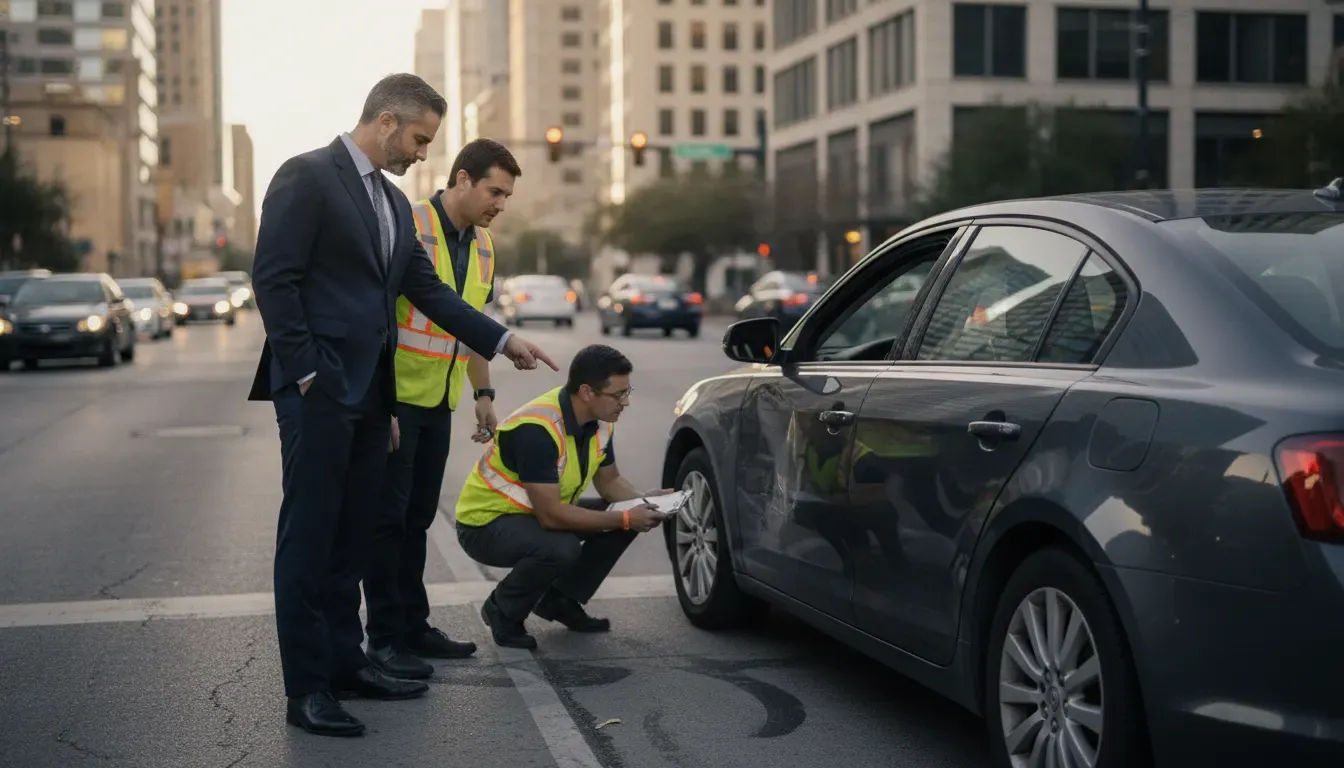
When someone searches for a distracted driving accident lawyer Austin after a crash, the useful question is how evidence can connect the driver's conduct to the collision. A lawyer can help preserve phone, video, witness, police, and vehicle data. Texas law prohibits electronic messaging while driving, but a civil claim may also rely on evidence that a driver looked away, reached for something, or otherwise failed to use reasonable care.
Request a consultation about your Austin distracted-driving crash.
What Counts as Distracted Driving Under Texas Law?
Distracted driving is any activity that takes attention away from safely operating a vehicle. It may be visual, such as looking at a screen; manual, such as reaching for a phone; cognitive, such as focusing on a conversation; or a combination of all three. Texting is a common example, but distraction can also involve eating, changing music, adjusting navigation, grooming, or interacting with passengers.
Texas Transportation Code Section 545.4251 generally prohibits reading, writing, or sending an electronic message on a portable wireless device while operating a motor vehicle unless the vehicle is stopped. The Texas Department of Transportation also explains that restrictions apply in certain settings, including school zones, and to some newer or younger drivers. A traffic violation can be important evidence, but it is not the only way to show negligence.
In a personal injury claim, the central questions are whether the driver owed a duty of reasonable care, breached that duty, caused the collision, and caused compensable harm. A driver can be distracted even when no citation was issued. The available proof may show the driver's conduct through timing, witness observations, footage, statements, or records obtained during the claim.
Read the current Texas electronic-messaging statute and the Texas Department of Transportation's cellphone-safety guidance for the statutory starting point. Those sources do not answer every civil-liability question after a crash, so the facts and evidence still matter.
How Do You Prove a Driver Was Using a Phone at the Time of the Crash?
Phone use is usually proved by combining several facts rather than relying on one piece of evidence. A witness may see a driver looking down, a camera may show the driver's hand position, and carrier records may help establish activity near the time of impact. The strongest proof connects the time, location, device activity, and driver's conduct to the collision.
Potential sources include:
- Eyewitness accounts: Passengers, other drivers, pedestrians, and nearby workers may describe what the driver was doing immediately before the crash.
- Cellphone and carrier records: Call, message, or data records may help establish device activity. These records are generally obtained through appropriate legal or investigative procedures, not by accessing another person's phone without permission.
- Admissions and statements: Statements made at the scene, to an insurer, or during testimony can be compared with other evidence. A changing account may create questions that require follow-up.
- Dashcam and traffic video: A camera may show the vehicle drifting, the driver's head position, or a phone in the driver's hand. The footage should be preserved in its original form when possible.
Phone records do not automatically prove that the phone caused a crash. A record may show activity, but the claim still needs a reliable timeline and evidence of causation. For example, an outgoing message close to the collision may support an argument about distraction. A record alone may not establish where the phone was or what the driver was doing at the exact moment.
Do not try to take another person's phone, log into an account, or pressure a witness to change a statement. Instead, save what you already have, identify potential witnesses, and tell the investigating team where relevant footage or records may exist. A timely preservation request can matter because video systems overwrite footage and phone data can become harder to obtain later.
What Evidence Strengthens a Distracted Driving Claim?
The best evidence creates a coherent timeline from the driver's conduct to the impact and then to the injury. A police report, scene photographs, video, witness testimony, medical records, and vehicle data each answer different questions. Organizing them together can make it easier to evaluate whether distraction caused the crash and to respond when an insurer disputes fault.
A practical evidence checklist includes:
- The crash report, citation information, and names or badge numbers of responding officers.
- Photographs of vehicle damage, road layout, traffic controls, lighting, debris, and visible sight lines.
- Names and contact information for witnesses, including people who saw the driver before impact.
- Dashcam, doorbell, business, traffic, or other video that may show the approach and collision.
- Medical records and bills that connect symptoms and treatment to the crash.
- Employment, school, or household records showing missed time or changes in daily activities.
- Insurance messages, estimates, recorded-statement requests, and settlement communications.
- Available vehicle data, including event data recorder information, when it can clarify speed, braking, steering, or the sequence of impact.
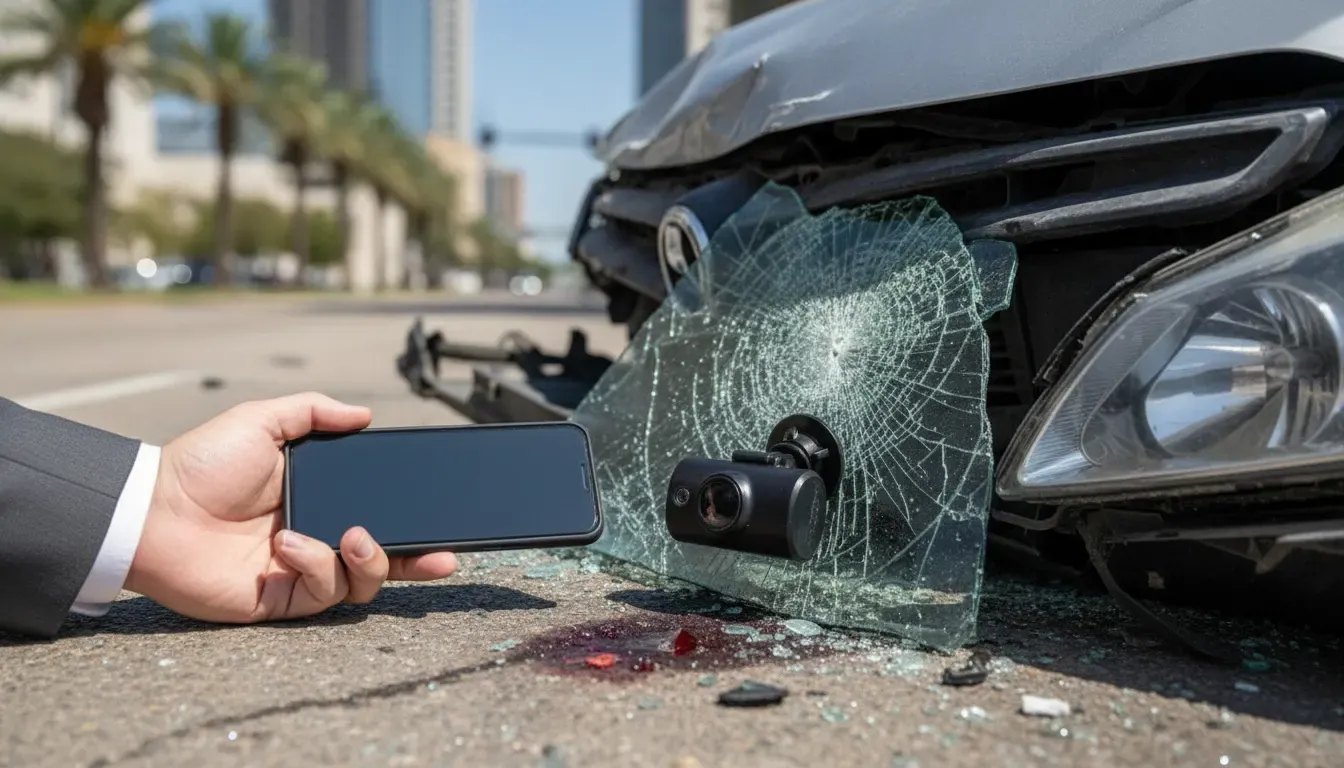
Not every crash produces every type of proof. A missing camera recording does not end a claim, and an officer's report may not contain enough detail to answer every question. Other evidence may fill the gap. For example, a witness who saw the driver looking down can be important even if no phone records are available. Vehicle damage and roadway evidence may help test whether the driver's account matches the physical scene.
Keep original files in more than one secure location. Do not crop, filter, rename in a way that removes identifying information, or post sensitive footage publicly. Write down when and how each file was obtained. These simple steps help preserve context and make it easier to explain why the evidence should be trusted.
| Evidence. | What it may show. | Important limit. |
|---|---|---|
| Witness account. | What the driver appeared to do before impact. | Memory, viewing angle, and timing should be tested. |
| Phone or carrier records. | Whether device activity occurred near the crash. | Activity alone may not prove who held the phone or causation. |
| Dashcam or traffic video. | Vehicle movement, hand position, and the collision sequence. | Footage may be overwritten or have a limited view. |
| Police report. | Statements, observations, scene conditions, and citations. | The report may not capture every fact discovered later. |
| Vehicle data. | Braking, speed, steering, or impact timing. | Data needs context and may not identify the distraction. |
What should you preserve in the first 24 hours?
- Write down the time, location, lane, weather, traffic, and what you remember before the details fade.
- Save photographs, dashcam files, messages from insurers, and the original crash documents in a secure folder.
- Record witness names and the location of nearby businesses, cameras, or vehicles that may have captured the scene.
- Request preservation of potentially temporary video without trespassing, altering equipment, or posting the footage publicly.
- Keep medical and work-loss records as they become available, and ask for advice before signing a release.
How Does Texas Comparative Responsibility Affect a Distracted Driving Claim?
Texas may assign responsibility among the people involved in a crash. If an injured person is partly responsible, the damages award may be reduced by that percentage. Under Texas Civil Practice and Remedies Code Section 33.001, a claimant whose percentage of responsibility is greater than 50 percent may not recover damages in the action. The precise result depends on the evidence and the claims presented.
Comparative responsibility makes evidence about the entire collision important. An insurer may argue that the injured driver was speeding, following too closely, failed to signal, or could have avoided the impact. Those arguments do not erase evidence of the other driver's distraction, but they can affect how fault is evaluated. A clear timeline can help separate a driver's distraction from unrelated allegations.
Useful questions include:
- What did each driver see before the impact?
- Which lane, signal, or right-of-way rule applied?
- How much time passed between the distraction and the collision?
- Could the collision have been avoided if the distracted driver had been watching the road?
- Do the physical marks, video, and witness accounts support the proposed sequence?
Review the Texas proportionate-responsibility statute for the statutory rule. It is not a substitute for evaluating a particular crash. Fault percentages, causation, and damages are fact-specific, and an online explanation cannot predict how an insurer, judge, or jury will weigh the evidence.
What Damages Can You Recover After a Distracted Driver Crash?
Recoverable damages depend on the injuries, losses, available insurance, proof of causation, and the legal theories involved. A claim may include economic losses such as medical treatment, rehabilitation, future care, lost income, and property damage. It may also include non-economic losses such as physical pain, emotional distress, and limitations on ordinary activities when supported by the facts.
Keep records that show both the amount and the reason for each loss. Examples include medical bills, explanation-of-benefits statements, prescription records, repair estimates, wage information, and a simple calendar describing symptoms and missed activities. Do not assume that a quick vehicle repair or an early settlement offer reflects the full effect of an injury. Some symptoms and treatment needs develop over time.
A distracted-driving case is not automatically worth more because the conduct was careless or because a phone was involved. The value of a claim depends on liability, the nature and duration of the injuries, medical evidence, lost income, insurance coverage, and other case-specific facts. Avoid posting private medical or crash details online while a claim is being evaluated.
What Can a Distracted Driving Accident Lawyer Austin Do to Prove Fault?
An Austin injury attorney typically starts by identifying the issues that can be proved and the evidence that may disappear. That can include requesting reports, preserving video, interviewing witnesses, reviewing photographs, analyzing the roadway, and evaluating available phone or vehicle records. The attorney can then compare the evidence with the driver's and insurer's versions of events.
The broad Austin car accident lawyer guide explains general crash-response, fault, and damages issues. This article addresses the narrower question of proving distraction. The two topics work together: the general guide provides the overall claim framework, while the distracted-driving evidence helps explain one possible cause of an Austin motor-vehicle collision.
Investigation does not mean every case requires a lawsuit. Some claims resolve through an insurance process, while others require litigation when liability or damages remain disputed. Before giving a recorded statement, signing a release, or discarding evidence, consider how that step could affect the claim. A consultation can help identify time-sensitive evidence and clarify the next practical step.
Contact Cap City Injury Attorneys to discuss the evidence in your Austin crash.
Frequently Asked Questions About Distracted Driving Accidents in Austin
Can I prove distracted driving without a police citation?
Yes. A citation is not the only possible proof. Witness statements, video, statements by the driver, phone records obtained through proper procedures, scene evidence, and the sequence of events may support a negligence claim. The evidence must still connect the driver's distraction to the collision and resulting losses.
Can I request the other driver's phone records myself?
Do not access another person's phone or account without authorization. Phone records may be obtained through the appropriate insurance, discovery, subpoena, or other legal process, depending on the stage of the claim. A lawyer can explain which evidence request fits the circumstances and applicable privacy rules.
What should I do if nearby video may show the distracted driver?
Note the exact location, camera owner, approximate time, direction of travel, and why the footage may matter. Ask the owner whether the video can be preserved, but do not trespass or alter the system. Tell the investigating team promptly because many systems automatically overwrite recordings.
Can I recover damages if I was partly at fault?
Possibly. Texas generally reduces damages according to a claimant's percentage of responsibility, but a claimant found more than 50 percent responsible may be barred from recovery under Section 33.001. The evidence in the particular collision determines how responsibility is argued and assigned.
How long do I have to bring a Texas injury claim?
Deadlines can depend on the claim, the parties, and special facts such as a government defendant or a minor claimant. Do not assume that an insurance conversation extends a legal deadline. Get case-specific advice promptly so evidence and potential filing deadlines can be evaluated together.
More on the blog
Keep reading.
12 min read
Premises Liability in Texas: What Must an Injured Person Prove?
Understand what must be proven in a Texas premises liability claim, how notice and causation work, and what evidence can help document an injury.
By Cap City Injury Attorneys
13 min read
How Does a Premises Liability Lawsuit Work in Texas?
Follow a Texas premises liability lawsuit from investigation and notice through discovery, settlement talks, and a possible trial, with practical steps to take.
By Cap City Injury Attorneys
Let's talk about your case.
Free case review, no obligation. We'll tell you straight whether we can help.