
By Cap City Injury Attorneys12 min read
Slip and Fall Lawyer in Austin: Proving Negligence
Learn how a slip and fall lawyer in Austin can prove property-owner negligence through notice, control, scene evidence, medical records, and Texas filing rules.
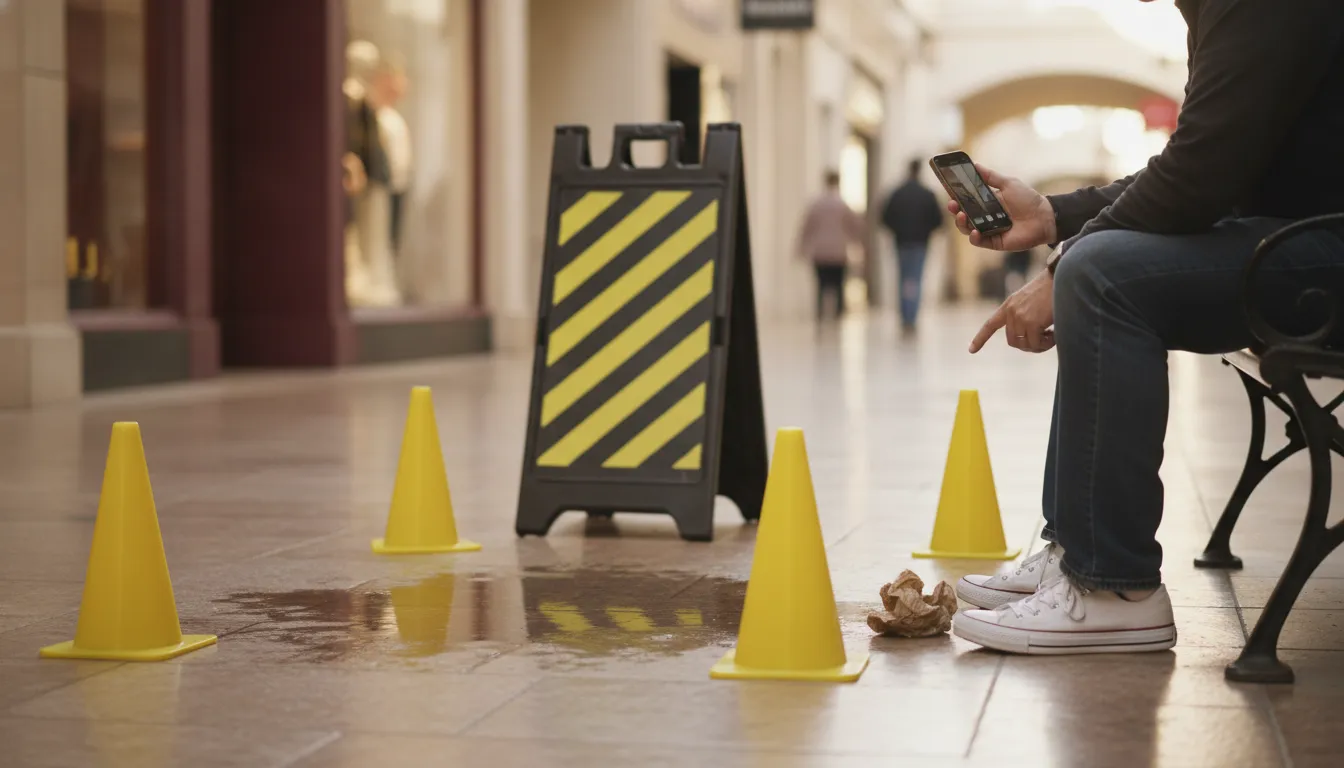
If you are searching for a slip and fall lawyer in Austin, you may be trying to answer a more specific question than whether you were hurt: can the evidence show that a property owner or occupier was negligent? Texas premises liability claims often turn on what caused the hazard, who controlled the area, how long the condition existed, and whether reasonable action could have prevented the injury.
Request a confidential consultation about your Austin slip and fall.
This guide explains the proof behind a Texas slip and fall claim in practical terms. It focuses on the property owner's duty, notice of the dangerous condition, causation, and the records that can help connect the incident to your losses. It is general information, not a case-specific legal opinion. For broader context, review Cap City Injury Attorneys' slip and fall and premises liability practice-area information.
What Is Premises Liability and Does It Cover Slip and Fall Accidents?
Premises liability is the area of Texas personal injury law that can apply when a dangerous property condition injures a visitor. A claim may involve a wet floor, uneven surface, broken step, inadequate lighting, or another hazard. The analysis usually asks who controlled the area, what duty was owed, and whether the condition caused the injury.
A slip and fall is not automatically the property owner's legal responsibility. A successful claim generally requires evidence that the defendant had a duty to the injured person, the property contained a dangerous condition, the defendant knew or should have known about it, the defendant failed to take reasonable action, and that failure caused compensable harm.
The responsible party may be a deeded owner, but ownership alone does not answer every question. A tenant, landlord, property manager, maintenance company, or business operator may have controlled the location or assumed responsibility for inspections and repairs. A Texas Real Estate Research Center guide to land occupiers' liability explains why possession and control are important parts of the analysis.
The visitor's legal status can also matter. A customer invited into a store, a tenant entering an apartment common area, and a social guest may not be evaluated under identical rules. The details of the invitation, the location, the reason for entry, and the condition itself can change the duty analysis. That is why a careful investigation should identify the specific relationship between the injured person and the property rather than rely on a broad label.
How Do You Prove a Property Owner Was Negligent After a Slip and Fall?
To prove property-owner negligence, an injured person generally needs to connect a dangerous condition to a duty, notice, breach, and injury. The evidence should show what the hazard was, who controlled the area, whether the owner knew or should have discovered it, what reasonable response was available, and how the fall caused documented losses.
1. Identify the dangerous condition
Start with a precise description of what caused the fall. It may have been liquid, food, ice, debris, a torn mat, an uneven sidewalk, a broken stair, poor lighting, a missing handrail, or another physical condition. "The floor was unsafe" is less useful than identifying the exact substance or defect, where it was located, and how it affected the walking path.
Photographs should show both the hazard and its surroundings. A close image can show the defect, while wider images can show the entrance, aisle, lighting, warning signs, slope, and route a visitor used. Do not delay emergency care or return to an unsafe location to obtain photographs.
2. Show who had control
The next question is who could reasonably inspect, repair, clean, warn about, or restrict access to the area. A store's operations manager may control a customer aisle. A property manager may control a shared apartment walkway. A maintenance contractor may have a contractual role, but the contract and actual practices must be reviewed before deciding who is responsible.
Useful evidence can include lease provisions, maintenance logs, inspection policies, work orders, employee statements, incident reports, and business records identifying the person responsible for the area. These materials can help distinguish a property owner with no operational control from an occupier or manager who was responsible for the condition.
3. Establish actual or constructive notice
Notice is often the central dispute. Actual notice means the responsible party knew about the condition before the fall. An employee may have seen a spill, a tenant may have reported a broken step, or a prior incident report may identify the same defect.
Constructive notice means the condition existed long enough, or was presented in a way, that a reasonable inspection should have discovered it. Time is not always proven by a witness who watched the hazard develop. Patterns, residue, track marks, deterioration, recurring complaints, inspection schedules, surveillance video, and employee assignments may help establish how long the condition existed or whether it should have been found earlier.
4. Connect the breach to the injury
Even when a hazardous condition existed, the claim must connect it to the fall and the fall to the claimed losses. Medical records, imaging, treatment notes, photographs of visible injuries, wage records, and a consistent symptom timeline can help document that connection. Tell healthcare providers accurately what happened and follow the treatment plan. Do not minimize symptoms, but do not speculate about a diagnosis either.
A property owner may argue that another event caused the injury, that the condition was not dangerous, or that the medical treatment is unrelated. A clear timeline helps address those arguments. It should identify the date and location of the fall, symptoms noticed immediately afterward, medical visits, changes in work or daily activities, and ongoing care.
What Evidence Should You Collect to Show Notice and Causation?
The strongest evidence often comes from several sources that tell the same story: scene photographs, witness information, incident reports, surveillance footage, inspection and maintenance records, medical documentation, and a timely account of what happened. Preserve original files and keep notes about when, where, and how each item was obtained.

Scene photographs and property records can help show what the hazard was and whether it should have been discovered.
| Evidence | What it may help establish |
|---|---|
| Wide and close scene photographs | The hazard, location, lighting, warnings, and walking path |
| Witness names and statements | What the condition looked like, prior complaints, and the fall itself |
| Incident reports and messages | When the property was notified and how it responded |
| Video or access-control records | How long the condition existed and who entered the area |
| Inspection, cleaning, and repair logs | Whether reasonable inspection or maintenance occurred |
| Medical and employment records | The injury, treatment, restrictions, lost income, and recovery course |
Ask the property owner or manager to preserve surveillance video and other electronically stored information as soon as possible. Many systems overwrite footage on a short cycle. Do not threaten employees or attempt to access restricted systems. Instead, record what you know about the cameras, the location, the approximate time, and the people who may be able to request preservation.
Keep original photographs and videos in their original format. Avoid editing, filtering, or adding captions to the only copy. Create a separate written timeline and preserve related text messages, emails, appointment records, bills, and insurance correspondence. If shoes or clothing may show how the fall occurred, store them as they were rather than washing or discarding them.
Cap City's Texas slip and fall resource provides additional background on premises liability claims. A case review can then focus on the facts that are unique to the property, the hazard, and the injury.
What Defenses Do Property Owners Use in Slip and Fall Claims?
Property owners and insurers may argue that they lacked notice, the condition was open and obvious, the visitor caused the fall, a warning was adequate, or another event caused the injury. The response depends on the facts. Evidence should address the condition, visibility, timing, warnings, conduct, and medical history without overstating what it proves.
No notice: The owner may say there was not enough time to discover or correct the hazard. Inspection logs, prior complaints, employee communications, recurring conditions, and video may help test that position. The issue is not simply whether an employee admits seeing the condition. It is whether the available evidence supports what a reasonable inspection should have found.
Open and obvious condition: An insurer may contend that a reasonable visitor should have seen and avoided the hazard. Lighting, obstructions, distractions, the angle of view, the surface color, the size of the condition, and the route available can matter. A photograph taken from the visitor's approach may show something a close-up does not.
Comparative responsibility: Texas law may reduce a recovery based on the injured person's percentage of responsibility. Under Texas Civil Practice and Remedies Code section 33.001, a claimant whose responsibility is greater than 50 percent is generally barred from recovery under the statute. This is a fact-dependent legal issue, and a person should not assume that an insurer's percentage assessment is final.
Different cause of injury: The defense may argue that a pre-existing condition, later event, or unrelated activity caused the symptoms. Consistent medical reporting and a chronological record can help healthcare professionals and legal reviewers evaluate what changed after the fall. Accuracy is more useful than exaggeration.
How Much Is a Slip and Fall Case Worth in Texas?
There is no reliable standard value for an Austin slip and fall claim. Potential damages depend on liability evidence, injury severity, medical treatment, lost income, future limitations, pain, available insurance, and comparative responsibility. A settlement amount should be evaluated from documented facts, not an online average or a promise of a result.
Depending on the facts, a claim may involve past and future medical expenses, lost wages, reduced earning capacity, physical pain, mental anguish, physical impairment, disfigurement, and other legally recognized losses. The availability and proof of each category can vary. Medical bills alone do not determine value, and a serious injury does not eliminate the need to prove responsibility.
Insurance coverage and the identity of the responsible parties also matter. A business, landlord, property manager, maintenance company, or additional insurer may be involved. Reviewers may need to examine leases, contracts, policy language, notice records, and the relationship between each party and the property.
Be cautious about giving a recorded statement, signing a broad medical authorization, or accepting a quick settlement before understanding the injury and evidence. An insurer's request does not mean that the claim is simple, and a settlement may affect future claims. Seek advice about your specific circumstances before signing documents that you do not understand.
How Long Do You Have to File a Slip and Fall Lawsuit in Texas?
Texas generally gives an injured person two years to file a personal injury lawsuit, but the correct deadline can depend on the parties, the location, the injury, and special rules. Because evidence may disappear before the filing deadline, preserve records and obtain case-specific legal guidance promptly rather than waiting until the last weeks.
Texas Civil Practice and Remedies Code section 16.003 generally addresses a two-year limitations period for personal injury claims. That general rule is not a substitute for calculating the deadline in a particular case. Claims involving a governmental unit, a minor, a death, a disability, a different legal theory, or other special circumstances may require additional analysis.
Notice rules can also create earlier practical deadlines. A city, county, school, or other governmental entity may have a shorter notice requirement than the lawsuit filing period. Even with private property, incident reports and surveillance may be difficult to obtain if a request is delayed. A prompt review can identify preservation steps, potential defendants, and deadlines before the evidence becomes harder to locate.
Talk with Cap City Injury Attorneys about the evidence in your Austin slip and fall.
Frequently Asked Questions
Do I need photographs to prove a slip and fall claim?
No. Photographs can be useful, but they are only one type of evidence. Witness information, incident reports, video, inspection logs, maintenance records, messages, medical records, and the property owner's own documentation may also help establish what happened and whether the condition should have been addressed.
Can I bring a claim if the property owner says it was my fault?
Possibly. Responsibility is evaluated from the facts, including the condition's visibility, warnings, the route available, and each party's conduct. Texas comparative responsibility rules may reduce damages or bar recovery when the claimant's responsibility exceeds the statutory threshold. An insurer's initial position is not a final legal determination.
What if the hazard was cleaned up before I took a picture?
Other evidence may still exist. Write down when and where the fall occurred, identify witnesses, request an incident report, preserve messages, and ask for relevant video or inspection records to be retained. A prompt record of what you observed can be important when the condition itself is no longer present.
Is a store, landlord, or property manager responsible for a fall?
It depends on who possessed or controlled the area and what duties that party assumed. A deeded owner may not be the only relevant party, while a tenant, property manager, or maintenance contractor may have operational responsibility. The lease, service agreement, actual practices, and incident facts can all matter.
Should I speak with the insurance company after a slip and fall?
Report the incident as required and be truthful, but avoid guessing about facts or agreeing to documents you do not understand. Insurance communications may become part of the claim record. Consider obtaining case-specific guidance before giving a recorded statement or accepting a settlement, especially when symptoms or treatment are ongoing.
This article is for general educational purposes and does not create an attorney-client relationship or provide legal advice. Every premises liability matter depends on its own facts, evidence, parties, and deadlines.
More on the blog
Keep reading.
12 min read
Premises Liability Texas Law: Property Owner Duties
Learn how premises liability texas law defines owner duties, visitor status, dangerous conditions, notice, and comparative responsibility after an injury.
By Cap City Injury Attorneys
11 min read
Underinsured Motorist Claims in Texas: Coverage Falls Short
Learn how to file an underinsured motorist claim in Texas, protect UIM coverage, document damages, and evaluate next steps after a crash. Read the guide.
By Cap City Injury Attorneys
Let's talk about your case.
Free case review, no obligation. We'll tell you straight whether we can help.