
By Cap City Injury Attorneys12 min read
Premises Liability Texas Law: Property Owner Duties
Learn how premises liability texas law defines owner duties, visitor status, dangerous conditions, notice, and comparative responsibility after an injury.
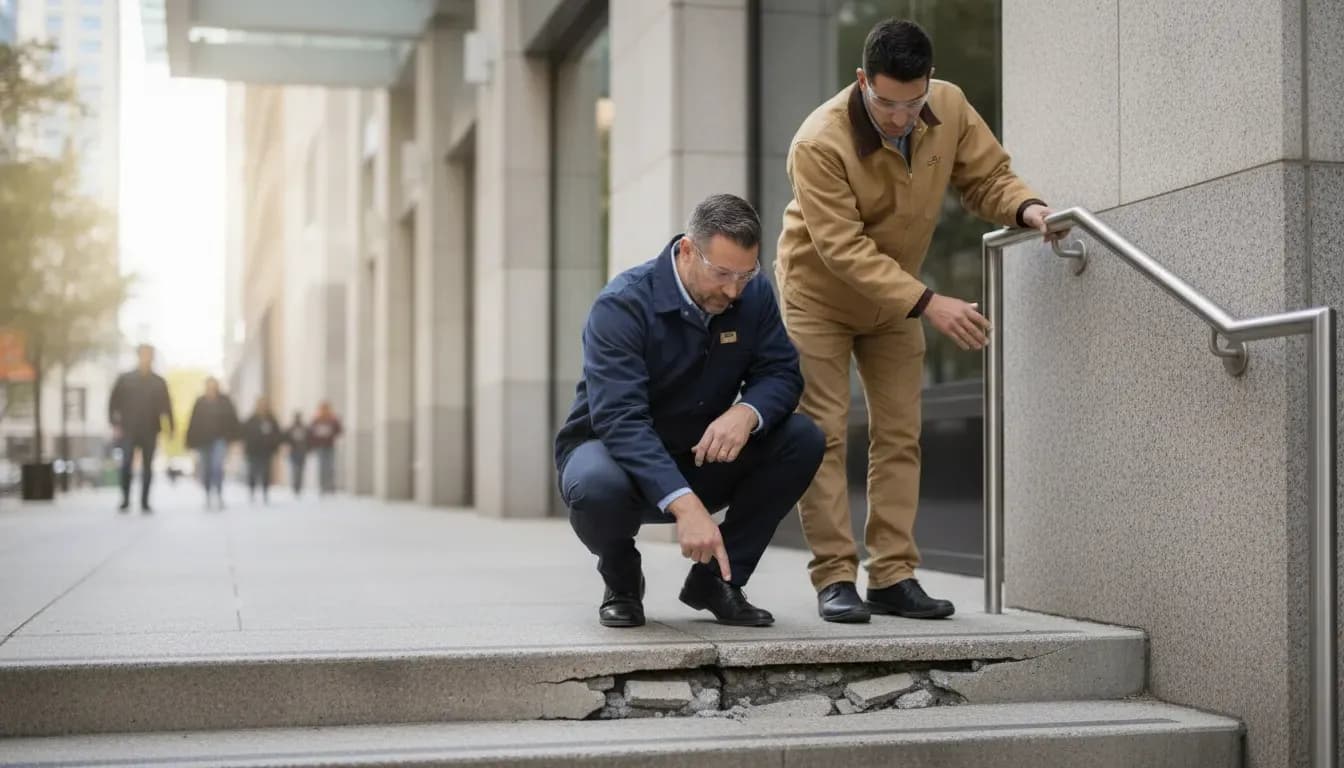
Premises liability Texas law governs when a property owner or occupier may be responsible for an injury caused by a dangerous condition on the property. The duty depends on why the injured person was there, what the owner knew or reasonably should have known. And whether a reasonable warning or repair could have prevented the harm. For Austin readers who need the broader service context, Cap City's premises liability and slip and fall guide explains how these rules may apply to an injury claim.
Contact Cap City Injury Attorneys to discuss your premises liability concerns.
What Is Premises Liability Under Texas Law?
Premises liability is a type of negligence claim involving an unsafe condition on real property. The condition might be a wet floor, broken stair, inadequate lighting, uneven pavement, unsecured mat, or another hazard that creates an unreasonable risk of harm. A claim may involve a store, apartment complex, office, restaurant, parking lot, private residence, or other property.
Texas law does not require property owners to guarantee that every visitor will avoid injury. It generally requires reasonable care under the circumstances. That can include inspecting the property, maintaining it, correcting a dangerous condition, or providing an effective warning when a risk cannot be corrected right away.
A premises liability claim usually requires evidence of four connected points:
| Issue | What the evidence must address |
|---|---|
| Duty | Why the visitor was on the property and what duty applied. |
| Dangerous condition | What condition created an unreasonable risk of harm. |
| Notice and breach | What the owner knew or should have discovered, and whether reasonable care was used. |
| Causation and damages | How the condition caused the injury and what losses followed. |
These points are related, but each still requires evidence. The exact facts, visitor status, and property owner's control can change the analysis.
The details matter. A person who falls is not automatically entitled to compensation, and a property owner is not automatically protected simply because a warning sign existed. The evidence must show what the hazard was, whether the warning addressed it, and whether the owner acted reasonably in light of the circumstances.
What Duty of Care Do Property Owners Owe Visitors in Texas?
Texas premises liability law generally asks whether the owner or occupier knew or reasonably should have known about a concealed. Unreasonably dangerous condition and whether the visitor knew about it. For an invitee, the owner may satisfy the duty by making the condition safe or by giving an adequate warning. The Texas Supreme Court's Austin v. Kroger opinion explains this general rule and the limits of a landowner's duty.
In practical terms, a property owner or manager may need to:
- Use reasonable inspection and maintenance procedures for the type of property.
- Repair a dangerous condition within a reasonable time when repair is possible.
- Keep visitors away from an area that presents an immediate risk.
- Give a clear, timely warning when the condition cannot be repaired immediately.
- Follow through on reports from employees, tenants, customers, contractors, or other visitors.
The duty is not identical in every case. A grocery store open to shoppers, an apartment landlord, a homeowner hosting a guest. And a business with a restricted work area may have different facts affecting the analysis. The property owner's control over the area and the visitor's legal status can both matter.
Contact Cap City Injury Attorneys to discuss an injury caused by a property condition.
What Does "Make Safe or Warn" Mean?
Making a property safe can involve removing a spill, replacing a broken step, repairing a handrail, improving lighting, or blocking access until a repair is completed. Warning can involve a properly placed sign, verbal notice, a barrier, or another method that reasonably alerts the particular visitor to the hazard.
A warning may be inadequate if it is hidden, too small to notice, placed after the person already encountered the hazard, or unrelated to the actual risk. A warning also may not excuse conduct that leaves a known danger unreasonably accessible. Whether a warning was sufficient is a fact-specific question, not a box that the owner can check without considering how visitors actually encounter the area.
What Is the Difference Between an Invitee, Licensee, and Trespasser?
Texas law evaluates a visitor's status because the status helps define the property owner's duty. The labels are not just technical terms. The reason for the visit, the owner's permission, and the benefit expected from the visit can affect which rule applies.
Invitees
An invitee generally enters property with the owner's knowledge and for a purpose that provides a mutual benefit. Customers in a store, diners in a restaurant, and visitors to a business open to the public are common examples. Property owners generally owe invitees a higher duty than licensees. That duty can include reasonable inspections for hazards, reasonable repairs, and warnings about concealed dangerous conditions the owner knows about or should discover.
Licensees
A licensee enters with permission but primarily for the person's own purposes rather than for a mutual business benefit. A social guest at a private home is a common example. The owner generally must warn a licensee about dangerous conditions the owner actually knows about when the licensee does not know about them. The owner is not necessarily required to inspect for unknown hazards in the same way an owner of a business open to customers must inspect for invitees.
Trespassers
A trespasser enters without permission or a legal right to be on the property. Property owners generally owe trespassers a more limited duty, but the rules can have important exceptions. Special circumstances may affect the analysis when a child is drawn to a dangerous condition. When the owner engages in intentional or reckless conduct, or when a statute creates a different rule. Do not assume that a visitor's status can be decided without looking at the facts surrounding entry and the hazard.
What Types of Property Conditions Create Liability?
A dangerous condition is a feature or state of the property that creates an unreasonable risk of harm. Common examples include:
- Liquid, ice, grease, or another slippery substance on a walking surface.
- Broken stairs, loose flooring, missing handrails, or uneven steps.
- Potholes, cracked pavement, loose rugs, or unmarked changes in elevation.
- Inadequate lighting that hides a step, obstruction, or drop-off.
- Debris, merchandise, cords, equipment, or other obstacles in a walkway.
- Unsafe elevator, escalator, gate, or parking-area conditions.
- Security conditions that may expose visitors to a foreseeable criminal risk.
The condition must be evaluated in context. A small change in a surface may not create an unreasonable risk in one setting but may do so where lighting is poor. The area is crowded, or visitors are directed to move quickly. Weather, the property's design, the time of day, the owner's inspection practices, and the availability of a safer route may all be relevant.
Premises liability also differs from a claim based on an active act of negligence. For example, an unsafe condition that remains on a floor is different from a person actively operating equipment in a careless way. The distinction can affect what evidence is needed and which legal theory fits the facts.
If your injury happened after a fall or another incident on someone else's property, Cap City's Texas slip and fall guide provides additional context about common hazards and evidence. The correct legal analysis depends on the specific condition and the circumstances of the incident.
How Do You Prove the Property Owner Knew About the Dangerous Condition?
Knowledge is often one of the most disputed parts of a premises liability claim. A property owner may have actual knowledge if an employee, manager, tenant, or owner saw the condition. Received a complaint, created the condition, or otherwise learned about it before the incident.
Constructive knowledge is different. It asks whether the condition existed long enough, or occurred often enough under the circumstances, that a reasonable inspection would have discovered it. A claimant does not always have a direct admission from the property owner. Evidence can come from the condition itself, maintenance records, surveillance video, employee testimony, prior complaints, inspection schedules, incident reports, photographs, and witness statements.
Useful evidence may include:
- Photographs or video showing the condition and the surrounding area.
- The exact location, time, and route taken before the incident.
- Names and contact information for witnesses or employees who responded.
- Records of prior complaints, repairs, inspections, or similar incidents.
- Clothing, footwear, or other physical evidence when it helps explain the event.
- Medical records connecting the incident to the claimed injuries.
After an injury, take reasonable steps to preserve evidence without placing yourself at further risk. Report the incident, request that the property preserve relevant video and records, and obtain medical care. Avoid guessing about facts you did not observe. A clear timeline is more useful than a confident but unsupported conclusion about how long a hazard existed.
If you are unsure what evidence may matter, contact Cap City Injury Attorneys for a consultation before important records or video become harder to locate.
What Is Modified Comparative Negligence and How Does It Apply?
Texas uses proportionate responsibility rules in many negligence cases. Under Chapter 33 of the Texas Civil Practice and Remedies Code, a fact finder may assign percentages of responsibility to the claimant, property owner, and other responsible parties when the evidence supports it.
If the claimant is found partly responsible, the award may be reduced by that percentage. Texas also generally bars recovery when the claimant's percentage of responsibility is greater than 50 percent. The rule is often called modified comparative negligence, although the statute uses proportionate responsibility language.
In a premises case, an insurer or property owner may argue that the visitor failed to watch where they were walking. Ignored a warning, used an unsafe route, or knew about the condition. Those arguments do not automatically decide the case. The evidence should be evaluated alongside the property's lighting, the visibility of the hazard. The adequacy of any warning, the reason the visitor was in the area, and the conduct of everyone involved.
Because responsibility can be divided, preserve facts that show the full setting rather than only the moment of the fall. A wide photograph, a diagram of the route, witness accounts, and video may help explain what a person could reasonably see and avoid.
What Should You Do After an Injury on Someone Else's Property?
Prompt, practical steps can protect both your health and the evidence related to a claim:
- Move to a safe location if you can do so without worsening the injury.
- Seek medical attention and follow the treatment instructions you receive.
- Report the incident to the property owner, manager, or responsible employee.
- Take photographs of the condition, nearby warnings, lighting, and the route.
- Collect witness information and keep copies of incident-report details.
- Keep medical bills, work records, correspondence, and notes about symptoms.
- Be careful when giving recorded statements or signing releases before you understand what they cover.
A property owner's insurer may contact you quickly. You can provide basic information, but avoid speculating about fault, minimizing symptoms, or agreeing to a release before reviewing it carefully. A consultation can help you understand which facts and deadlines may apply to your situation.
Contact Cap City Injury Attorneys to review what happened and discuss possible next steps.
Frequently Asked Questions About Premises Liability Texas Law
Does a property owner have to know about a hazard before being responsible?
Usually, the claim must show actual or constructive knowledge of the dangerous condition. Constructive knowledge means the condition may have existed long enough, or occurred under circumstances, that a reasonable inspection should have discovered it. The evidence and visitor status determine how that rule applies.
Can I have a claim if there was a warning sign?
Possibly. A warning is considered in light of its location, timing, wording, visibility, and relationship to the actual hazard. A sign that a visitor could not reasonably see or understand may not be adequate. Other facts, including the property's condition and the visitor's conduct, also matter.
Are landlords responsible for injuries in an apartment?
A landlord, property manager, maintenance company, or another party may be responsible depending on who controlled the area. Who knew about the condition, what the lease required, and whether the party had a reasonable opportunity to repair or warn. Apartment injury claims require a close review of the condition and the parties' roles.
Is every injury on private property a premises liability case?
No. The legal theory depends on whether a dangerous property condition caused the injury. Whether someone actively caused the harm, the visitor's status, and the evidence of duty, breach, causation, and damages. A legal professional can help identify the claim that best fits the facts.
This article provides general information about Texas premises liability law and is not legal advice for a specific situation. The outcome of any claim depends on its facts, evidence, deadlines, and applicable law.
More on the blog
Keep reading.
12 min read
Slip and Fall Lawyer in Austin: Proving Negligence
Learn how a slip and fall lawyer in Austin can prove property-owner negligence through notice, control, scene evidence, medical records, and Texas filing rules.
By Cap City Injury Attorneys
11 min read
Underinsured Motorist Claims in Texas: Coverage Falls Short
Learn how to file an underinsured motorist claim in Texas, protect UIM coverage, document damages, and evaluate next steps after a crash. Read the guide.
By Cap City Injury Attorneys
Let's talk about your case.
Free case review, no obligation. We'll tell you straight whether we can help.