
By Cap City Injury Attorneys15 min read
Semi Truck Accident Lawyer: What to Do After a Commercial Truck Crash
Learn how fault, federal safety rules, evidence, and damages shape a Texas semi truck crash claim—and what steps can help protect important evidence.
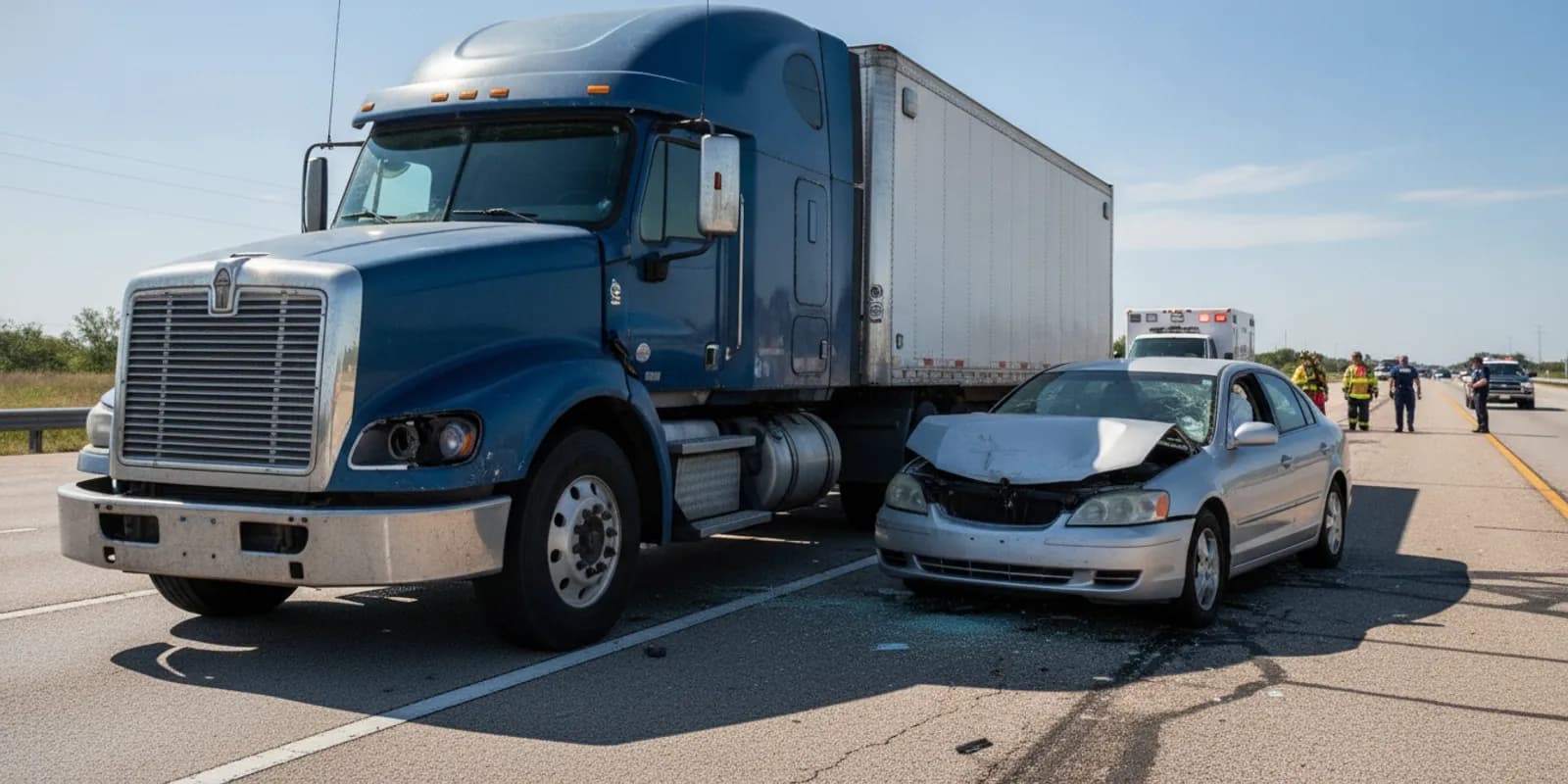
A collision involving a semi truck can leave you facing serious injuries, vehicle damage, and questions about who is responsible. A semi truck accident lawyer evaluates more than the actions of the truck driver: the carrier, maintenance providers, cargo handlers, or other companies may also have played a role. If you are dealing with a crash in Austin or elsewhere in Texas, understanding how these claims work can help you protect evidence and make informed decisions.
Contact the firm to discuss your situation
What Makes a Semi Truck Accident Claim Different?
A commercial truck crash may involve more people, records, and safety rules than a typical two-car collision. A driver may be working for a motor carrier, using a truck owned or leased by another company, and hauling goods arranged or loaded by a separate business. Each relationship can raise questions about who controlled the work, equipment, or cargo and whether that party contributed to the collision.
Truck cases can also involve evidence that is not part of an ordinary passenger-car claim. Examples include driver qualification and duty records, dispatch communications, inspection and maintenance documents, cargo paperwork, and data recorded by a truck or its components. Some evidence may be kept by a company rather than an individual driver. It can be important to identify what exists and ask that it be preserved before routine retention practices or repairs make it harder to obtain.
The crash itself may be complex, too. A fully loaded tractor-trailer takes more distance to stop than a passenger vehicle, and a collision can involve a trailer swing, underride, rollover, or multiple impacts. These possibilities are not proof of fault by themselves. Investigators must connect the physical evidence and records to the sequence of events.
For a broader overview of the firm’s Texas truck accident representation, see the related information. The questions below explain what may need to be examined in a specific claim.
Who May Be Liable After a Commercial Truck Crash?
Responsibility depends on the facts, the applicable law, and evidence showing what caused the wreck. The truck driver may be liable if careless driving—such as speeding, following too closely, or failing to respond to traffic—contributed to the collision. But a driver is not automatically the only potentially responsible party.
- The motor carrier: A carrier may face questions about hiring, training, supervision, scheduling, vehicle maintenance, or its own safety practices. Whether it is legally responsible for a driver’s conduct can depend on the employment or agency relationship and the circumstances.
- The truck or trailer owner: An owner or leasing company may be relevant if a defective condition, inspection issue, or maintenance failure contributed to the crash.
- A maintenance or repair provider: A shop may be examined if faulty work or an overlooked safety problem played a role.
- A cargo loader or shipper: Improperly secured or unbalanced cargo can affect vehicle handling. Records and inspections may help show whether loading contributed to a loss of control or other event.
- A parts or vehicle manufacturer: If a defective component is suspected, the investigation may need to consider product-related claims as well as driver or carrier conduct.
- Another road user or entity: A passenger vehicle driver, contractor, or a party responsible for a dangerous roadway condition may have contributed to the collision.
These are possibilities to investigate, not a checklist that applies to every case. More than one party can share responsibility, and a company’s connection to a truck does not alone establish fault. The evidence must show a legally recognized basis for liability and a link between the conduct or condition and the injuries.
For example, a driver’s employer or the company named on a truck may not be the only business involved in the trip. Contracts, dispatch instructions, insurance documents, and the way the work was actually performed may help clarify each party’s role. A company may describe a driver as an independent contractor, but that label alone may not answer every legal question. The relationship and applicable law need to be examined in context. Do not assume that a logo on the truck identifies every potentially responsible company, or that every company connected to a shipment is liable.
Texas uses a proportionate-responsibility framework in many injury claims. If the evidence suggests that more than one person contributed, responsibility may be allocated among them under the law. The facts can be disputed, so it helps to keep your account accurate and avoid guessing about fault in statements to insurers. Cap City’s overview of Texas car accident laws and injury claims offers related context for roadway collisions.
How Can Federal Trucking Rules Affect a Claim?
Commercial motor carriers and drivers may be subject to federal safety requirements, along with Texas laws and other rules that apply to the specific operation. Which requirements apply can depend on the vehicle, cargo, route, and type of operation. The Federal Motor Carrier Safety Administration (FMCSA) oversees federal motor-carrier safety matters. Its official website provides information about the agency and its safety programs.
Depending on the circumstances, an investigation may examine whether the driver and carrier complied with rules concerning hours of service, driver qualifications, vehicle inspection and maintenance, or cargo securement. A violation may be relevant evidence, but it does not automatically establish that a particular violation caused the crash or that a claimant is entitled to a particular amount. The details and applicable legal standards matter.
Hours-of-service records, for example, may help clarify when a driver was working, driving, or off duty. Those records should be considered with other material, such as dispatch messages, fuel or toll records, electronic logs, and witness accounts. A discrepancy warrants careful investigation; it should not be treated as proof of fatigue without supporting evidence.
Maintenance documents can help show what inspections or repairs were recorded and when. A tire, brake, lighting, or steering issue may be significant if it is connected to the crash. Similarly, cargo documentation and loading evidence may help explain whether the load shifted or affected the vehicle’s stability. A legal review should determine which regulations govern the specific truck and trip, rather than assume every federal requirement applies in every case.
For general background about the kinds of issues that can arise in these cases, the firm’s guide to truck crash claims and truck accident case overview may also be useful.
What Evidence Should Be Preserved?
Evidence can clarify how the collision happened, who may be responsible, and how the injuries affected you. If you are physically able and it is safe to do so, begin with basic documentation. Do not enter a roadway or approach damaged equipment to collect evidence.
- Get medical care and follow instructions. Your health comes first. Tell your treating providers about your symptoms and how they began. Keep discharge papers, referrals, test results, and bills.
- Record the scene safely. If conditions allow, photograph vehicle positions, visible damage, skid marks, debris, road signs, traffic controls, and weather or lighting conditions. Do not delay emergency care to take pictures.
- Collect contact details. Save the names and contact information of drivers and witnesses, and note the carrier name, truck and trailer identifiers, and any visible company information. Avoid confrontation or speculation.
- Keep personal records. Save repair estimates, towing and rental documents, missed-work information, receipts, and messages from insurers or companies. Make a dated note of symptoms and daily limitations while details are fresh.
- Preserve original digital material. Keep the original photographs, videos, dash-camera footage, and relevant messages. Back them up without editing or adding marks to the originals.
- Ask about company-held records promptly. Relevant material may include electronic vehicle data, driver logs, inspection and repair history, dispatch records, and cargo documents. An attorney can assess what should be requested and how to make a preservation request.
A preservation letter can notify a company that certain evidence may matter and ask it not to destroy or alter that material. Sending a letter does not guarantee that every record will be retained or establish what the evidence will show. It is one step in a broader process that may include formal information requests, inspections, and expert review. Do not try to access a company’s systems or records yourself.
Witness details can be easy to lose in the first days after a crash. Write down what each person saw in their own words, along with when and where they were positioned, but do not coach anyone or ask them to adopt your account. Save the incident number and any information about the responding agency so the report can be located later. A crash report can be useful, but it may not contain every witness statement, establish civil liability, or capture all the facts that a later investigation uncovers.
Keep a simple, dated record of contacts with insurers and other companies. Note who called, the subject of the conversation, what documents were requested, and any deadlines stated. Keep copies of what you send. This can make it easier to spot unanswered questions and avoid relying on memory when the claim has been active for weeks or months.
Truck data can be overwritten, vehicles can be repaired, and physical evidence can change. That does not mean every claim is lost if time has passed. It does mean that documenting what you know and getting advice about relevant evidence sooner can help avoid unnecessary gaps. The firm’s practice-area information explains the types of injury matters it handles.
What Should You Do After a Semi Truck Collision?
Once immediate safety needs are addressed, take practical steps that protect your health and help keep an accurate record. You do not need to solve questions of liability at the scene.
- Call emergency services when needed and follow directions from first responders. Request a crash report process or incident number if one is provided.
- Get evaluated by a medical professional. Some symptoms are not obvious right away. Describe all symptoms honestly and seek follow-up care if they change or persist.
- Report the crash to your insurer as required by your policy, but keep your description factual. You can say you do not know an answer rather than speculate.
- Be cautious with recorded statements and documents. Before giving a recorded statement to another party’s insurer or signing a broad medical authorization, understand what is being requested and consider getting legal advice.
- Do not post case details publicly. Statements, photos, or updates may be taken out of context. Preserve relevant material, but avoid debating fault on social media.
- Keep track of deadlines. Time limits and notice rules can depend on the claim and parties involved. Do not assume that an insurance discussion pauses a legal deadline.
If you want to compare what a personal injury claim may involve, the firm also describes its Austin personal injury services and its contingency-fee arrangement. Review any representation agreement carefully and ask questions about how fees and case expenses are handled before signing.
What Damages May Be Part of a Truck Accident Claim?
Damages are the losses a claimant seeks to recover when another party is legally responsible. The types and amount depend on the evidence, the law, and the effect of the collision. There is no standard payment that applies to every semi truck case.
| Category | Examples of supporting information | What to keep in mind |
|---|---|---|
| Medical expenses | Invoices, treatment records, prescriptions, and rehabilitation documents | Records should connect the care to the injuries at issue. Future care may require additional evidence. |
| Lost income or earning capacity | Pay records, employer statements, work schedules, and vocational information | Time missed and any longer-term work effects need documentation and support. |
| Physical pain and limitations | Medical notes and a consistent record of symptoms and daily effects | Describe the real impact; do not exaggerate or minimize it. |
| Property loss | Photos, repair estimates, valuation records, and towing or rental receipts | Keep records of damage and related out-of-pocket costs. |
In Texas injury cases, potentially recoverable losses can include medical expenses, lost income, and physical pain, among other legally recognized damages. The proof required varies by category. For example, billing records alone may not answer every question about the nature of an injury or future needs. Records from treating professionals and other qualified evidence may be needed to support those issues.
Property damage is often handled separately from bodily injury, even though both arise from the same crash. Keep photographs and repair or total-loss documents, and track reasonable costs associated with the damaged vehicle. Avoid assuming that accepting payment for one part of a claim resolves every other part; read any release before signing it.
In cases involving a fatal collision, eligible family members may have separate legal claims under Texas law. Those claims have specific requirements and are different from a personal injury claim brought by someone who survived. A lawyer can explain whether the facts and relationships meet those requirements.
How Do You Evaluate a Settlement Offer?
An insurer may ask for information or make an offer before the full impact of an injury is clear. A quick offer is not necessarily fair or unfair on its face. Consider whether the available records explain the diagnosis, treatment, missed work, continuing symptoms, and expected care. Also consider whether the offer requires you to release claims that you have not yet evaluated.
Before making a decision, identify what is known and what remains uncertain. Has the vehicle damage been documented? Are there outstanding medical evaluations? Have the relevant records from the carrier or other parties been requested? Is there a dispute over how the crash happened or who bears responsibility? A complete evaluation accounts for both the supporting evidence and the weaknesses or gaps.
Settlement discussions can involve tradeoffs. Resolving a claim can provide certainty, while continuing a dispute can take time and carries risk. No lawyer can guarantee a particular result. If you are considering representation, ask who will handle communications, what evidence may need to be gathered, how costs are treated, and what decisions remain yours. You can review steps to consider when you need an accident lawyer before deciding what questions to ask.
How Do Truck Claims Differ from Car Accident Claims?
Both types of claims require evidence of responsibility, injury, and loss. A truck case may add layers because multiple businesses may have relevant roles, federal motor-carrier rules may apply, and evidence can be held by the carrier or other companies. A car case may more often focus on the drivers and their insurers, though it can also involve complex questions.
The comparison below is general. A smaller commercial vehicle or a particular delivery may be governed by different requirements than a large tractor-trailer engaged in interstate commerce. The facts matter more than the label used for the vehicle.
| Issue | Passenger-car collision | Semi truck collision |
|---|---|---|
| Potentially involved parties | Often the drivers and their insurers; other parties may still be involved | May include a driver, motor carrier, owner, maintenance provider, loader, or manufacturer |
| Records to investigate | Photos, witness accounts, crash report, medical and insurance records | Those same records plus possible driver, dispatch, inspection, maintenance, cargo, and vehicle data |
| Safety rules | Traffic laws and any rules applying to the drivers or vehicles | Traffic laws and potentially applicable commercial motor-carrier safety requirements |
| Evidence preservation | Vehicle photographs, repair records, and statements can be important | Company-held records and truck data may add time-sensitive preservation concerns |
These differences do not make a truck claim automatically stronger or more valuable. They show why identifying the right records and parties can be important. A case may be relatively straightforward, or it may require a deeper investigation into several companies and technical evidence.
Contact the firm to talk through your next steps
Frequently Asked Questions
Should I hire a semi truck accident lawyer after every crash?
Not necessarily. The right choice depends on the injuries, disputed facts, evidence, and potential parties. A consultation can help you understand what questions to investigate and what deadlines may apply. You can decide whether representation makes sense for your circumstances.
Does a trucking regulation violation prove the carrier caused the crash?
No. A possible violation may be relevant, but it must be evaluated in context, including whether the rule applied and whether the conduct contributed to the collision. Liability and causation are determined from the evidence and applicable law.
What if I may have contributed to the collision?
Do not assume that a possible share of fault ends your claim. In Texas, responsibility may be apportioned under applicable law, and the effect depends on the facts and assigned percentages. Preserve evidence and get advice about how the rules apply rather than relying on an insurer’s early conclusion.
How long do I have to bring a Texas truck accident claim?
Deadlines depend on the claims and parties involved, and special notice requirements may apply in some situations. Because missing a deadline can affect your rights, get case-specific legal guidance promptly instead of waiting until a deadline seems close.
This article provides general information, not legal advice for a specific claim; the facts of your situation determine what rules and options may apply.
More on the blog
Keep reading.
14 min read
Respondeat Superior in Texas: When Is an Employer Liable for an Employee's Accident?
Learn when Texas employers may be responsible for employee-caused injuries, what scope of employment means, and what evidence can help establish a claim.
By Cap City Injury Attorneys
15 min read
Punitive and Exemplary Damages in Texas: When Can You Recover More Than Actual Losses?
Learn when Texas law allows exemplary damages, what proof is required, how statutory caps work, and how these damages differ from compensation for losses.
By Cap City Injury Attorneys
Let's talk about your case.
Free case review, no obligation. We'll tell you straight whether we can help.