
By Cap City Injury Attorneys13 min read
Can a Motorcyclist Recover if There Was No Helmet in Texas?
Can a motorcyclist recover if there was no helmet in Texas? Learn how helmet rules and fault can affect a claim, without a case verdict.
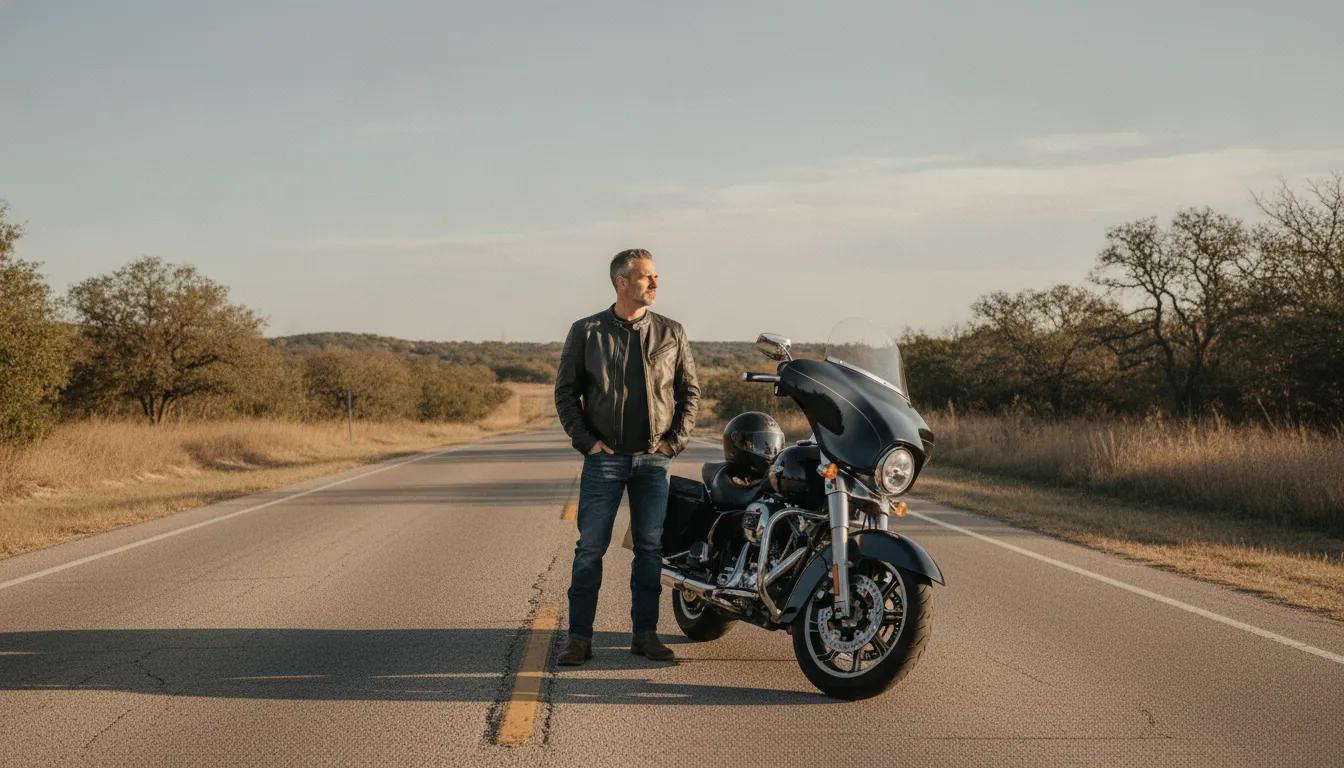
Can a motorcyclist recover if there was no helmet in Texas? Yes. A motorcyclist may still have an injury claim after a Texas crash even if the rider was not wearing a helmet. The absence of a helmet does not automatically erase another driver’s responsibility for causing a collision or make every injury unrecoverable. It can, however, create separate questions about Texas’s helmet law, the rider’s age and qualifications, and whether the missing helmet contributed to a particular injury. Those questions should be evaluated with the crash evidence and medical records rather than a single assumption.
Call (512) 612-3110 about a Texas motorcycle injury or request a case review.
Can a Motorcyclist Recover if There Was No Helmet in Texas?
A no-helmet allegation is not the same as a finding that the rider caused the crash. A driver who turns left across a motorcycle’s path, changes lanes without checking, follows too closely, or otherwise acts negligently may still be responsible for the collision. The rider’s helmet status is one fact among many, and its significance may depend on what happened, what injuries occurred, and what the evidence can prove.
The answer can differ between the collision itself and the injuries that followed. Not wearing a helmet generally does not explain why another driver failed to yield. It may become more relevant if an insurer argues that the absence of head protection contributed to the severity of a head or facial injury. That argument still requires a fact-specific evaluation of causation, medical evidence, and Texas proportionate-responsibility rules. Cap City’s Texas motorcycle injury lawyers page provides an overview of the firm’s motorcycle-claim focus.
What does Texas law require about motorcycle helmets?
Texas Transportation Code Section 661.003 generally makes it an offense to operate or ride as a passenger on a motorcycle on a public street or highway without protective headgear meeting the state’s safety standards. The law provides an exception for a person who is at least 21. That person must have completed a motorcycle operator training and safety course under Chapter 662. Or the person must be covered by a qualifying health insurance plan. The statute defines that health insurance plan broadly as coverage providing health care or medical or surgical benefits for collision-related expenses.
That means age and documentation can matter. A rider younger than 21 generally cannot rely on the adult exception. A rider who is 21 or older may need records showing the approved training course or qualifying health coverage. Keep copies of any course completion record, insurance card, policy information, or other proof that existed at the time of the crash. The statute and its current text are available through the Texas Transportation Code, Section 661.003.
A ticket or allegation involving the helmet statute does not by itself decide a civil injury claim. Traffic-law compliance and civil causation overlap in some cases, but they are not identical questions. The important issue is how the available evidence connects each person’s conduct to the collision and the claimed harm.
How can the lack of a helmet affect an injury claim?
An insurance company may use the no-helmet fact in several ways. It may suggest that the rider violated a safety rule, argue that the rider was partly responsible, or contend that some portion of the claimed harm would have been less severe with a helmet. Those are arguments, not automatic outcomes. The carrier still has to evaluate the evidence and explain the connection it claims.
The practical effect may depend on the injury. A helmet argument may receive more attention when the claim involves a traumatic brain injury, skull fracture, facial injury, or other head-related condition. It may have less obvious relevance to a broken leg caused by the motorcycle landing on the rider, road rash, a shoulder injury, or damage caused by the initial impact. Even then, medical causation is not something a general rule can decide. Doctors, photographs, imaging, accident reconstruction, and other evidence may be needed.
Do not assume that an insurer’s first position is the final value of a claim. Ask what evidence supports the proposed reduction, what injury it supposedly addresses, and whether the reduction is tied to the crash, the medical condition, or both. A careful claim review should separate the driver’s conduct from the rider’s medical outcome instead of treating every injury as one undifferentiated loss.
How does proportionate responsibility work in Texas?
Texas uses a proportionate-responsibility system in many personal-injury cases. Under Civil Practice and Remedies Code Section 33.001, a claimant generally may not recover damages if the claimant’s percentage of responsibility is greater than 50 percent. If the claimant’s percentage is 50 percent or less, the award may be reduced by the percentage assigned to the claimant under the applicable rules.
Section 33.003 directs the fact finder to determine percentages of responsibility for each claimant, defendant, settling person, and properly designated responsible third party, based on conduct that caused or contributed to cause the harm. In a helmet dispute, the question is therefore not simply whether a rider wore a helmet. The questions may include whether the rider violated an applicable rule, whether that conduct contributed to the harm being claimed, and what percentage of responsibility the evidence supports.
Those rules do not mean an insurer can simply assign a percentage in a letter and make it binding. A negotiated claim, lawsuit, and trial have different procedures and proof requirements. The parties may disagree about fault, injury mechanics, the reliability of witnesses, or the proper medical interpretation. The value of a claim should not be calculated from the helmet fact alone.
What evidence can help explain a no-helmet motorcycle crash?
Preserve evidence that answers both parts of the case: who caused the collision and what caused each injury. Useful records may include:
| Evidence | What it may help show |
|---|---|
| Crash-scene photographs and video | Vehicle positions, road design, visibility, traffic controls, debris, damage, and the direction of impact. |
| Police report and witness information | Initial accounts, citations, statements about right of way, and people who saw the driver’s maneuver. |
| Medical records and imaging | The timing, diagnosis, treatment, and medical opinions about how the injuries occurred or progressed. |
| Helmet and protective-gear photographs | What equipment was present, its condition, and whether the insurer’s description matches the physical evidence. |
| Training and insurance records | Whether an adult rider may have met an exception under Section 661.003 at the time of the crash. |
| Vehicle damage and reconstruction evidence | Impact location, speed or movement disputes, and whether the rider had an opportunity to avoid the collision. |
Do not repair, discard, or alter a damaged helmet or other equipment before it has been documented. Save photographs in their original form when possible, keep copies of medical bills and explanations of benefits, and write down what you remember while the details are fresh. If a video may exist from a business, traffic camera, vehicle, or nearby residence, note where it may be located and how long it may be retained.
What should a rider do after a Texas motorcycle crash?
Seek emergency care when needed and follow the treating provider’s instructions. Call 911 when the scene requires emergency assistance, and exchange information only when it is safe to do so. Avoid guessing about fault at the scene or giving an insurer a recorded statement before you understand what information is being requested and how it may be used.
After immediate care, preserve the crash report, photographs, witness contacts, insurance correspondence, repair records, and a timeline of symptoms and treatment. Tell medical providers about the crash and all areas that hurt, even if a symptom seems minor at first. Some injuries become clearer over time, and an incomplete early record can make later questions harder to answer.
A rider may also want to identify possible coverage sources, including the at-fault driver’s liability policy, the rider’s uninsured or underinsured motorist coverage, and any applicable medical-payments or health coverage. Policy language and notice requirements vary. Do not assume that a carrier’s initial denial or request for a recorded statement resolves those issues.
When should you discuss the claim with Texas motorcycle injury lawyers?
Consider getting case-specific guidance in a few situations. The insurer may blame the rider for the crash or focus on the missing helmet. It may dispute the injury, delay medical bills, or offer a settlement before the medical picture is clear. These concerns can also arise when the other driver left the scene, had limited insurance, or when a commercial vehicle or roadway condition may have played a role.
Riders can also review information about left-turn motorcycle crashes and lane-change motorcycle crashes, two fact patterns in which visibility and right of way may need close review.
Texas personal-injury deadlines can also matter. Section 16.003 of the Civil Practice and Remedies Code generally provides a two-year limitations period for a personal-injury lawsuit, subject to exceptions and details that can change the analysis. A deadline should not be assumed from a general article, especially when the injured person is a minor, the claim involves a governmental entity, or another special rule may apply. Early legal review can help identify the correct deadline and preserve evidence.
Call (512) 612-3110 to discuss a Texas motorcycle injury or contact Cap City for a case review.
Where the Helmet Argument Shows Up Around Austin
The same legal questions come up on very different roads. A left turn across a rider on Lamar is not the same scene as a blind-spot sideswipe on MoPac, US-183, or an I-35 frontage road. Rural FM roads add gravel and debris. Downtown streets add parked-car dooring. In each pattern, the first job is still to show how the other driver moved. A missing helmet does not explain a failure to yield.
Cap City Injury Attorneys handles these files from Austin and is licensed across Texas. The office is at 1005 Congress Avenue, Suite 925-E26, Austin, Texas 78701. Matthew Mandelker founded the firm after more than 15 years in Texas personal injury practice so clients would work directly with the attorney on the file, not a case manager at a high-volume mill. The firm serves the Austin metro, including Round Rock, Cedar Park, Pflugerville, Georgetown, Kyle, and Buda, and it takes motorcycle cases statewide. You can reach the office at (512) 612-3110.
That setup matters on a helmet dispute because the medical story often takes months. Road rash, fractures, and head injuries may need staged care before anyone can describe future treatment. A fast, thin settlement can leave that care out. Cap City keeps the file open until the treating physicians have a credible picture of the recovery. That is a way of working, not a promise about any result.
Jury attitudes are part of the practical problem. Texas juries pulled from urban and suburban counties sometimes view riders as risk-takers. Insurers know that and price offers around it. The response is preparation. Scene photos that show the rider had the right of way, witness names taken early, and an honest medical chronology all test the stereotype. When speed or lane position is disputed, a reconstruction may be needed. Headgear is answered inside that record. It is not a substitute for it.
How a Percentage Example Works, Without Predicting a Case
Section 33.001 is easier to see with a plain illustration. These numbers are not a valuation. Say proven damages are $100,000 and a fact finder assigns the rider 20 percent of the responsibility. Recovery on those damages would be reduced to $80,000. If the rider is assigned 51 percent or more, the statute bars recovery of those damages. The percentage has to come from evidence about who caused the harm. It does not come from the bare fact that a helmet was off.
Head injuries and other injuries should be separated in that math. A helmet is built to reduce head trauma. It is not a shield for a broken leg, a crushed wrist, or internal bleeding from the impact. If the adjuster applies one discount to every bill, ask which injury they claim the helmet would have changed. Put the imaging next to that letter. A tibia fracture from a bumper strike is a different medical question from a brain injury.
Coverage can move on a separate track while fault is argued. The at-fault driver's liability policy is the usual starting point. If those limits are too low or the driver is uninsured, the rider's own uninsured or underinsured motorist coverage may matter. Policy language and notice rules vary, so a denial letter is not the last word. Riders can read Cap City's uninsured motorist claims page and its underinsured motorist claim guide for that coverage question. How to organize reports, photos, and medical files is covered in the motorcycle accident evidence guide.
A broader look at rider bias, injuries, and comparative negligence is in the Austin motorcycle claims guide. None of those pages decides a helmet dispute. They give the surrounding facts a place to live so the no-helmet point is not the only sentence in the file.
Frequently Asked Questions
Can I recover if I was not wearing a helmet in Texas?
Possibly. Not wearing a helmet does not automatically prevent recovery. The claim may turn on the other driver’s fault, the rider’s age and statutory status, the injuries involved, and evidence about whether the absence of a helmet contributed to the claimed harm.
Can a rider under 21 legally ride without a helmet in Texas?
Texas Transportation Code Section 661.003 generally requires protective headgear and states an exception for a person at least 21 who completed an approved course or has qualifying health coverage. A rider under 21 should not assume that exception applies.
Will a no-helmet violation make me more than 50 percent at fault?
Not automatically. A percentage of responsibility must be supported by the facts and the applicable legal rules. The relevance of helmet evidence may depend on whether it relates to causing the crash, causing a specific injury, or both.
Does a helmet issue affect every type of motorcycle injury?
No single answer applies to every injury. The issue may be more contested in a claim involving head or facial trauma than in a claim involving a leg, arm, or other injury caused by a different part of the impact. Medical evidence is important.
What should I do if the insurance company asks whether I wore a helmet?
Answer truthfully, but do not guess or minimize your injuries. Keep the request and your response, ask what evidence the carrier is relying on, and consider obtaining case-specific advice before giving a recorded statement or signing a release.
This article provides general educational information, not legal advice. The facts, available insurance, medical evidence, and deadlines can change the analysis of an individual Texas motorcycle injury claim.
More on the blog
Keep reading.
12 min read
How Should I Prepare for an Austin Injury Consultation?
How should I prepare for an Austin injury consultation? Bring a timeline, records, and photos. Leave the dollar figure for the meeting.
By Cap City Injury Attorneys
12 min read
How to Report a Car Accident and Preserve Key Details
Learn how to report a car accident in Texas, what details to collect, and how to preserve records that may help explain what happened.
By Cap City Injury Attorneys
Let's talk about your case.
Free case review, no obligation. We'll tell you straight whether we can help.