
By Cap City Injury Attorneys12 min read
How to Report a Car Accident and Preserve Key Details
Learn how to report a car accident in Texas, what details to collect, and how to preserve records that may help explain what happened.
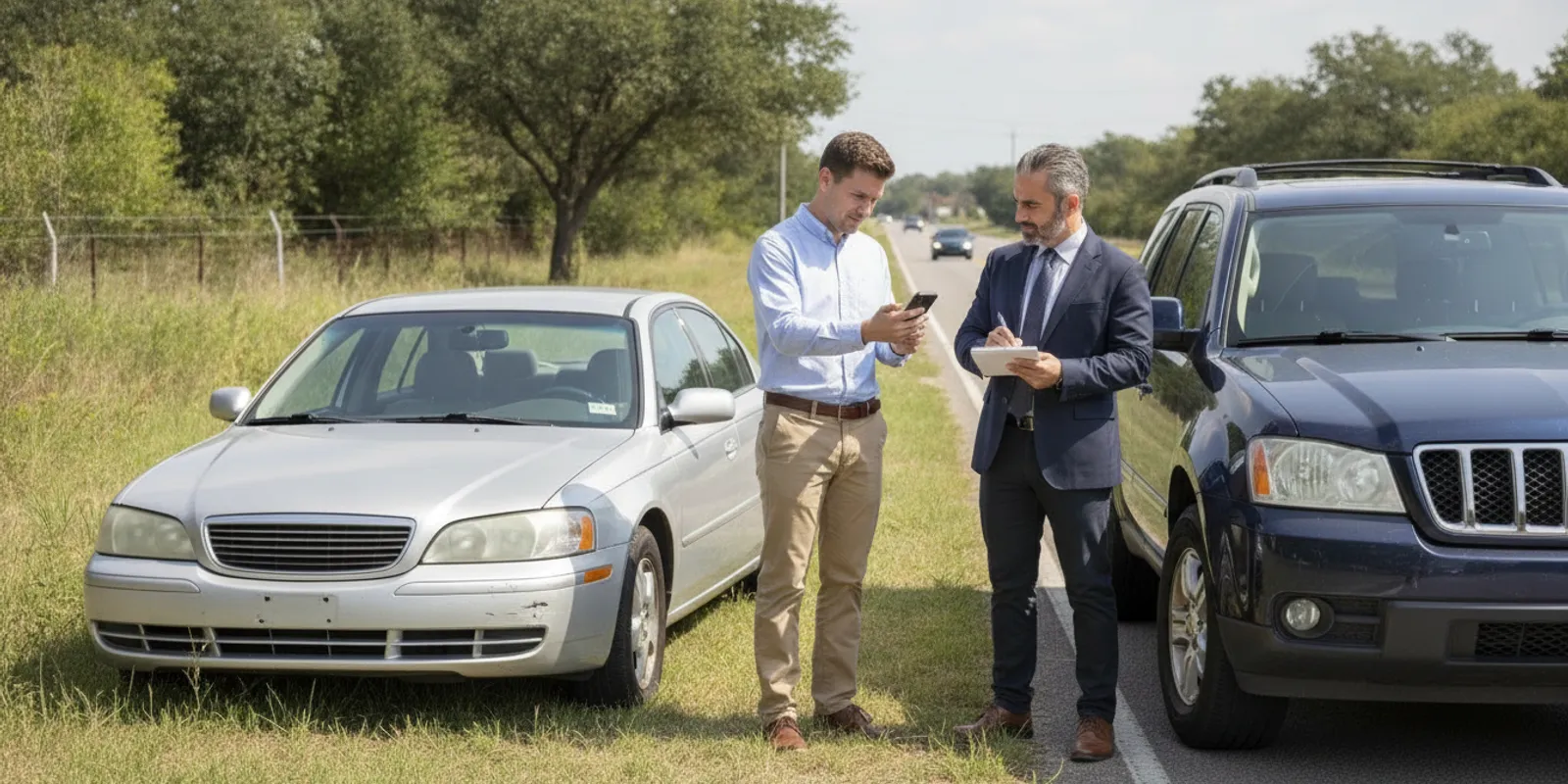
If you are wondering how to report a car accident in Texas, start by addressing immediate safety, then contact law enforcement when needed and document the facts before they fade. The right reporting steps depend on whether anyone is hurt, whether a vehicle cannot be moved, and what information is available at the scene.
Discuss your accident questions
What should you do before making a report?
First, check whether anyone needs urgent medical attention. Call 911 for an emergency, serious injury, a safety hazard, or a crash that is blocking traffic. If it is safe to do so, move vehicles out of active traffic and turn on hazard lights. Do not put yourself in danger to take photographs or collect details.
Even when an injury is not obvious, pay attention to how you feel. Some symptoms may become noticeable later. Seek medical care when you have a concern, and describe the event and symptoms accurately to the provider. Keep copies of visit summaries, instructions, and bills.
Once everyone is safe, exchange basic information with the other driver. Record names, contact details, driver’s license information, license plate numbers, and insurance company and policy details. Note the make, model, color, and location of each vehicle. If there are witnesses, ask for their names and a way to reach them.
When should you contact law enforcement?
Call 911 when the crash involves an apparent injury, a dangerous roadway situation, or another urgent need. For a non-emergency collision, contact the appropriate local law enforcement agency and ask how to report it. The agency’s response can depend on the circumstances, location, and available resources. Do not assume that an officer will come to every crash.
Be factual when speaking with an officer. Explain what you personally observed: where you were traveling, what you saw, what happened next, and whether anyone reported an injury. If you do not know an answer, say so rather than guessing. Avoid arguing about fault at the scene. You can provide information without offering a legal conclusion about who caused the collision.
Ask how to obtain the report or any incident number. Write down the responding agency, officer’s name or badge number if available, and the date and time of the contact. A report may not include every detail, and it is not necessarily a final decision about legal responsibility. It is one record among others that may help describe the event.
What information belongs in your own accident record?
Create a separate record while your memory is fresh. Include the date, approximate time, precise location, direction of travel, lane positions, weather and lighting, traffic conditions, and a plain-language description of what you remember. Make clear which details you observed yourself and which you learned from someone else.
Photographs and video can preserve context that a short written report may not capture. When it is safe, take wide images of the scene, each vehicle’s position, damage from several angles, license plates, traffic signs, signals, road markings, and visible debris. If road or weather conditions played a role, document those too. Keep original files and avoid editing or cropping the only copy.
Do not trespass or put yourself at risk to get an image. If you could not take pictures at the scene, make a note of that and consider whether nearby businesses or residences may have relevant footage. Record where a camera appeared to be and the approximate time window. Do not assume footage will be kept indefinitely; a prompt, polite request may help preserve it.
Which details should you collect from each source?
Different records answer different questions. The table below can help you make a practical checklist. Not every item will exist in every collision, and you should not delay urgent care or emergency reporting to collect paperwork.
| Source | Information to record | How to preserve it |
|---|---|---|
| Drivers and vehicles | Names, contact details, plate numbers, vehicle descriptions, and insurance information | Save notes or photos of documents in a dated folder |
| Law enforcement | Agency, incident number, officer contact information, and report access instructions | Keep the incident number and obtain the report when available |
| Witnesses | Name, preferred contact method, and what they say they observed | Write down their words as accurately as possible; do not coach them |
| Medical providers | Visit dates, symptoms reported, recommendations, referrals, and bills | Keep visit summaries, receipts, and appointment records |
| Vehicles and property | Damage, towing, storage, repair estimates, and personal items affected | Photograph before repairs and retain estimates, invoices, and receipts |
| Insurance contacts | Claim number, representative, date, and summary of each conversation | Save letters, emails, texts, and call notes in one place |
How do you notify the insurance companies?
Review your policy and promptly follow its instructions for reporting a collision. Contact your insurer using a verified phone number or online account, and ask what information it needs, how to submit documents, and what deadlines or policy conditions apply. Keep the claim number and the name or reference information for each person you speak with.
Provide accurate basic facts. If you do not yet know an answer, explain that you are checking rather than filling in a gap with a guess. Write down the date, time, and substance of calls. After a significant phone conversation, consider sending a short follow-up through the insurer’s approved channel that records your understanding.
Another insurer may contact you. You can ask who the person represents, what information is requested, and whether the request can be sent in writing. Be careful about signing documents or giving a recorded statement before you understand what is being requested and how it may be used. Do not conceal information or speculate about events you cannot remember.
Insurance policies and claim circumstances differ. This general overview is not a substitute for reviewing your policy or getting advice about a specific claim. For broader information on vehicle safety and crash reporting resources, see the National Highway Traffic Safety Administration.
What records may help explain an injury claim?
Keep a single, organized file for the collision. It can be a paper folder or a secure digital folder. Use dated filenames and save copies of important documents rather than relying on an email inbox or text thread. Include the police report when available, photographs, witness details, insurance correspondence, medical records, bills, repair documents, and towing or rental receipts.
A simple event log can be useful. Write down appointments, symptoms, missed work, and practical effects on daily activities. Keep the entries factual and dated. For example: “Tuesday, 9 a.m.—follow-up appointment; provider advised limiting lifting until reassessment.” Avoid exaggeration or conclusions. If you make a correction later, note when and why rather than silently changing an old entry.
Save records that show financial losses, such as pay documentation for time missed from work and receipts for accident-related expenses. Do not discard damaged property or repair paperwork before documenting it. If you need to repair a vehicle, take clear photographs first when possible and keep estimates, invoices, and communications about the work.
Keep originals where practical and share copies when requested. Protect private information, especially medical or financial documents. Make a backup of digital files and check that it opens. A neat file helps you answer questions consistently; it does not guarantee a particular insurance or legal outcome.
What if the other driver leaves or information is missing?
If another driver leaves the scene, call 911 or local law enforcement as soon as it is safe. Give the vehicle description, direction of travel, license plate details if known, and the location and time of the collision. Do not pursue the vehicle. Record what you remember promptly and identify any possible witnesses or nearby cameras.
If you cannot obtain the other driver’s insurance details, tell the responding agency and your own insurer. Share the information you do have, such as a partial plate or vehicle description, and mark uncertain details as uncertain. Do not try to identify a driver through speculation or post personal accusations online.
If you discover an error in your own notes, correct it transparently and keep the original version when feasible. If a report contains a factual mistake, ask the agency how it handles corrections or supplemental information. A request for a change does not mean an agency will alter its report, so keep your communications and any supporting material.
How can you keep the reporting process clear?
- Use a consistent date and time format in your notes.
- Separate what you witnessed from what another person told you.
- Keep a short contact log with the name, organization, date, and next step.
- Save photos and documents in a folder labeled with the collision date.
- Ask for clarification when a form or request is unclear.
- Do not sign a document you do not understand or send records to an unverified recipient.
Texas crashes can raise questions about fault, insurance, medical documentation, and deadlines. The details matter, and a general article cannot determine how a particular claim should be handled. You can read more about Texas car accident laws and your rights or review the firm’s personal injury practice areas for related information.
When may legal guidance be useful?
You may want to get legal guidance if someone was seriously hurt, fault is disputed, multiple vehicles or parties are involved, an insurer requests a statement or broad records, or you are unsure how to document losses. A lawyer can review the facts and explain potential options. Whether representation makes sense depends on the particular circumstances.
Readers looking for Texas car accident lawyers can also review the firm’s Austin personal injury information. Keep copies of the documents you share, and ask questions about the scope of any requested review before providing sensitive material.
For a practical example, imagine a driver is struck at an intersection during a rainy evening commute. The driver may remember a green signal, while a passenger remembers only the impact and a nearby witness recalls a car entering the junction. A useful record keeps those accounts separate: the driver writes what they saw, the passenger describes what they remember, and the witness's name and contact details are saved without trying to align their versions. Wide photographs can show the intersection layout and road conditions, while close images record damage. Keeping each source distinct helps prevent uncertainty from turning into an assumed fact.
Another common situation is a collision in a parking lot where drivers move their cars before exchanging information. In that case, write down the original positions as soon as possible and identify any markings, signs, or cameras that might clarify how the vehicles approached each other. Record that the vehicles were moved, when, and by whom if known. A short note about the sequence of events is more useful than a confident conclusion about fault that the available evidence cannot yet support.
Reporting is also a sequence rather than one form. A driver might first make an emergency call, then complete an agency's reporting process, notify an insurer, and later request the incident report. Keep a dated log of each step and any instructions received. If a requested document is not available yet, note that and follow up rather than sending a substitute that may not answer the request. This simple timeline can make a later conversation more precise.
When you review your file, look for gaps rather than trying to make it look polished. Are the scene photos labeled? Does the contact log identify which insurer called? Is the report request still pending? Are estimates and receipts saved? A checklist can flag practical next actions, such as calling the agency for an incident number or asking a provider for a visit summary. Avoid altering original photos or notes; if you add context later, date the addition.
Some details are easy to overlook because they seem unrelated at first. Note whether a vehicle was towed, where it was taken, and whether personal items remained inside. If repairs begin, retain the estimate and final invoice, and keep messages about what was inspected or replaced. If you use another vehicle or pay for transportation, preserve receipts and note the dates. These records do not establish entitlement by themselves, but they help explain the practical aftermath and the expenses being discussed.
Use a simple naming system for digital records, such as the collision date followed by the subject: “2026-11-17-scene-wide,” “2026-11-17-insurance-call,” or “2026-11-18-clinic-visit.” Store originals and a backup separately. If a family member helps gather files, clarify who recorded each observation and when. Consistent organization makes it easier to locate an item without changing its meaning or relying on memory months later.
Request a conversation about your situation
Frequently Asked Questions
Do I need to make a report if the damage seems minor?
Follow applicable law enforcement and insurance instructions, and contact an agency if you are unsure whether the circumstances require a report. Apparent damage or symptoms can change after the scene, so record the facts and notify your insurer as your policy directs.
What should I do if I do not know whether I am injured?
Do not diagnose yourself based only on how you feel at the scene. Seek medical care if symptoms arise or you are concerned, and tell the provider what happened. Keep the records and follow the provider’s guidance.
Is the police report proof of who caused the crash?
A report records information gathered by an officer, but it may not contain every fact or settle legal responsibility. Other evidence, such as photographs, witness accounts, vehicle information, and records, may also be relevant.
How long should I keep accident documents?
Keep relevant records while an insurance claim or legal matter remains open, and do not discard documents before checking whether they may still be needed. Applicable deadlines and record needs vary, so ask an appropriate professional about your particular situation.
Prompt, accurate reporting and organized records can make it easier to explain what happened, but they cannot guarantee how a claim will be resolved.
More on the blog
Keep reading.
13 min read
Does Rideshare Insurance Cover Passengers in Texas?
Learn how Texas rideshare insurance may cover passengers after a crash, which policies to check, and what steps can help protect an injury claim.
By Cap City Injury Attorneys
12 min read
Animal Attack Lawyer: Texas Claims Beyond Dog Bites
Learn what to do after an attack by a domestic animal in Texas, how to preserve evidence, and what facts may matter in a liability claim.
By Cap City Injury Attorneys
Let's talk about your case.
Free case review, no obligation. We'll tell you straight whether we can help.