
Car accidents · Subcategory
Head-On Collision Lawyer in Texas
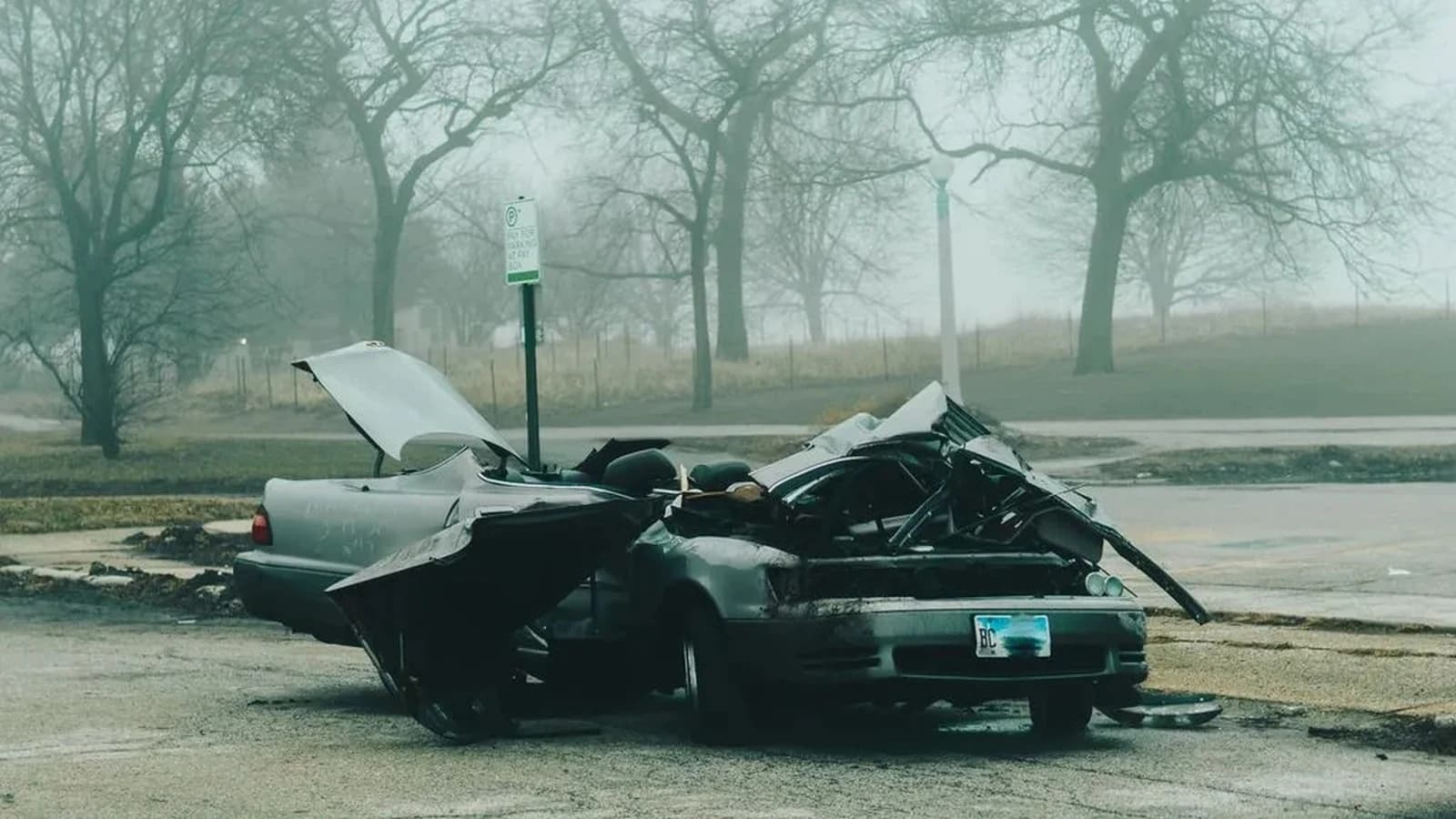
Head-on collisions are front-to-front impacts between vehicles moving in opposing directions. They are statistically rare compared to other crash types but produce a disproportionate share of catastrophic and fatal-injury cases because closing speeds combine: a 55-mph car striking a 55-mph car generates a 110-mph crash. In Texas these crashes cluster on rural two-lane highways, on undivided FM and ranch roads, and at freeway entrance ramps where a wrong-way driver enters against traffic.
How wrong-way and crossover head-ons actually happen
Three patterns generate almost every head-on we work. First, a driver crosses the centerline on a rural two-lane, drifting from fatigue, distraction, or intoxication. Second, a driver attempts to pass on an undivided highway and misjudges oncoming distance. Third, a wrong-way driver enters a freeway via an exit ramp, almost always at night and almost always impaired. The Texas Department of Transportation tracks wrong-way entries on specific entrance/exit pairings. MoPac, US-183, and several I-35 ramps near downtown Austin have repeat-incident histories that occasionally support a roadway-design or signage claim against TxDOT itself, though the Tort Claims Act caps and notice requirements make those secondary defendants at best.
Fatal and catastrophic injury patterns
Head-on impacts deliver force along the occupants' line of sight. Even with modern front airbags and three-point belts, the injury picture is severe: lower-extremity fractures from the footwell intrusion, chest trauma from the seatbelt and steering wheel, traumatic brain injury, cervical spine injury, and abdominal organ injury. In high-delta-V impacts the question is often survivability rather than recovery time. Our role in catastrophic and wrongful-death files shifts from settlement valuation to building a life-care plan, an economic-loss analysis, and (in fatality cases) the survival and wrongful-death actions under Tex. Civ. Prac. & Rem. Code Chapter 71.
Impairment, dram-shop, and exemplary-damages exposure
A large share of wrong-way and centerline-crossing head-ons involve intoxicated drivers. Toxicology results from the responding agency's investigation establish impairment for civil purposes regardless of the criminal case outcome. Where an over-served bar or restaurant served the at-fault driver while obviously intoxicated, Tex. Alco. Bev. Code § 2.02 creates a separate cause of action against the licensed provider. Gross negligence — driving the wrong way on a freeway at 2 a.m. with a 0.20 BAC, for example — supports exemplary damages under Tex. Civ. Prac. & Rem. Code Chapter 41, which are not capped in death cases or in cases tied to certain enumerated felonies.
Why insurance coverage analysis is harder in head-on cases
Catastrophic-injury demand value usually exceeds any single policy. We work the file to identify every potential layer: the at-fault driver's primary auto policy, any umbrella, any household resident coverage, employer commercial coverage if the driver was on the clock, dram-shop carrier coverage if the bar's insurance applies, and your own UM/UIM stack. UM/UIM stacking under Texas law is more flexible than people realize, and in fatality cases we have built recovery from multiple household policies that the family did not initially know applied.



Frequently asked
Questions Texas accident victims ask us
- Two things. First, closing speeds add, so the physics of injury are categorically more severe than any other crash type at the same individual speeds: a 50-mph head-on is a 100-mph event for the occupants. Second, head-ons are heavily correlated with impaired or wrong-way driving, which opens up exemplary-damages exposure and (often) a dram-shop claim against the establishment that served the driver. Both factors usually push the case value well above the at-fault driver's basic auto policy.
- Sometimes. Tex. Alco. Bev. Code § 2.02, the Texas Dram Shop Act, allows a claim against a licensed provider when (1) the provider sold or served an alcoholic beverage to a person who was obviously intoxicated to the extent that they presented a clear danger to themselves and others, and (2) that intoxication was a proximate cause of the resulting damages. It is a narrower statute than most people assume, and the proof requires working through receipts, surveillance, and server testimony. When it applies, it dramatically expands available coverage.
- Yes, when the conduct rises to gross negligence under Tex. Civ. Prac. & Rem. Code § 41.003. Driving while intoxicated, particularly at high BAC levels or while wrong-way on a freeway, supports a gross-negligence finding. Exemplary damages are capped in most cases under § 41.008, but the cap does not apply in cases involving certain enumerated criminal offenses, including intoxication assault and intoxication manslaughter under the Texas Penal Code.
- Yes. The claim becomes a claim against the at-fault driver's estate, and his auto liability policy still applies on behalf of the estate. Death of a tortfeasor does not extinguish the civil claim; it changes the named defendant and adds procedural steps under the Texas Estates Code. Most files in this posture resolve at the policy level through the carrier without contested probate involvement.
- Texas provides two causes of action: a survival claim under Tex. Civ. Prac. & Rem. Code § 71.021 for the damages the decedent suffered before death, and a wrongful-death claim under § 71.002 for the damages suffered by the surviving spouse, children, and parents. These are separate elements with different damage categories, and they have to be pled and proved separately. Statutory beneficiaries are tightly defined: siblings, for example, are not eligible beneficiaries under the wrongful-death statute.
- TxDOT can be a defendant when a ramp's signage, lighting, or geometry contributed to a wrong-way entry, but suing a state agency under the Texas Tort Claims Act involves notice requirements (six months under § 101.101), damage caps, and immunity defenses. In practice, TxDOT is rarely the primary defendant; it is sometimes a supplemental defendant where the documented history of wrong-way incidents at a specific ramp is strong. The primary defendant remains the impaired driver.
- Through physical evidence and reconstruction. Skid marks, gouge marks, debris-field location, and the resting position of the vehicles tell an accident reconstructionist which vehicle crossed the centerline. The crash report's diagram is a starting point but is rarely sufficient on its own; we retain reconstruction experts on every contested-liability head-on file because the difference between 'crossed the line' and 'was crossed into' is the entire case.
- Longer than most other car-accident cases. Catastrophic-injury files often run eighteen to thirty-six months because the medical picture has to stabilize, life-care planning has to be done, and multiple insurance layers usually have to be pursued. Fatality cases run on a similar timeline. Settling early in a serious head-on almost always leaves money on the table; the future-medical and lifetime-care components only become provable once treatment plateaus.
Let's talk about your case.
Free case review, no obligation. We'll tell you straight whether we can help.