
Car accidents · Subcategory
I-35W Accident Lawyer in Fort Worth
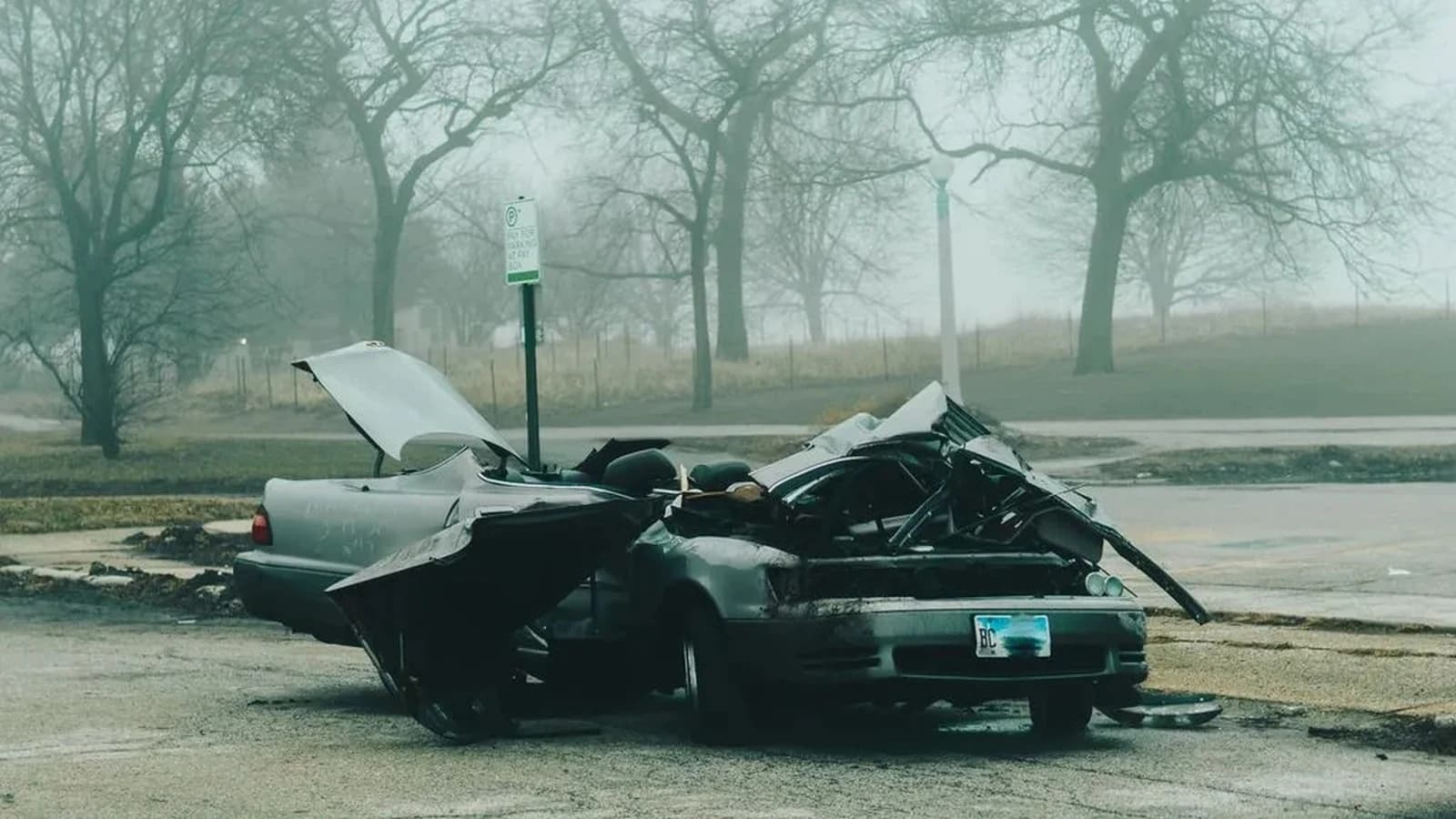
I-35W is the Fort Worth branch of Interstate 35, splitting from the main line at Hillsboro and running north through downtown Fort Worth and Denton. It combines tightly woven downtown interchanges with TEXpress managed toll lanes, and it was the site of the 2021 winter-storm pileup that involved more than 130 vehicles and killed six people, a stark illustration of how fast a high-speed I-35W stretch turns into a mass-casualty chain reaction. Crashes here frequently raise questions about managed-lane operation, weather, and commercial traffic that an ordinary city collision does not.
Winter weather and mass chain-reaction pileups
The February 2021 pileup on I-35W near downtown Fort Worth is the defining example of the corridor's risk: black ice on an elevated managed-lane segment, traffic moving too fast for conditions, and a chain reaction that grew to well over a hundred vehicles before it stopped. Texas law requires drivers to control speed for the conditions under Tex. Transp. Code § 545.351, and ice does not excuse a driver who was traveling too fast to stop. In a mass pileup, fault is divided among the responsible drivers under the proportionate-responsibility rules of Chapter 33, and questions can also arise about roadway treatment and managed-lane operation. Sorting it out requires reconstructing the sequence of impacts vehicle by vehicle.
TEXpress managed lanes and who operates them
Much of I-35W through Fort Worth runs alongside TEXpress managed toll lanes operated under a public-private arrangement separate from TxDOT's general-purpose lanes. That matters after a crash because the entity responsible for design, signage, maintenance, and incident response in the managed lanes may differ from the agency responsible for the free lanes. Where inadequate signage, a poorly marked lane shift, or a failure to treat or respond to a known hazard contributed to a crash, the operator can be a defendant alongside the at-fault driver. Identifying the correct responsible entity early is part of building the case.
Downtown interchanges and high-speed weaving
I-35W threads through a dense cluster of interchanges in and around downtown Fort Worth, including the connections with I-30 and the North Tarrant Express corridor. Short merge distances and heavy lane-changing produce sideswipe and merge collisions at freeway speed. Tex. Transp. Code § 545.060 requires a driver to stay in a single lane and change lanes only when it is safe, and a high-speed weaving crash usually involves a violation of that duty. We look for dashcam footage, adjacent-vehicle witnesses, and the damage geometry on the vehicle bodies to establish which vehicle moved into which lane.

Frequently asked
Questions Texas accident victims ask us
- Liability in a mass pileup is divided among the drivers whose conduct caused the chain reaction, using Texas's proportionate-responsibility rules in Chapter 33. Icy conditions do not excuse a driver who was traveling too fast to stop, because Tex. Transp. Code § 545.351 requires controlling speed for the conditions. Depending on the facts, the entity responsible for treating or operating the roadway segment may also be examined. These cases are won by reconstructing the sequence of impacts rather than by pointing at the weather.
- No. Weather is a condition, not a defense. Every driver has a duty to reduce speed and increase following distance when the road is icy or wet, and a driver who fails to do that and strikes another vehicle can be held responsible despite the weather. The presence of ice usually makes the speed-for-conditions question central rather than eliminating fault.
- It can. The managed toll lanes on I-35W are operated under an arrangement separate from the general-purpose lanes, so the entity responsible for signage, maintenance, and incident response there may differ from TxDOT. If inadequate signage, an unmarked hazard, or a failure to respond to a known danger contributed to the crash, that operator can be a defendant alongside the at-fault driver. Identifying the correct entity early is important because records are not kept indefinitely.
- Usually the driver who moved out of their lane unsafely. Tex. Transp. Code § 545.060 requires drivers to maintain a single lane and change lanes only when it is safe to do so, and a high-speed merge or weave crash typically involves a breach of that duty. Proof comes from dashcam footage, witnesses in adjacent vehicles, and the angle and direction of the scrape damage on the vehicles, which often shows which one crossed the line.
- An I-35W crash in or around Fort Worth is generally a Tarrant County case, filed in a Tarrant County district court, with the specific court assigned after filing. If the crash occurred farther north toward Denton, Denton County may apply. Venue is generally proper where the crash happened or where a defendant resides under Tex. Civ. Prac. & Rem. Code § 15.002, and an out-of-area trucking or operating company can open alternative venues.
- Quickly. Dashcam footage, managed-lane incident-response records, and any commercial-vehicle telematics are time-sensitive, and in a multi-vehicle crash the evidence that establishes the order of impacts is the most valuable and the most perishable. The two-year deadline under Tex. Civ. Prac. & Rem. Code § 16.003 governs filing, but the reconstruction evidence needs to be secured in the first weeks.
Let's talk about your case.
Free case review, no obligation. We'll tell you straight whether we can help.