
By Cap City Injury Attorneys13 min read
When Do You Need a Negligent Security Lawyer?
Learn when a negligent security lawyer may help after a Texas property crime injury, what to preserve, and what to ask during an initial legal review.
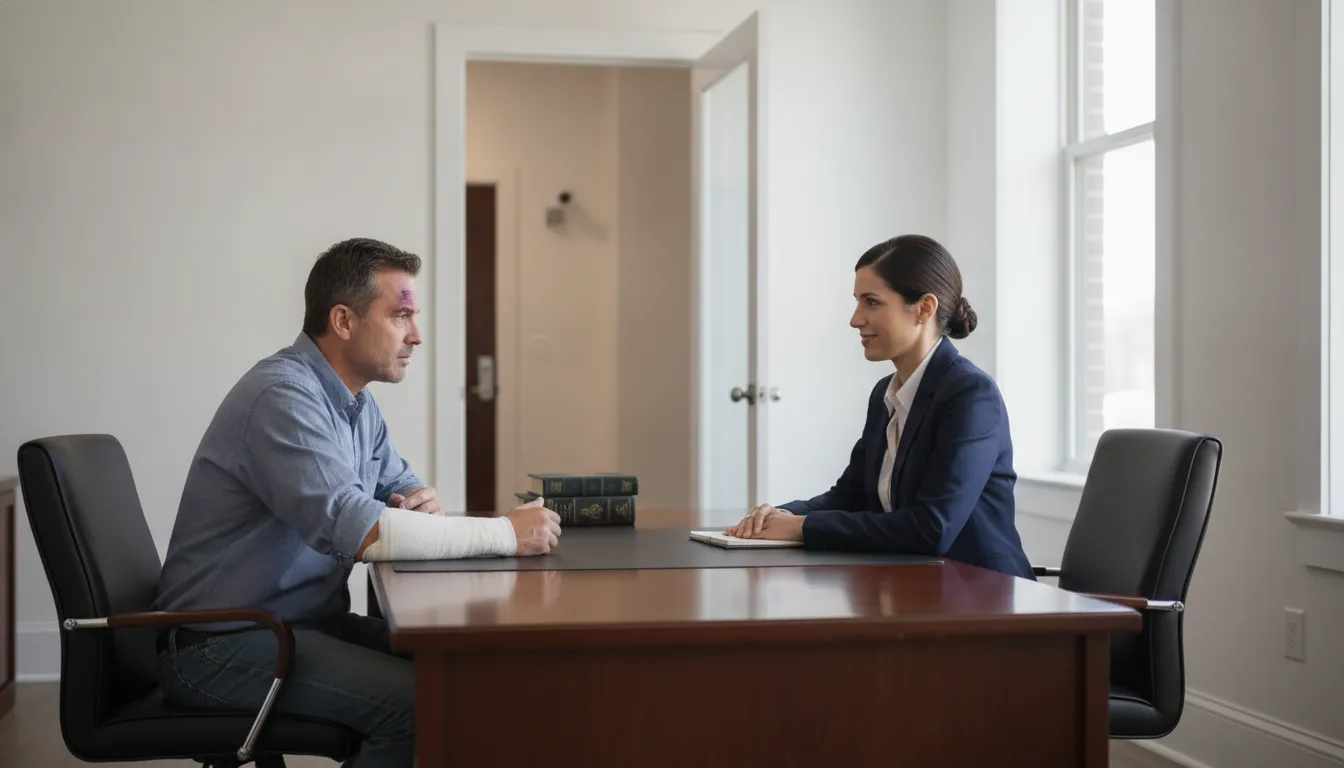
An injury connected to a burglary, assault, or other property crime can leave you managing medical care while trying to understand what happened. The property owner, landlord, security company, or another party may have information you do not have, and important details can become harder to confirm over time.
A negligent security lawyer may be relevant when the injury was connected to conditions a property controller knew or had reason to know created an unreasonable and foreseeable risk, especially when the facts, responsibility, or available evidence are disputed. Texas law does not treat every crime as proof of property-owner liability; the circumstances require a fact-specific review.
Contact Cap City Injury Attorneys through the online form to discuss your situation.
Before deciding what to do next, consider the seriousness of the injury, who controlled the location, whether an insurer has contacted you, and whether surveillance or other records may be difficult to preserve. Those practical warning signs can help you decide when an initial legal conversation may be useful.
When Should You Consider Speaking With a Negligent Security Lawyer?
An initial conversation may be useful when the circumstances surrounding the incident are unclear, the injuries are serious, or responsibility is already being disputed. You do not need to know whether a property owner is legally responsible before asking questions. A lawyer can help identify what information matters and what should be preserved while the facts are still available.
Consider seeking guidance if you were injured during or after a violent crime, assault, robbery, or other incident and:
- The property owner, manager, security company, or insurer gives you conflicting explanations about what happened.
- You are unsure who controlled the area where the incident occurred, particularly at an apartment complex, business, parking area, or hotel.
- Security cameras, access records, incident reports, or witness information may be changed, lost, or difficult to obtain.
- An insurer contacts you quickly, asks for a recorded statement, or suggests that your injuries or the property conditions are unrelated.
- You have substantial medical needs, missed work, or an injury whose long-term effects are not yet clear.
A crime alone does not establish negligent-security liability. Under Texas law, property owners generally have no legal duty to protect people from third-party criminal acts. In some circumstances, however, a property owner who controls the premises may owe invitees ordinary-care protection when the owner knew or had reason to know of an unreasonable and foreseeable risk. Texas courts emphasize that the risk must be both foreseeable and unreasonable, so the analysis depends on the specific facts rather than the label attached to the incident. See the Texas Supreme Court's discussion of these principles in Petrie v. Brookhaven Apartments.
That fact-specific review is why an early discussion can help, even when the answer is not yet clear. You can also learn more about Texas negligent security claims before deciding what next step fits your situation.
What Signs Make Early Legal Guidance Especially Useful?
Early legal guidance can be especially useful when the facts are difficult to sort out or important information may be controlled by someone else. These signs do not establish liability by themselves, but they can help identify when a case-specific review may be worthwhile.
- The injury is serious or the effects are ongoing. Significant medical treatment, missed work, or lasting limitations can make it important to understand how the incident may affect a claim before discussing it with an insurer.
- The facts are disputed. If witnesses describe the event differently, an incident report leaves out important details, or the property owner denies that anything happened, an early review may help identify what should be documented and preserved.
- Control of the property is unclear. A landlord, business, security company, management company, or event operator may each have different responsibilities. Identifying who controlled the area at the relevant time may require reviewing leases, contracts, policies, or other records.
- A security feature was changed, missing, or not working. A broken gate, removed lighting, disabled camera, or unlocked access point may raise questions, but it does not automatically show that a property owner was legally responsible. The surrounding circumstances still matter.
- There were earlier complaints or similar incidents. Reports of prior criminal activity or safety concerns may be relevant to whether a risk was reasonably foreseeable. Their timing, location, similarity, and reliability can all matter.
- An insurer is pressing for a statement or settlement. You may want to understand what information is being requested and what rights may be affected before signing a release or making a recorded statement.
Texas negligent-security claims often turn on details about the property, the known risk, and the parties responsible for operating or maintaining it. You can review the broader issues involved in Texas negligent security claims. An attorney can assess the facts without assuming that a crime, missing feature, or serious injury guarantees a legal claim.
Why Can the First Days After a Property Crime Injury Matter?
The first priority after any property-crime injury is medical care. Once immediate health concerns are addressed, documenting what happened can help preserve details that may become harder to confirm later. Write down the date, time, location, sequence of events, conditions you noticed, and names or descriptions of people who may have seen the incident. Keep the account factual, even if some details remain uncertain.
Take photographs of your injuries and the surrounding area when it is safe to do so. Images may help show lighting, entrances, damaged security features, warning signs, or other conditions as they appeared after the incident. Do not trespass, move objects, repair property, or confront anyone to obtain evidence. If you cannot safely take photographs, note what you observed and who may have access to relevant information.
Other potentially useful categories include an incident or police report, witness contact information, messages about the event, and communications with the property owner, manager, security company, or insurer. Save original messages and emails, and keep notes about calls, including the date, caller, and substance of the conversation. An insurer's request for a statement or medical records does not by itself establish responsibility, so consider getting case-specific guidance before making detailed statements.
Surveillance footage and security records may be important, but no universal retention period applies to every property or system. A recording could be overwritten, lost, or held by a different business or contractor. That is one reason an early review with a premises liability lawyer in Texas may help identify preservation steps without promising that any particular evidence exists.
Texas law does not treat every crime as proof of a property owner's civil liability. The Texas Supreme Court explains that foreseeability and notice depend on the particular facts, including information about risks connected with the property. See the court's opinion. Early documentation helps a lawyer evaluate those facts without asking you to guess at the legal conclusion.
What Should You Gather Before an Initial Consultation?
You do not need a complete case file before asking for legal guidance. A clear timeline and the information below can help an attorney understand what happened, identify possible evidence, and determine which questions require follow-up. Gather what you can safely access without delaying medical care.
- Medical information: Collect records, discharge paperwork, diagnoses, treatment instructions, prescriptions, and a list of providers. Keep notes about symptoms, limitations, missed work, and changes in your daily activities.
- Photographs and video: Save photographs of injuries, clothing, the location, lighting, entrances, damaged property, and any condition that may relate to the incident. Preserve the original files when possible, along with the date and approximate location.
- People and reports: Write down the names and contact details of witnesses, employees, security personnel, property managers, and anyone who helped you. Include any incident report number, police report, emergency call information, or correspondence explaining how to request a report.
- Messages and insurance communications: Keep texts, emails, voicemails, claim numbers, letters, recorded-statement requests, and messages with an insurer or property representative. Do not delete or edit communications, even if they seem unimportant.
- Property and ownership details: Note the property name and address, the specific area where the incident occurred, the date and time. How you entered, and any business, landlord, security company, or management names shown on signs, receipts, leases, or other documents. These details may help clarify who controlled the area.
Do not trespass to obtain photographs or records, confront a suspected person, pressure a witness, or alter the scene. Do not repair, discard, clean, or move potentially relevant property unless safety requires it. If you already took any of those steps, describe what happened accurately rather than trying to recreate the evidence.
For related background, review this guide to Texas property injury claims. A consultation is fact-specific, and gathering information supports discussion; it does not by itself establish that a property owner or another party is legally responsible.
How Can a Negligent Security Lawyer Screen Responsibility?
A negligent security lawyer does not begin by assuming that a property owner is liable because a crime occurred. The initial review is an issue-spotting process. It asks which person or business controlled the area, what information may have been available before the incident, whether proposed precautions were practical, and how the conditions connect to the injury. Those questions help identify what facts require investigation and which parties may need to be contacted.
Texas law generally does not impose a duty to protect against every criminal act by a third party. In a case involving a property owner who controlled the premises, however. The Texas Supreme Court has explained that ordinary-care duties may arise when the owner knew or had reason to know of an unreasonable and foreseeable risk. Foreseeability is only the beginning of the analysis, not a prediction of the result. See the Texas Supreme Court opinion.
| Question | Why it matters | What may answer it |
|---|---|---|
| Who controlled the area when the injury occurred? | Ownership and day-to-day control may belong to different people or entities. | Lease terms, management agreements, property records, and staff information. |
| What was known, or reasonably knowable, before the incident? | Prior incidents and warnings may help assess whether the risk was foreseeable. | Police records, incident reports, complaints, security logs, and witness accounts. |
| What precautions were practical in the circumstances? | The analysis can include the risk, likelihood of harm, burden of precautions, and consequences of requiring them. | Lighting, access controls, staffing, cameras, maintenance records, and policies. |
| What caused the injury, and who may cover the claim? | The facts may involve property conditions, conduct by another person, multiple businesses, or more than one insurer. | Medical records, photographs, video, witness statements, policies, and claim correspondence. |
This screening does not replace a fact-specific legal assessment. It can, however, help organize an incident before important information becomes harder to locate and clarify whether a discussion about Texas negligent security claims is appropriate.
What Questions Should You Ask About Deadlines and Shared Responsibility?
Timing and responsibility can become harder to evaluate when an injury follows a crime or security incident. During an initial consultation, ask questions that help identify what must be preserved, which facts remain uncertain, and whether more than one person or entity may be involved. A Texas negligent security claim depends on the particular property, relationships, and circumstances, not simply on the fact that a crime occurred.
What deadlines could affect my situation?
Ask which filing deadlines or notice requirements may apply to your specific claim, and what facts could change that analysis. The answer can depend on the type of defendant, the location, the date and nature of the injury, and other details. Do not assume that an insurer's ongoing conversation pauses every legal deadline. Ask what should happen next and what records should be preserved while the timing is reviewed.
Could someone argue that I share responsibility?
Ask how the other side might characterize your actions and which facts support or challenge that position. This is not a prediction that you caused your injury. It is a way to identify disputed issues, such as why you were on the property. What you could see or know, and what occurred immediately before the incident. Texas courts recognize that a property owner's duty analysis is fact-specific; foreseeability is important, but it does not end the inquiry. The Texas Supreme Court explains that courts may weigh risk, likelihood of injury, the burden of precautions, and related considerations.
Which damages and insurance questions should I raise?
Ask what categories of harm should be documented, including medical care, work disruption, ongoing symptoms, and effects on daily life. Also ask which insurers have been contacted, what statements or releases have been requested. And whether a property owner, security company, tenant, or another party may have separate coverage. Bring the claim letters and messages rather than relying on memory. A case-specific review can clarify what is known, what still needs investigation, and which next step is appropriate.
Contact Cap City Injury Attorneys through the online form to discuss your situation.
Frequently Asked Questions
What should I do after an injury connected to a Texas property crime?
Get appropriate medical care, report the incident when safe, and write down what you remember while the details are fresh. Preserve photographs, messages, names of witnesses, and insurance communications. Avoid confronting anyone or returning to restricted areas to collect evidence. A prompt conversation with a Texas negligent security lawyer may help identify what information should be preserved and whether more than one party controlled the property.
What evidence may help a negligent security lawyer review my situation?
Useful materials may include medical records, photographs of the scene and lighting, an incident or police report, witness contact information, and communications with the property owner or insurer. Surveillance footage, security logs, maintenance records, prior complaints, and contracts may also become relevant, but you should not assume you must obtain them yourself. Ask about preservation promptly because the availability of records can change.
Can someone else share responsibility if I was partly involved in the incident?
Possibly, but the answer depends on the facts and Texas law. A lawyer may need to examine what each person did, whether the conduct contributed to the injury, and how responsibility could be allocated. Being present at a property or making an ordinary mistake does not automatically decide the issue. Give a complete, candid account during an initial consultation so the analysis is based on the full circumstances.
How does a lawyer evaluate whether the property owner may have had a duty?
A Texas property owner generally has no automatic duty to prevent third-party crimes. Depending on the circumstances, a controlling owner may owe ordinary-care protection when the owner knew or had reason to know of an unreasonable and foreseeable risk. Texas courts consider factors such as prior criminal conduct and the risk and burden of precautions. See the Texas Supreme Court opinion for the legal framework; a case-specific review is still necessary.
Get Started With an Initial Conversation
When an injury follows a crime on someone else's property, an early review may help you organize what happened. Identify questions about property control, and understand which details could matter. The right next step depends on the facts, available records, and your medical situation. Complete the online contact form to discuss what happened and whether case-specific legal guidance may help.
More on the blog
Keep reading.
13 min read
How Does a Premises Liability Lawsuit Work in Texas?
Follow a Texas premises liability lawsuit from investigation and notice through discovery, settlement talks, and a possible trial, with practical steps to take.
By Cap City Injury Attorneys
15 min read
Slip and Fall Lawsuit in Texas: What Happens Next?
Learn what happens after a slip and fall lawsuit is filed in Texas, from service and discovery to settlement, mediation, trial preparation, and key deadlines.
By Cap City Injury Attorneys
Let's talk about your case.
Free case review, no obligation. We'll tell you straight whether we can help.