
By Cap City Injury Attorneys15 min read
What to Do After a Car Accident in Austin
Learn what to do after a car accident in Austin, from scene safety and crash reports to medical care, insurance steps, documentation, and legal options.
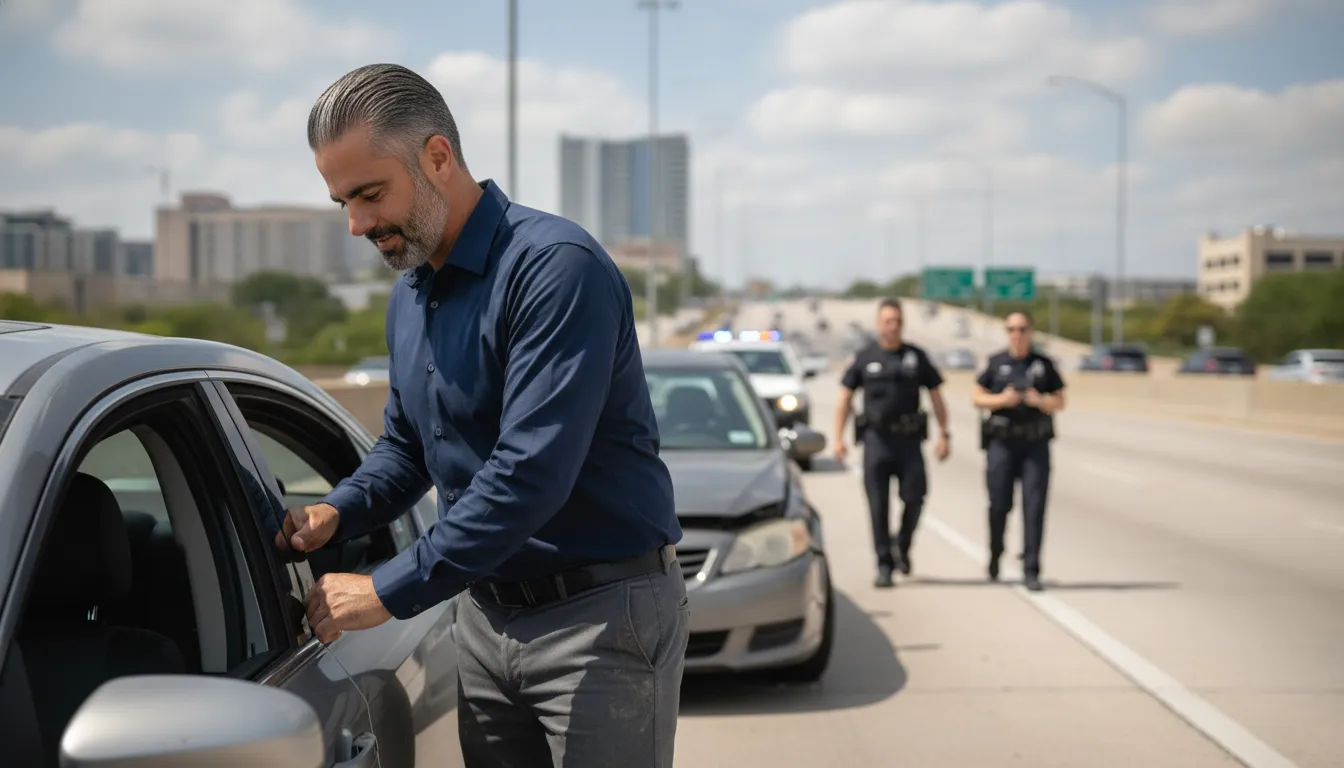
The minutes after a crash can feel chaotic, but a calm sequence of decisions can protect your safety, health, and ability to document what happened. Start with people, not paperwork: check for injuries, move out of traffic when it is safe, and call for help when needed.
Knowing what to do after a car accident in Austin means securing the scene, exchanging information. Reporting the collision when appropriate, documenting damage and symptoms, seeking medical evaluation, and communicating carefully with insurers. If fault, injuries, or coverage become disputed, an Austin car accident claims guide can help you understand the issues to discuss with a qualified professional.
Request a no-cost case review if you need to discuss your situation.
Your first priority is the scene itself. The steps below explain how to respond without overlooking immediate safety concerns or evidence that may matter later.
Do You Know What to Do After a Car Accident in Austin at the Scene?
The first priority after a collision on an Austin street, frontage road, or highway is preventing another injury. If you are trying to understand what to do after a car accident in Austin, use this order as a practical starting point. Your health and immediate safety matter more than collecting perfect evidence.
- Check for immediate danger. Turn on your hazard lights if your vehicle cannot be moved safely. If no one is injured and the vehicles can be moved without creating another hazard, get out of active traffic and move to a shoulder or other safe location. Do not move someone who may be seriously injured unless staying in place creates an immediate danger, such as fire or continuing traffic.
- Call 911 when help is needed. Request police and emergency medical assistance if anyone is injured, an injury is suspected, or the other driver leaves the scene. Tell the dispatcher your location, including the nearest intersection, highway, exit, or landmark. Austin's traffic information page identifies collisions involving suspected minor injuries or blocked secondary roads as crash-urgent incidents. When in doubt about an injury, explain what you observe rather than trying to diagnose it.
- Exchange basic information. When it is safe, photograph the other driver's insurance card and driver's license, then record the driver's name, phone number, insurance company, policy number, vehicle description, and license plate. Provide your own information. Keep the conversation focused on identification and safety, not fault.
- Identify witnesses and preserve the scene. Ask witnesses for their names and phone numbers. Take photographs of the vehicles, visible damage, license plates, traffic signs, road angles, debris, and conditions that may help explain how the collision occurred. If you cannot safely photograph the scene, leave that task for law enforcement or a later, safer opportunity.
- Describe facts without admitting fault. Cooperate with officers and answer questions accurately. Avoid guessing about speed, distance, or cause, and do not say that the crash was your fault simply because you are shaken or want to be polite. A calm factual account is more useful than an immediate conclusion about liability.
The Texas Department of Insurance recommends moving out of the road when no one is injured, calling police for injuries or a driver who leaves, collecting driver information, photographing the scene, and speaking with witnesses. Its checklist is a useful reference while events are still fresh: Texas Department of Insurance wreck checklist.
Once everyone is safe, write down the location, time, weather, and what you remember before details fade. Do not delay emergency care or remain in a dangerous location just to complete documentation.
Should You Call the Police After a Minor Austin Crash, and What to Do After a Car Accident in Austin?
A crash may look minor at first, but calling law enforcement can be important when the facts are unclear or someone may be hurt. Call 911 if anyone has an injury, believes they may be injured, or needs immediate medical attention. Austin's traffic guidance also identifies collisions involving suspected minor injuries as crash-urgent incidents. If a driver leaves the scene, report the hit-and-run promptly and provide the vehicle description, direction of travel, and any identifying details you safely collected.
Call the police when the vehicles or debris create a roadway hazard, when a driver appears impaired or refuses to exchange information, or when the account of what happened is disputed. Do not put yourself in danger to gather evidence. If the vehicles can be moved safely and nobody needs emergency care, move out of traffic and document the scene from a safe location.
Apparent damage matters, even when nobody reports an injury. Austin's traffic page describes a Driver's Crash Report for an uninvestigated crash involving apparent property damage or an injury or death. That description helps explain when a driver's report may be relevant, but it does not mean every minor collision follows the same reporting path. The appropriate response can depend on the location, the condition of the people involved, the roadway, and whether an officer investigates.
Ask how to obtain the report or incident number before leaving. TxDOT explains that it is the custodian of Texas crash records and that an investigating officer submits a qualifying report to TxDOT by the tenth day after the crash. You may also need the report for an insurance claim. For official details, review the Austin traffic and crash report guidance and TxDOT crash records information.
Even if police do not respond, exchange information, photograph the vehicles and surroundings, and write down what you remember while it is fresh. A lack of an officer's report does not by itself establish who caused the collision, and calling the police does not guarantee a particular insurance or legal result.
How Do You Document the Accident Properly?
Good documentation preserves details that become harder to recall after the scene is cleared. If you can do so safely, use your phone to photograph the vehicles from several angles, including license plates, visible damage, and the positions of the cars. Take wider photos of the roadway, traffic signs, signals, lane markings, debris, skid marks, lighting, and weather. Avoid stepping into traffic or delaying medical care to collect evidence.
Exchange information with the other driver, including their name, contact information, driver's license details, insurance company, policy number, vehicle description, and license plate. Photograph the insurance card and license only when it is safe and appropriate. Do not argue about fault at the scene. Instead, write down what happened in your own words while the sequence is fresh.
Ask witnesses for their names and contact information. A witness may remember traffic conditions, vehicle movements, or a signal phase that is not clear from photographs. Note the exact location, approximate time, direction of travel, road conditions, and anything unusual, such as construction, poor lighting, or an obstructed sign.
Preserve video quickly. Nearby businesses, homes, traffic cameras, rideshare vehicles, and dashboard cameras may have footage, but recordings can be overwritten or disappear. Make a note of possible cameras and tell your insurer or legal representative about them promptly. Keep the original photos and videos in a safe location, and do not edit them.
Create a continuing file for medical records, bills, prescriptions, repair estimates, towing receipts, and wage-loss documentation. Keep appointment dates and notes about pain, limitations, and changes in daily activities. The Texas Department of Insurance recommends retaining medical records and bills while handling a wreck claim. If evidence, fault, or insurance coverage becomes disputed, an Austin car accident lawyer can explain how investigation and record collection may apply to your situation.
When Should You Seek Medical Treatment?
Get emergency help right away if you or a passenger has severe bleeding, trouble breathing, loss of consciousness, confusion, a severe or worsening headache, significant neck or back pain, or weakness or numbness. Do not try to drive yourself if you may be seriously injured. Call 911 and follow the dispatcher's instructions.
Even when a collision seems minor, prompt medical evaluation is a sensible next step if you feel pain, stiffness, dizziness, or anything that does not feel normal. A healthcare professional can evaluate your symptoms and determine whether additional care is appropriate. Do not assume that feeling capable of leaving the scene means you are uninjured.
Watch for symptoms that appear later
Some crash-related symptoms are delayed. Mayo Clinic explains that whiplash is commonly caused by rear-end crashes and that symptoms often start within days of the injury. Possible symptoms include neck pain or stiffness, reduced range of motion, headaches, shoulder or arm pain, and tingling or numbness in the arms. If neck pain or other possible whiplash symptoms develop after a crash, Mayo Clinic advises seeking medical evaluation. Read its guidance on whiplash symptoms and causes.
Follow care instructions and keep a clear record
Tell the provider how the collision happened, when symptoms began, and what activities make them better or worse. Follow the recommended treatment plan and ask questions before changing appointments, medication, therapy, or activity limits. If symptoms change, report that change rather than waiting for the next scheduled visit.
Keep copies of medical records, bills, prescriptions, work restrictions, and appointment dates. A brief daily note about pain, sleep, mobility, and missed work can help you remember details accurately. Save related receipts and communications in one folder. These records can also help explain how the injury affected your daily life while you address medical care and the other practical steps involved in what to do after a car accident in Austin.
Should You Talk to the Other Driver's Insurance Company?
Yes, you may need to notify the other driver's insurer, but a conversation with an adjuster is not the same as a neutral interview. The adjuster's job is to evaluate the claim for the insurance company. Keep your communication accurate, brief, and limited to what you know.
Notify your own insurer promptly
Start by reporting the collision to your own insurance company as soon as reasonably possible, even if you believe the other driver caused it. Ask for the assigned adjuster's name, phone number, email address, and claim number. Your policy may require prompt notice, and your insurer may help address vehicle damage while fault and coverage are reviewed.
When describing the crash, give the time, location, vehicles involved, and observable events. Do not guess about speed, distance, the other driver's intentions, or who was legally at fault. If you do not remember something, say so. A written timeline and your photographs can help you stay consistent. The Texas Department of Insurance recommends keeping medical records and bills for the claim. Its guidance also explains that an insurer may provide repair-shop suggestions, but the vehicle owner can choose a body shop.
Be careful with statements and paperwork
An adjuster may ask for a recorded statement, medical authorization, or release. Listen to the request, ask what it is for, and do not sign a settlement release before you understand what claims and expenses it covers. A release can affect future claims, including injuries that have not fully declared themselves. You also do not have to diagnose yourself during an insurance call. Explain what you currently feel, what treatment you have received, and what your medical provider has told you.
Keep copies of emails, letters, estimates, bills, prescriptions, wage-loss records, and notes from calls. Property damage and bodily injury may involve separate claim processes, so organize them separately. If the insurer disputes fault, delays payment, requests broad records, or makes an offer before your treatment and losses are clear, consider speaking with an Austin car accident lawyer about your options. Insurance questions can become more complicated when coverage is limited or the other driver is uninsured.
Common post-crash insurance questions
| Situation | Practical next step |
|---|---|
| Your vehicle is damaged | Report the loss, keep estimates and receipts, and ask how the repair process works. |
| You may be injured | Seek appropriate medical care, keep bills and records, and describe symptoms accurately. |
| The other driver lacks coverage | Ask your insurer whether uninsured or underinsured motorist coverage may apply to your policy and facts. |
| Fault or value is disputed | Preserve your evidence and consider legal guidance before signing a release. |
When Should You Call a Lawyer to Discuss What to Do After a Car Accident in Austin?
You may want to speak with an injury lawyer when the facts, injuries, or insurance issues make it difficult to protect your claim on your own. This can be true even if you are still deciding what to do after a car accident in Austin. A conversation does not commit you to filing a lawsuit. It can help you understand the issues that may affect your options and the records you should preserve.
Situations that may warrant legal guidance
- Fault is disputed. If the other driver blames you, several vehicles were involved, or the available evidence is unclear, an attorney may help assess how liability could be established. Texas comparative-negligence rules can make fault allocation important.
- Your injuries are serious, worsening, or delayed. Some crash injuries are not immediately obvious. Neck pain, stiffness, headaches, or numbness may develop after the collision. Keep seeking appropriate medical care and document symptoms, appointments, bills, and missed work.
- The other driver was uninsured or underinsured. Your potential options may involve your own uninsured or underinsured motorist coverage, depending on the policy and facts. These claims can require careful review rather than assuming the other driver's lack of coverage ends the matter.
- Important evidence may disappear. Traffic-camera footage, vehicle data, photographs, witness contact information, and other records can become harder to obtain as time passes. Early guidance may help identify what should be preserved.
- The insurer denies the claim or makes a low offer. Do not assume an adjuster's decision is the final word. Before signing a release, make sure you understand what rights you may be giving up and whether future treatment or losses have been considered.
- A deadline may apply. Texas injury claims commonly raise a two-year statute-of-limitations concern, but exceptions and other deadlines can change the analysis. Do not wait until the deadline is near to ask about your specific circumstances.
Cap City documents services that include investigating fault and liability, collecting evidence, compiling medical records, and handling uninsured or underinsured motorist matters. Its Austin car accident claims guide provides additional information about fault, damages, evidence, and deadlines. Legal information is general, so consider getting advice tailored to your claim before making a major insurance or settlement decision.
What Should You Do Next?
After a car accident, a clear review of the available records can help you understand which next steps may fit your situation. Gather your crash report, photographs, medical records, bills, and insurance communications if you have them. Legal information is general, so consider getting advice tailored to your claim before making a major insurance or settlement decision.
Request a no-cost case review to discuss your situation.
Frequently Asked Questions
What should I do right after a car accident in Austin?
Check for injuries, call 911 when someone needs help or the other driver leaves, and move out of traffic if it is safe. Exchange identifying and insurance information, photograph the vehicles and roadway, collect witness contact details, and write down what happened while the details are fresh.
Do you still call the police after a minor crash?
Call law enforcement when there are injuries, a hit-and-run, or uncertainty about whether the scene is safe. Austin also describes a Driver's Crash Report for an uninvestigated crash involving apparent property damage or injury or death. See the Austin crash-report guidance for the applicable reporting process.
Should I get medical care if I feel fine after the collision?
Pay attention to symptoms that develop after you leave the scene. Whiplash symptoms can appear within days and may include neck pain, stiffness, headaches, or tingling. The Mayo Clinic recommends evaluation for neck pain or other possible whiplash symptoms after a crash.
What should I say to an insurance adjuster?
Notify your own insurer promptly and give a truthful, factual account of the collision. Record the adjuster's name and contact information, keep medical records and bills, and avoid guessing about fault or the extent of your recovery. Do not sign a release until you understand what rights and claims it may affect.
When should I contact a car accident lawyer?
Consider speaking with a lawyer when fault is disputed, injuries are serious or delayed, the driver was uninsured, evidence may disappear, or an insurer denies the claim or makes an offer you cannot evaluate. Deadlines can vary by claim and facts, so do not wait to ask about the timing of your situation.
More on the blog
Keep reading.
12 min read
Premises Liability Texas Law: Property Owner Duties
Learn how premises liability texas law defines owner duties, visitor status, dangerous conditions, notice, and comparative responsibility after an injury.
By Cap City Injury Attorneys
12 min read
Slip and Fall Lawyer in Austin: Proving Negligence
Learn how a slip and fall lawyer in Austin can prove property-owner negligence through notice, control, scene evidence, medical records, and Texas filing rules.
By Cap City Injury Attorneys
Let's talk about your case.
Free case review, no obligation. We'll tell you straight whether we can help.