
By Cap City Injury Attorneys12 min read
Premises Liability in Texas: What Must an Injured Person Prove?
Understand what must be proven in a Texas premises liability claim, how notice and causation work, and what evidence can help document an injury.
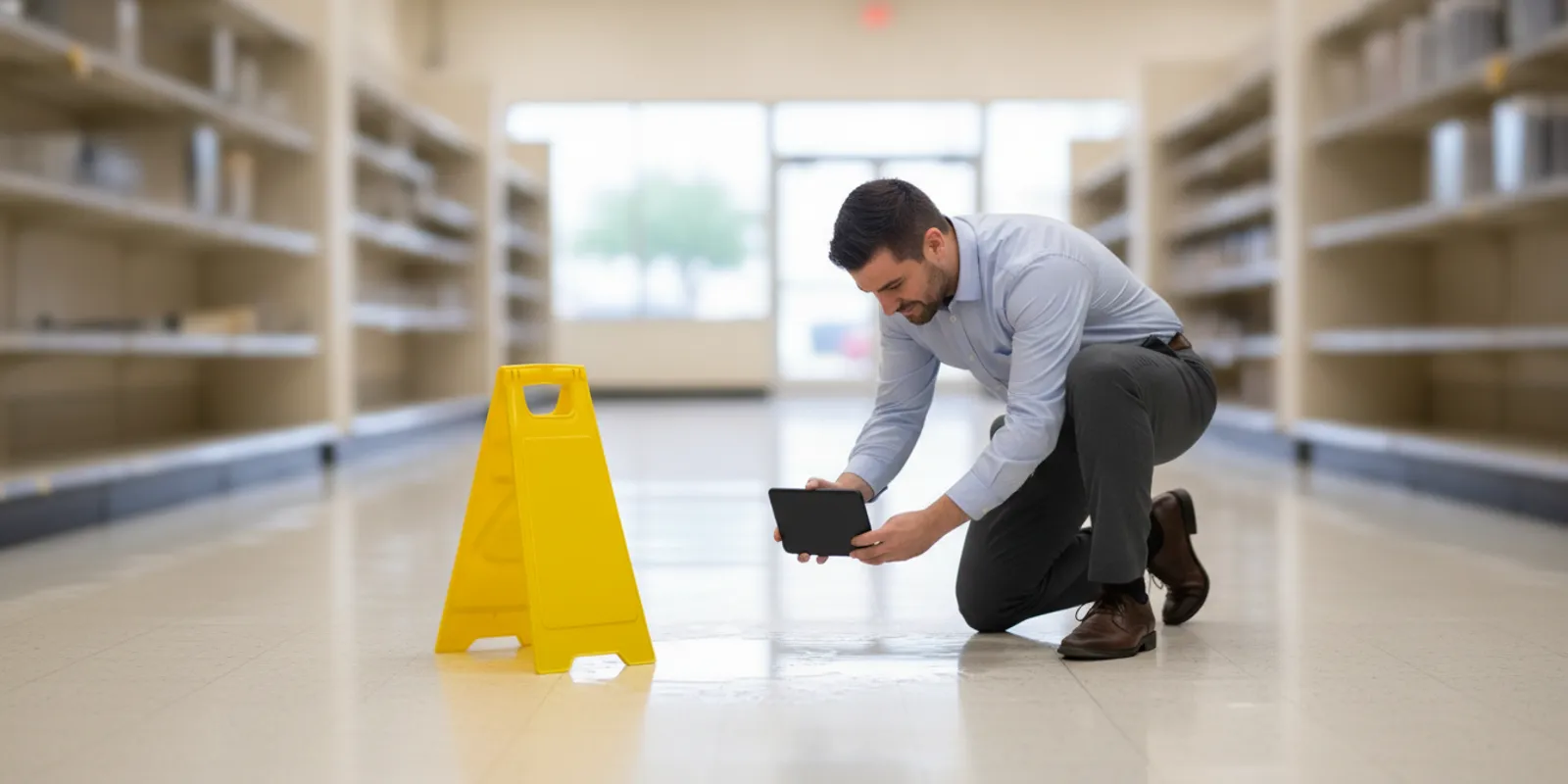
Answer: In a typical Texas premises liability claim, an injured person must show that a property owner or occupier had a duty, a dangerous condition created an unreasonable risk, the responsible party knew or should have known about it, reasonable care was not used to address it, and that failure caused an injury with resulting damages. The precise duty can depend on why the person was on the property and what the responsible party knew.
Request a consultation to discuss your situation
What does premises liability mean in Texas?
Premises liability is the area of law that can apply when someone is injured because of a condition on property. The condition might be a spill, broken stair, uneven walkway, inadequate lighting, or another physical hazard. The central question is not simply whether an injury happened on someone else’s land. The claim usually turns on whether the responsible person or entity had a legal duty and whether the evidence connects a failure to use reasonable care with the injury.
General explanations of premises liability describe responsibility for injuries connected to unsafe property conditions, but they do not establish Texas law. For background on the general concept, see the Reinsurance Association of America’s overview and The National Trial Lawyers’ explanation. Texas rules and the facts of a particular incident control any specific claim.
People often use “slip and fall” as a shorthand, but premises liability is broader. It can involve a fall, an object that drops or breaks, a poorly maintained surface, or another property-related hazard. The same general framework can apply to stores, apartment properties, restaurants, workplaces open to visitors, and other locations, though responsibility depends on who controlled the area and the circumstances.
What must an injured person prove?
For an invitee claim involving a dangerous condition, Texas courts commonly examine whether the owner or occupier had actual or constructive knowledge of the condition; whether it posed an unreasonable risk of harm; whether the owner or occupier failed to use reasonable care to reduce or eliminate the risk; and whether that failure proximately caused the injury. The injured person must also establish legally recognized damages. These are connected questions, not boxes that can be resolved by showing only that a hazard existed.
| Issue | What it asks | Examples of useful evidence |
|---|---|---|
| Duty and status | What duty did the property controller owe this visitor? | Reason for the visit, permission to enter, signs, lease or event details |
| Dangerous condition | Was there a condition that created an unreasonable risk? | Photos, measurements, inspection records, witness descriptions |
| Notice | Did the responsible party know, or should it have discovered the condition? | Prior complaints, work orders, inspection logs, duration evidence |
| Reasonable care | Were appropriate steps taken to address or warn about the risk? | Warning signs, cleanup records, repair history, safety procedures |
| Causation and damages | Did the failure cause the event and a documented injury? | Incident details, medical records, photographs, bills, work records |
This framework is a starting point, not a checklist that guarantees a result. A dispute may turn on whether a person could see a condition, how long it existed, who was responsible for inspecting the area, or whether another event contributed to the injury. A property owner may also dispute the account or argue that reasonable precautions were taken.
A dangerous condition is assessed in context. A small change in floor height may pose little risk in a well-lit, clearly marked area but create a different concern where lighting is poor or the walkway is crowded. A spill may be difficult to notice if it blends into the floor. The condition’s size, location, visibility, and the way people use the area can all matter. A photo that captures only the precise spot may leave out helpful context, so wider views of the surrounding path can be useful too.
It is also important to identify the person or organization with control over the location or the task that could have prevented the injury. A business might occupy a space owned by someone else, while a maintenance contractor handles particular repairs. The responsible party can depend on the area and the duty at issue. Collect names and documents that help identify property management or maintenance contacts, but do not assume that the deed holder is the only party whose conduct should be considered.
Why does a visitor’s status matter?
Texas premises liability law may distinguish among invitees, licensees, and trespassers. An invitee is generally someone who enters for a purpose connected with the property controller’s business or another mutual benefit, such as a customer shopping at a store. A licensee has permission to be there but is present for the person’s own purposes, such as a social guest. A trespasser enters without permission. Labels do not decide every case; the facts and legal context matter.
The duty owed can vary by status. A property controller’s obligations to an invitee are not identical to the obligations owed to a social guest or a trespasser. For example, the legal analysis may focus on whether the controller knew about a danger and whether the visitor knew about it, while other circumstances can affect the duty. Do not assume that permission, a posted sign, or the visitor’s purpose alone settles the issue.
Property control also matters. The owner may not be the only person who managed the area or had responsibility for maintenance. A tenant, management company, contractor, or another party may have had control over a particular location or task. Leases, service arrangements, and the practical division of maintenance work can help clarify who was responsible, though a contract by itself may not resolve liability to an injured visitor.
How is actual or constructive notice shown?
Notice is often one of the most disputed parts of a premises liability claim. Actual notice means the responsible party knew about the condition before the injury. A prior complaint, an employee’s observation, or a repair request may help show that knowledge. Evidence should identify what was reported, when it was reported, and who received the information.
Constructive notice means the condition existed long enough that a reasonable inspection could have discovered it. The length of time is evaluated in context; there is no simple rule that every hazard must be found within a set number of minutes. Evidence about the condition itself, the area’s inspection practices, and the timing of events may all matter. In a spill case, for instance, a photograph showing a footprint or other change may help establish that the spill had been there for some time, but one image rarely answers every question.
Useful notice evidence can include:
- Incident reports, maintenance requests, or customer complaints made before the injury.
- Inspection, cleaning, and repair logs, including the time and location recorded.
- Statements from people who saw the condition before the incident.
- Security footage or photographs that show when the hazard appeared or how the area was maintained.
- Physical details such as dried residue, tracked marks, or repeated damage, when documented and interpreted carefully.
A lack of a written complaint does not automatically prove that the property controller lacked notice. Conversely, a hazard’s existence after a fall does not by itself prove that a responsible person knew or should have discovered it beforehand. The timeline and supporting evidence are important.
For example, an inspection log may show that an area was checked shortly before an incident, but the log needs to be considered alongside other evidence. It may not identify the exact location, the condition could have appeared later, or a witness may have seen the hazard earlier. Ask what records exist and preserve the details that identify the inspection time, area, and person responsible. A broad claim that a location was “checked regularly” is less informative than a record tied to the specific place and time.
What evidence should you preserve after an injury?
Start with safety and medical care. If you are injured, get appropriate help and do not put yourself at further risk to gather evidence. When it is safe, record what you can while your memory is fresh. An organized account can help explain what happened later, particularly if the condition is cleaned or repaired soon after the incident.
- Photograph the area. Take wide and close views of the hazard, nearby signs, lighting, entrances, and the route you took. Include an object for scale only if doing so is safe. Keep original image files where possible.
- Write down the timeline. Note the date, approximate time, exact location, what you were doing, what you noticed before the incident, and what happened immediately afterward. Mark estimates as estimates.
- Identify witnesses. If someone saw the condition or event, ask for their name and contact information. Do not pressure them or try to coach their account.
- Report the incident. Notify the property representative when appropriate and ask how to obtain a copy of any incident report. Keep your own notes about whom you spoke with and when.
- Keep relevant records. Save medical paperwork, receipts, communications, and photographs of visible injuries as they change. Preserve shoes or clothing involved in the event rather than cleaning or discarding them.
- Ask about preserving footage. If a camera may have recorded the area, promptly make a written request that relevant footage be preserved. Keep a copy of the request. Do not assume a recording will remain available indefinitely.
A practical guide to what to do after a slip and fall can help organize immediate next steps. If the incident happened in a rental building, the issues may include shared areas and maintenance responsibilities; see this overview of apartment complex injury claims in Texas.
How do causation and damages fit into the claim?
Causation asks whether the alleged failure to use reasonable care was a substantial factor in bringing about the injury and whether the injury would have occurred without it. A person may fall near a hazard, but the evidence still needs to connect the condition to the fall. The property controller may argue that the condition did not cause the event, that another cause was responsible, or that the condition was not dangerous in the circumstances.
Medical records can help document the nature and timing of an injury, but they do not replace evidence about the property condition or notice. Tell medical providers accurately what happened and describe symptoms as they are. Keep follow-up instructions and records. If symptoms change, seek appropriate care rather than relying on photographs or a property report to assess your health.
Damages may include reasonable medical expenses, lost income, and the effects of physical pain or limitations, depending on the evidence and applicable law. Keep bills, pay records, and notes about missed work or changed daily activities. Do not assume that every claimed expense will be recoverable or that a particular amount is assured; valuation depends on the facts, proof, and legal issues in the case.
Can shared responsibility affect a Texas claim?
It can. A property owner or insurer may argue that the injured person failed to use reasonable care, missed a visible condition, or otherwise contributed to the event. Texas uses proportionate-responsibility rules in many injury cases. Depending on the findings, a claimant’s share of responsibility can reduce damages, and a claimant found more than 50 percent responsible generally cannot recover damages under those rules. How the rules apply depends on the claim and the evidence.
That is one reason to describe the incident accurately rather than guess about what you could see or what caused the fall. Keep statements factual. If you do not remember a detail, say so. Preserve photographs and communications, and avoid changing or deleting relevant records. An insurer’s early account of fault is not necessarily the final legal determination.
What deadlines and other issues should you consider?
Time limits can apply to Texas injury claims, and some claims can involve shorter notice requirements or special rules. Waiting may also make it harder to locate witnesses, obtain footage, or document a condition that has since changed. The deadline depends on the circumstances and the parties involved, so a general online article cannot calculate it for an individual situation.
For a general overview of timing issues, read about the Texas personal injury statute of limitations. Someone injured in Austin can also review the firm’s Austin personal injury information or its slip-and-fall practice area. These resources are general information, not a substitute for evaluating the facts and applicable deadlines in a particular case.
Contact the firm to discuss the facts and possible next steps
Frequently Asked Questions
Does an injury on another person’s property automatically create a claim?
No. The location of an injury alone does not establish liability. The claim generally requires evidence of a duty, a dangerous condition, the responsible party’s notice, a failure to use reasonable care, causation, and damages. The duty and proof required can vary with the visitor’s status and the circumstances.
Must the property owner have created the hazard?
Not necessarily. A claim may involve a condition the owner or occupier created, or a condition that another person created if the responsible party had actual or constructive notice and a reasonable opportunity to address it. Who controlled the area and what they knew are important factual questions.
Is a warning sign enough to defeat a claim?
Not in every situation. A warning may be relevant to whether reasonable care was used and whether a visitor could see or avoid the hazard. Its placement, visibility, timing, and the nature of the risk all matter. A sign does not automatically resolve every issue.
What if I did not take photographs at the scene?
You may still have other evidence, such as witness accounts, medical records, an incident report, maintenance documents, or video. Write down what you remember as soon as practical and keep relevant records. Do not return to a location or enter a restricted area if doing so would be unsafe or unauthorized.
Premises liability claims depend on specific evidence about the property, the hazard, notice, and the injury, so careful documentation and timely attention to possible deadlines can matter.
More on the blog
Keep reading.
13 min read
How Does a Premises Liability Lawsuit Work in Texas?
Follow a Texas premises liability lawsuit from investigation and notice through discovery, settlement talks, and a possible trial, with practical steps to take.
By Cap City Injury Attorneys
15 min read
Slip and Fall Lawsuit in Texas: What Happens Next?
Learn what happens after a slip and fall lawsuit is filed in Texas, from service and discovery to settlement, mediation, trial preparation, and key deadlines.
By Cap City Injury Attorneys
Let's talk about your case.
Free case review, no obligation. We'll tell you straight whether we can help.