
By Cap City Injury Attorneys14 min read
Apartment Complex Injury Lawyer Austin: Landlord Liability
Apartment complex injury lawyer Austin guidance on landlord liability, evidence, renters insurance, and compensation after a dangerous-condition injury.
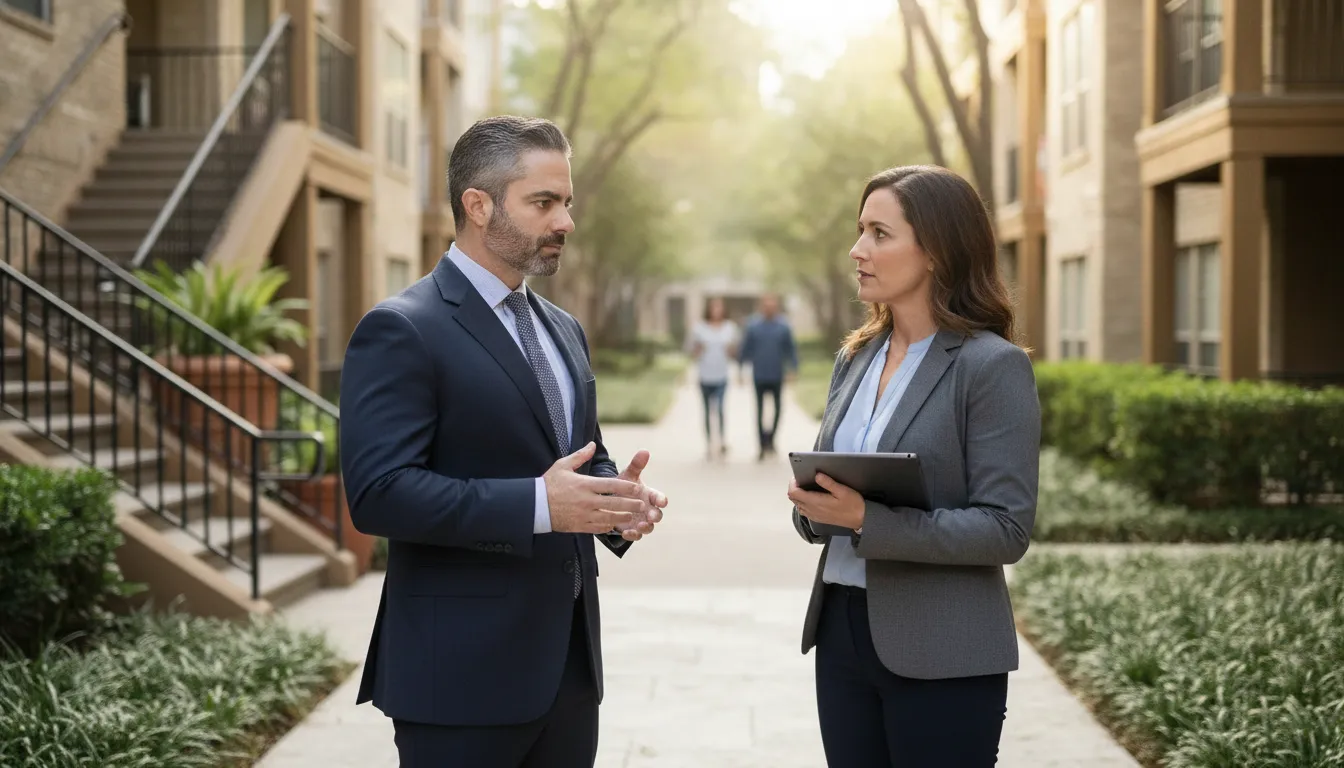
A loose stair, leaking ceiling, broken light, or other apartment hazard can turn an ordinary day into medical bills. Missed work, and difficult questions about who should have fixed the problem. For Austin renters, the answer often depends on what happened, who controlled the area. And whether the landlord or property manager knew, or reasonably should have known, about the danger.
An apartment complex injury lawyer austin renters trust may evaluate whether the condition was unreasonably dangerous. Whether the responsible party had notice, and whether reasonable time was provided to correct it. Your lease, repair requests, photographs, witness accounts, and medical records can all help clarify the facts, but no single item automatically establishes liability.
This guide explains how landlord responsibility can work under Texas law, what evidence to preserve. How renters insurance may differ from a landlord's coverage, and what compensation may be available. It also addresses whether you can remain in your unit while pursuing a claim. First, it helps to understand how liability is connected to notice, control, and the specific circumstances of the injury. For related guidance, review our premises liability and slip and fall injury guidance.
Contact Cap City Injury Attorneys to discuss your Austin apartment injury.
How an Apartment Complex Injury Lawyer in Austin Evaluates Landlord Liability
An apartment injury does not automatically make the property owner or manager legally responsible. In Texas, liability often turns on who controlled the area. Whether the responsible party knew or reasonably should have known about a dangerous condition, and whether reasonable steps could have reduced the risk.
Texas Property Code Chapter 92 defines a dwelling broadly and identifies a landlord generally as the owner, lessor, or sublessor. It also defines premises to include the rental unit, areas the lease authorizes a tenant to use, and common facilities held out for tenants generally. Those definitions can matter when an injury occurs in a hallway, stairwell, parking area. Pool area, or other shared space, but the lease and the specific facts still control. Read the Texas Property Code definitions.
Control and notice are central questions
A premises-liability claim generally requires evidence that the owner or other responsible party had actual or constructive knowledge of an unreasonably dangerous condition. Actual knowledge may come from a tenant complaint, maintenance request, inspection, or employee observation. Constructive knowledge asks whether the condition existed long enough, or was apparent enough, that the property owner reasonably should have discovered it. A hazard that appeared moments before an accident may be evaluated differently from a broken light, leaking pipe, uneven walkway, or unrepaired stair defect that was repeatedly reported.
Texas courts also consider whether the owner failed to use reasonable care to reduce or eliminate the risk and whether that failure proximately caused the injury. The condition must be more than a minor inconvenience; its character, location, visibility, and surrounding circumstances matter. Photos, work orders, messages, incident reports, and witness accounts may help establish what happened and when, but no single item guarantees a result.
Repair notice may affect a tenant claim
For certain repair-related claims under Chapter 92, the tenant must provide notice of the condition to the person or place where rent is normally paid. The condition must materially affect an ordinary tenant's physical health or safety. And the landlord generally must have had a reasonable opportunity to respond without making a diligent repair effort. These statutory requirements are distinct from every possible premises-liability theory, so an apartment injury lawyer in Austin will need to examine the hazard. Lease, notice history, control over the area, and cause of the injury together.
What Are the Most Common Apartment Complex Injury Scenarios?
Apartment injuries can arise from conditions throughout a property, not only inside a leased unit. Common examples include wet floors or walkways, broken stairs and handrails, poor lighting, unsafe swimming pools, uneven pavement or parking-lot defects, and unrepaired holes or other maintenance hazards. A falling object, malfunctioning gate, or other property condition may also matter when the complex controls the area where it occurs.
Security conditions can be relevant too. For example, a broken gate, inadequate lighting. Or a door that does not lock may raise questions about whether the property created an unreasonable risk in a particular setting. Dog attacks can involve different issues, including prior complaints, the animal's presence in a common area, and who had control over the condition or animal. You can review apartment dog attack liability for a more focused discussion.
Not every accident makes an apartment owner or manager legally responsible. The key facts often include what the hazard was, who controlled the area, whether the owner or manager knew or reasonably should have known about it. And whether reasonable steps were taken to repair, remove, warn about, or reduce the danger. Texas premises-liability law generally requires proof of an unreasonably dangerous condition, the owner's actual or constructive knowledge. A failure to use reasonable care, and a causal connection to the injury. See the Texas premises liability rules for related guidance.
Repair history and notice can be especially important. Emails, maintenance requests, work orders, incident reports, photographs, and witness accounts may help establish when a condition existed and whether management had an opportunity to address it. The location and timing matter as well. A report about a hole near one building may not establish notice of a different hole elsewhere. If you were injured, document the specific condition and location promptly, then seek medical attention and preserve related communications.
Does Renters Insurance Cover Injuries Caused by a Negligent Landlord?
| Coverage or source | What it may address | What it does not establish |
|---|---|---|
| Renters insurance | Policy-specific personal liability or property losses | That the landlord caused the injury |
| Landlord insurance | Owner property interests and some liability claims | That the owner had notice of the hazard |
| Lease and repair records | Notice, duties, and communications | A guaranteed claim outcome |
Renters insurance and a landlord's insurance policy serve different purposes, and neither policy decides whether a landlord or property manager was negligent. A renters policy may include personal liability coverage, but the scope of that coverage depends on the policy language, exclusions, and the facts of the incident. It may also cover certain losses involving the tenant's belongings. That does not automatically mean it pays for the tenant's bodily injuries or replaces a potential claim against a responsible property owner.
Landlord insurance generally protects the owner's property and may include liability provisions for certain claims involving the premises. However, the existence of that policy does not establish that the owner knew about a hazard, controlled the area, or failed to respond reasonably. In a Texas premises-liability case. The legal questions can include whether the owner had actual or constructive knowledge of an unreasonably dangerous condition and failed to use reasonable care to reduce or eliminate the risk. Texas Supreme Court guidance describes these elements, but applying them requires examining the specific condition and circumstances.
Insurance representatives may ask for a recorded statement, documents, or an account of what happened. Answer accurately, but avoid guessing about facts you do not know or making statements about fault before you understand the claim. Preserve your renters policy, declarations page, lease, maintenance requests, incident reports, medical bills, photographs, and every letter, email, or message from an insurer or apartment representative.
Details can matter. For example, evidence about the precise location of a hazard and its condition before the incident may affect the notice analysis. In one Texas apartment case, testimony about holes near different buildings did not establish knowledge of the condition where the injury occurred. The court's opinion illustrates why location-specific evidence matters. Coverage questions and negligence questions should therefore be evaluated separately.
What Evidence Do You Need to Prove Landlord Negligence?
Use this order when preserving records:
- Get medical care and document the condition safely.
- Report the incident and hazard in writing.
- Save the lease, repair requests, photos, witness details, and insurer messages.
- Keep medical and work-loss records together.
Start preserving evidence as soon as you can, while details are still fresh. A photograph or report may support your account, but no single item automatically proves that an owner or property manager was legally responsible. Texas premises-liability cases can turn on what the owner knew, how long a condition existed, whether reasonable care was taken, and whether the condition caused the injury.
Document the condition and what happened
- Take clear photos and video of the hazard from several angles. Include nearby lighting, signs, stairs, drains, flooring, or other features that help show the setting. If the condition changes, photograph it again and preserve the original files.
- Report the incident to management in writing and request a copy of the incident report. Keep emails, portal submissions, text messages, and notes of conversations, including the date, time, location, and name of the person who responded.
- Save repair requests, work orders, maintenance notices, inspection messages, and lease provisions or community rules that address the area or condition. Texas law can make notice and repair history important in some circumstances, but the legal effect depends on the facts and the claim.
- Collect witness names and contact information. Ask witnesses to record what they personally saw, including the hazard's location and condition, rather than guessing about what happened before they arrived.
A Texas appellate case involving an apartment tenant's fall illustrates why location and timing matter. Testimony about holes behind other buildings did not necessarily establish notice of the condition near the area where the tenant fell. Evidence should connect the reported condition to the specific place and date of the injury. The court's opinion provides an example of that distinction.
Preserve injury and claim records
Keep medical records, discharge paperwork, prescriptions, bills, mileage or transportation receipts, and notes about symptoms and treatment. Also save pay stubs, schedules, employer communications, or other documentation showing time missed from work. Keep every letter, email, and recorded statement request from an insurer, and avoid guessing about fault or the extent of your recovery when answering questions.
Photos, video, witness testimony, policies, and expert analysis have all appeared as evidence in Texas premises cases. But courts still evaluate whether the condition was unreasonably dangerous and whether it caused the injury. Responsibility may also be assigned among multiple parties, including the claimant, under Texas law. For more context, review these Austin personal injury resources and consider discussing the complete record with an apartment complex injury lawyer in Austin.
Can You Sue an Apartment Complex While Still Living There?
Often, a tenant may be able to pursue an injury claim without moving out first. Continuing to live at the property does not, by itself, prove that the apartment owner or manager is liable, however. The key questions may include what condition caused the injury, who controlled the area. Whether management knew or reasonably should have known about the danger, and whether reasonable steps could have reduced the risk.
If the hazard remains, notify management promptly and in writing. Describe the condition, where it is located, when you noticed it, and how it affects safety. Keep copies of emails, portal submissions, maintenance requests, photographs, and any responses. For certain repair-related claims, Texas law addresses notice to the person or place where rent is normally paid, along with notice, repair time, and the landlord's response. See Texas Property Code Section 92.056 for the statutory language.
Until the condition is addressed, avoid the unsafe area when reasonably possible and do not attempt a repair that could create additional risk. If you must pass through it, note what precautions were available and whether warnings or barriers were present. Preserve the condition through photographs or video when it is safe to do so, and seek medical care for your injury.
Tenants may also worry that reporting a hazard or seeking legal advice could lead to retaliation. Retaliation concerns can depend on the facts and the protections that apply, so document changes in notices, services, fees, access, or treatment after you complain. A qualified Austin personal injury lawyer can review the circumstances. Consider getting advice promptly because deadlines and available claims can vary under Texas law.
What Compensation Can You Recover After an Apartment Injury?
After an apartment injury, potential compensation is usually tied to the losses the injury caused and the evidence supporting those losses. Depending on the facts, a claim may include reasonable medical expenses, such as emergency care, follow-up treatment, rehabilitation, medication, and related care. It may also include income lost while recovering, reduced earning capacity when the injury affects future work, and other future losses supported by reliable evidence.
Texas premises-liability law also recognizes that an injury can affect more than finances. Damages may include compensation for physical pain, emotional distress, physical impairment, or disfigurement. If personal property was damaged in the incident, property loss may be relevant as well. The availability and value of any category depend on the injury, the circumstances, and the proof available. No particular recovery is guaranteed.
What determines whether compensation is available?
Showing an injury alone does not establish an apartment complex's responsibility. The claim may turn on whether the owner or other responsible party knew, or reasonably should have known. About an unreasonably dangerous condition; failed to use reasonable care; and caused the injury. The Texas Supreme Court describes these as central premises-liability considerations. See the court's Texas premises-liability guidance.
Documentation can connect the condition to your losses. Medical records, bills, wage information, incident reports, photographs, witness accounts, and communications with management or insurers may all matter. Fault can also affect recovery. Under Texas proportionate-responsibility rules, a claimant whose responsibility is greater than 50 percent may be barred from recovering damages, while assigned responsibility can reduce recovery in other circumstances. An Austin injury lawyer can evaluate how notice, causation, insurance, comparative fault, and your individual losses fit together under the available evidence.
Frequently Asked Questions
What kind of lawyer do you need to sue an apartment complex?
A personal injury lawyer who handles Texas premises-liability claims can evaluate an injury involving an apartment owner, property manager, maintenance contractor, or another responsible party. The legal theory and potentially liable parties depend on the hazard, who controlled the area, what the property knew or should have known, and how the injury occurred.
Does my landlord have to know about a dangerous condition before I can bring a claim?
Often, notice is important. In a premises-liability case, Texas courts generally require evidence that the owner had actual or constructive knowledge of an unreasonably dangerous condition. Failed to use reasonable care, and caused the injury. Evidence showing how long a hazard existed may help address constructive knowledge. See the Texas Supreme Court's premises-liability guidance.
What should I do after being injured at an apartment complex?
Get appropriate medical care, report the incident in writing, and preserve photographs or video of the condition before it changes if you can do so safely. Keep medical records, receipts, messages, maintenance requests, and the names of witnesses. Avoid guessing about fault in statements to an insurer, and do not discard shoes or clothing involved in the incident.
Can I recover compensation if I was partly responsible for the injury?
Possibly, but your share of responsibility can reduce recovery. Texas law says a claimant may not recover damages when the claimant's percentage of responsibility is greater than 50 percent. The evidence, the parties involved, and the specific facts determine how responsibility is evaluated. See Texas Civil Practice and Remedies Code section 33.001 at statutes.capitol.texas.gov.
Contact Us About Your Austin Apartment Injury
Understanding whether an apartment complex may be responsible can depend on the condition involved, what was known, and the available evidence. If you were injured at an Austin apartment community, Cap City Injury Attorneys can discuss your situation and possible next steps. To schedule a conversation, contact Cap City Injury Attorneys through our contact page.
More on the blog
Keep reading.
14 min read
Traumatic Brain Injury Lawyer Austin: Costs and Options
Traumatic brain injury lawyer Austin guidance on TBI documentation, long-term costs, Texas damages, insurance questions, and legal options for injured families.
By Cap City Injury Attorneys
14 min read
Dog Bite Lawyer Austin: Texas Claim Guide
Dog bite lawyer Austin guidance on Texas liability, evidence, damages, immediate steps, and the filing deadline after an attack. Learn what to document.
By Cap City Injury Attorneys
Let's talk about your case.
Free case review, no obligation. We'll tell you straight whether we can help.