
By Cap City Injury Attorneys14 min read
Dog Bite Lawyer Austin: Texas Claim Guide
Dog bite lawyer Austin guidance on Texas liability, evidence, damages, immediate steps, and the filing deadline after an attack. Learn what to document.
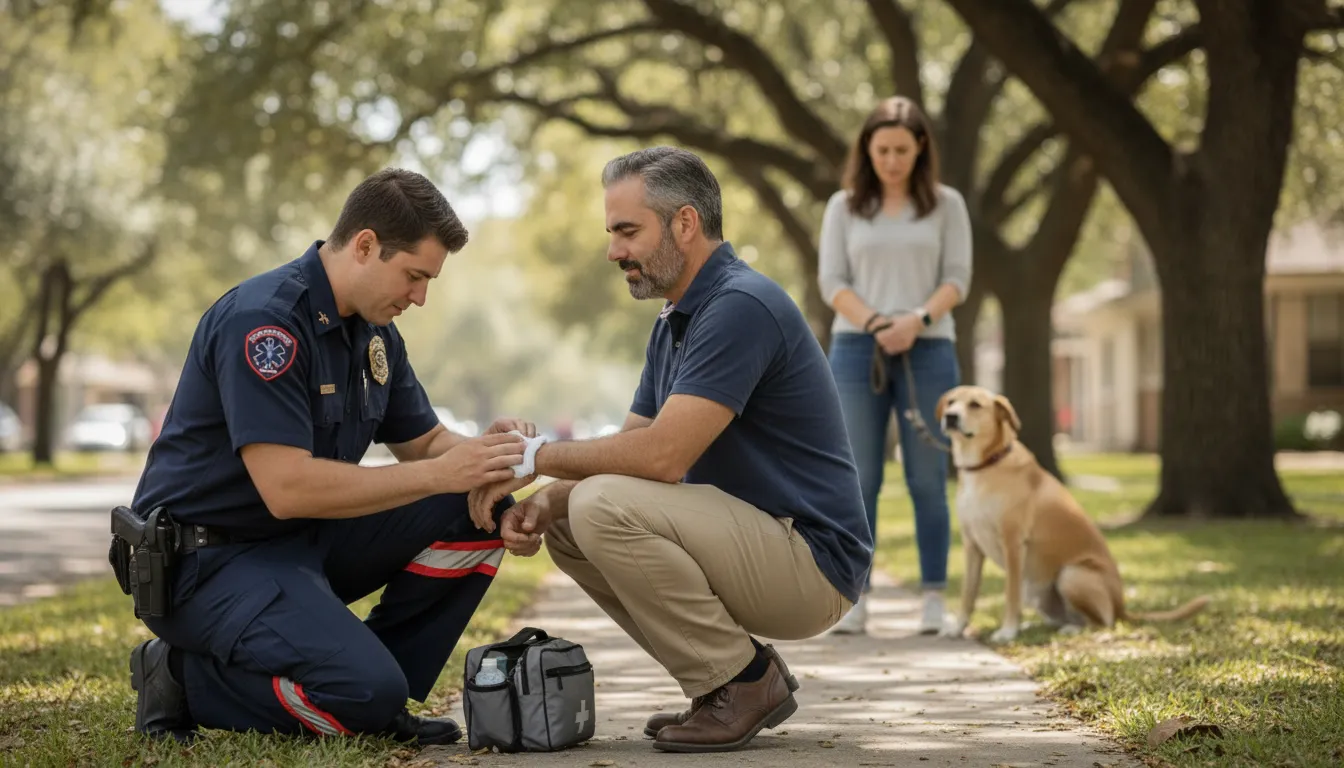
A dog attack can leave you managing a wound, medical decisions, insurance questions, and a report to Austin Animal Protection at the same time. Acting methodically helps preserve both your health and the information needed to understand what happened.
Request a consultation about your Austin dog bite claim.
If you are looking for a dog bite lawyer austin residents can turn to, begin by getting medical attention, reporting the bite, documenting the scene and injury, and identifying the dog and its owner. Whether another person may be responsible depends on facts such as prior notice, control of the animal, negligence, the severity of the injury, and applicable Texas law. A timely review can also help protect evidence before memories and records become harder to obtain.
This guide explains the Texas rules that may apply, the people or entities whose conduct may matter, and the steps that can strengthen a fact-specific claim. For broader context, see our Austin specialty injury claims guide. The first issue is how Texas approaches responsibility when a dog has attacked someone.
Does Texas Have a Strict Liability or One-Bite Rule for Dog Attacks?
Texas dog-bite cases do not fit neatly into the label of a purely strict-liability state or a purely one-bite state. A claim may depend on what the owner or caretaker knew about the dog's prior behavior, whether the person failed to use reasonable care, and whether the dog was adequately controlled. The details of the attack, the location, and the relationship between the dog and the injured person can all affect the analysis.
Prior knowledge can matter when a dog previously showed aggression, threatened someone, escaped confinement, or acted in a way that should have alerted a reasonable owner to a risk. But a prior bite is not always required for a negligence-based theory. Evidence that an owner ignored a known local leash requirement, allowed a dog to escape, or failed to take reasonable precautions may also be relevant. The question is not simply whether the dog caused an injury. It is whether the responsible person had a duty under the circumstances and failed to act reasonably.
Texas Health and Safety Code Chapter 822 defines securing a dog as taking reasonable steps to keep it on the owner's property, including using an enclosure capable of preventing escape. The statute recognizes serious bodily injury in terms of severe bite wounds or severe ripping and tearing of muscle. It also provides a court process for seizure when a sworn complaint and probable cause establish that a dog caused death or serious bodily injury. Those provisions address control and dangerous-dog procedures, not every civil liability question. See these Texas dog bite liability rules for related background.
For an Austin incident, preserve facts about warnings, fences, leashes, prior complaints, witnesses, and what happened immediately before the attack. A dog bite lawyer in Austin can evaluate those facts under the potentially applicable theories. This article provides general information, not legal advice.
Who Is Legally Responsible When a Dog Bites You in Texas?
| Potentially responsible party. | Why that party may be relevant. | Facts that need review. |
|---|---|---|
| Dog owner | The owner may be connected to the dog's control, prior behavior, and the circumstances of the attack. | Ownership, previous aggression or warnings, where the dog was kept, and whether reasonable precautions were taken. |
| Keeper or caretaker | A person temporarily responsible for the dog may have had control over its movement or access to other people. | Who was watching the dog, what instructions they received, and whether the dog escaped or was allowed to approach the victim. |
| Property controller | A landlord, business, or other property controller may be relevant when the location, known hazard, or failure to control access contributed to the incident. | Notice of the dog or danger, control over the area, warnings, security measures, and the relationship between the parties. |
| Other responsible parties | In some cases, another person or organization may have contributed through negligent handling, supervision, or security. | The complete timeline, witness accounts, records, local rules, and evidence showing who had control. |
Being the dog owner does not automatically establish liability, and identifying a property owner does not by itself prove responsibility. Texas law addresses reasonable steps to secure a dog, including preventing escape from an enclosure, while local governments may impose additional leash or registration requirements. The facts surrounding control, notice, and the injury remain important.
For a broader explanation of the issues that may affect a Texas claim, review these Texas dog bite liability rules. A careful review may also consider whether the injury meets Texas's statutory definition of serious bodily injury, including severe bite wounds or severe ripping and tearing of muscle. This section is general information, not legal advice.
What Evidence Do You Need to Support a Dog Bite Claim?
Start by creating a clear record of what happened and how the bite affected you. Keep copies of the following materials. Do this even if you are still deciding whether to speak with a dog bite lawyer in Austin.
- Medical records and bills: Save urgent-care or hospital records, photographs of treatment, prescriptions, follow-up notes, and instructions from your providers. These documents connect the injury to the incident and show the care your condition required.
- Injury photographs: Take well-lit photos as soon as it is safe, then continue documenting bruising, swelling, wounds, scarring, or changes during healing. Keep the original files and note when each image was taken.
- Witness information: Write down names, phone numbers, email addresses, and a short description of what each person saw. A witness may be able to clarify where the dog was, whether it was restrained, and what happened before and after the bite.
- Animal Protection records: Austin requires animal bites to be reported to Animal Protection. After receiving medical attention, complete an Animal Bite Report and retain confirmation or related correspondence. The city also requires owners of dogs involved in bite cases to provide a current rabies vaccination certificate. Review Austin's animal-bite reporting guidance.
- Owner, dog, and scene details: Record the owner's name and contact information, the dog's description, the location, whether a leash or enclosure was present, warning signs, property conditions, and any prior statements about the animal. Photograph the scene when appropriate and safe.
- Insurance communications: Preserve letters, emails, claim numbers, recorded-statement requests, and messages from an insurer. Avoid deleting anything or speculating about fault. Consider getting legal guidance before making a detailed recorded statement.
Evidence does not guarantee a particular result. Liability and damages depend on the specific facts, applicable law, and the reliability of the available proof. This is general information, not a substitute for legal advice.
What Injuries and Damages Can Dog Bite Victims Recover?
A dog bite claim may address more than the initial emergency-room bill. Depending on the evidence and the legal theory involved, recoverable damages can include reasonable medical expenses, future care, lost income, and the physical and emotional effects of the injury. The available recovery depends on the facts, the available insurance or assets, and proof connecting each loss to the attack.
Medical care and lasting physical harm
Medical damages may include emergency treatment, follow-up visits, medication, wound care, physical therapy, and other treatment related to the bite. If the injury requires additional care, records and medical opinions may help show what treatment is reasonably expected. Scarring, nerve damage, limited movement, and disfigurement can affect the value of a claim, particularly when the injury is visible or requires continuing treatment.
Income, pain, and emotional effects
If the injury prevents someone from working, a claim may include documented lost wages and, when supported, reduced earning capacity. A dog attack can also cause pain, fear, anxiety, sleep problems, or other emotional effects. Medical records, counseling documentation, personal observations, and testimony from people who saw the changes may help establish those effects. These categories are case-specific, not automatic.
Property damage may also be relevant when the attack damages clothing, a phone, or another personal item, but receipts, photographs, repair records, or other documentation can make the loss easier to evaluate. An explanation of dog bite claim value factors can provide additional context, but no article can responsibly promise an average settlement or dollar amount. A careful review should account for the injury, treatment, work impact, emotional consequences, evidence, and applicable Texas law.
What Should You Do Immediately After a Dog Attack in Austin?
- Get emergency care first. Call 9-1-1 if you have severe bleeding, deep wounds, trouble breathing, signs of shock, or another urgent condition. Otherwise, seek prompt medical evaluation. Follow the clinician's instructions and keep records of treatment, prescriptions, referrals, and follow-up visits.
- Report the bite to Austin Animal Protection. Austin says all animal bites must be reported. For an emergency, call 9-1-1. For a domestic-animal bite, follow Austin's reporting instructions and complete the Animal Bite Report after receiving medical attention. Keep the activity number and copies of anything you submit.
- Ask about rabies without delaying care. Tell the clinician whether the dog was known, vaccinated, restrained, or acting abnormally. The CDC says rabies post-exposure care can include wound washing, human rabies immune globulin, and vaccination. Wash a wound with soap and water for 15 minutes and contact a health professional promptly. Do not decide that treatment is unnecessary based only on an owner's verbal assurance.
- Preserve what you can safely document. Photograph the wounds, torn clothing, treatment-related materials, and the location, if doing so does not interfere with care. Write down the date, time, address, sequence of events, dog description, owner's name and contact information, and witness names and contact details. Save any available vaccination or insurance information.
- Keep communications and records. Preserve texts, emails, direct messages, voicemails, incident reports, medical bills, and notes about missed work or symptoms. Avoid arguing about fault or making a detailed recorded statement before you understand what is being requested. This is general information, not a substitute for medical or legal advice.
These steps address immediate safety and documentation. Whether a claim exists depends on the facts, applicable law, and available evidence.
When Should You Call a Dog Bite Lawyer in Austin?
Consider seeking legal guidance once immediate medical needs are under control, especially if the bite caused significant wounds, scarring, missed work, continuing treatment, or uncertainty about who controlled the dog. Early review can help preserve evidence while memories, photographs, messages, and witness details are still available. It can also clarify which facts matter under Texas law instead of assuming that every bite creates automatic owner liability.
Timing matters for medical follow-up. Keep records of treatment, prescriptions, referrals, symptoms, and recommended future care. In Austin, animal bites must be reported to Animal Protection, and the city asks people who received medical attention to complete an Animal Bite Report. Reported dogs, cats, and ferrets that bite or scratch a person must be observed for 10 full days, so reporting promptly can help preserve an official record and address public-health requirements. See the Austin specialty injury claims guide for broader context on evaluating local injury claims.
Be careful with insurance communications. You may need to provide basic incident information, but avoid guessing about fault, minimizing symptoms, or agreeing that an early payment resolves future medical issues before you understand the full impact. Save emails, texts, recorded-message notices, claim forms, and settlement documents.
A fact-specific review may be useful when the owner disputes what happened, the dog was kept at an apartment or business, or a child was injured. It may also help when vaccination or ownership information is unclear or the insurer requests a recorded statement. A lawyer can assess the available evidence and applicable deadlines, but no general article can determine the outcome of an individual claim.
How Long Do You Have to File a Dog Bite Lawsuit in Texas?
In general, Texas law gives a person two years to bring a personal-injury lawsuit. Texas Civil Practice and Remedies Code Section 16.003 measures that period from the day the cause of action accrues, rather than automatically from the date someone first speaks with a lawyer. Read the statute at Texas CPRC Section 16.003.
That general rule does not answer every dog bite case. The accrual date can depend on the facts and the legal theory involved. The statute also addresses legal disability, including a person who is younger than 18 when the claim accrues. Other statutory exceptions or case-specific rules may affect the deadline. A minor's claim, a death-related claim, or an unusual injury pattern may require a different limitations analysis.
Why you should not wait to review the deadline
Do not treat two years as a reason to postpone action. Witnesses may become harder to locate, surveillance footage can be overwritten, and photographs, medical records, and communications may be more difficult to gather as time passes. Prompt documentation can also help preserve the sequence of treatment, symptoms, and contact with the dog owner or insurer.
This is general information, not an individualized legal conclusion. If you were injured by a dog in Texas, consider getting case-specific legal guidance early enough to identify the potentially applicable deadline and preserve relevant evidence.
Request a consultation about your Texas dog bite claim
Frequently Asked Questions
Can I sue for a dog bite in Texas?
You may have a claim when the evidence supports responsibility for the attack and legally recognized harm. The analysis can involve the dog's history, how it was controlled, who had custody, where the bite occurred, and whether another person or property owner contributed to the incident. Medical records, photographs, witness information, and an Austin Animal Protection report can help establish what happened. A case review should account for the specific facts rather than assume the owner is automatically liable.
What is the average settlement for a dog bite in Texas?
There is no reliable average that predicts what an individual claim is worth. Potential damages may include medical treatment, future care, lost income, scarring, disfigurement, pain, emotional effects, and certain property losses. The severity and permanence of the injuries, available insurance, documentation, and applicable liability rules all matter. Be cautious of online figures that do not explain the facts behind them.
How much does a lawyer cost for a dog bite case?
Fees and case expenses depend on the lawyer, the agreement, and the work the claim requires. Before hiring counsel, ask how fees are calculated, which expenses may be charged, and what happens if the claim does not resolve. Request those terms in writing so you understand the arrangement before moving forward.
Is it worth suing for a dog bite?
That depends on the injury, evidence, insurance coverage, likely damages, and the practical cost of pursuing the claim. A legal review can help you compare those considerations and identify deadlines. Texas generally requires a personal-injury suit to be filed within two years after the claim accrues, subject to statutory exceptions, including provisions concerning legal disability. See Texas Civil Practice and Remedies Code Section 16.003.
Talk With Cap City About Your Dog Bite Claim
Understanding how Texas rules, Austin reporting steps, and available evidence apply to your situation can help you evaluate what to do next. For a case-specific review of your injuries and claim, request a consultation through Cap City Injury Attorneys. Share the basic details of the incident and any documentation you have available so the team can better understand your concerns.
More on the blog
Keep reading.
14 min read
Traumatic Brain Injury Lawyer Austin: Costs and Options
Traumatic brain injury lawyer Austin guidance on TBI documentation, long-term costs, Texas damages, insurance questions, and legal options for injured families.
By Cap City Injury Attorneys
17 min read
Motorcycle Accident Lawyer Austin: A Texas Claims Guide
Motorcycle accident lawyer Austin guidance on rider bias, evidence, injuries, comparative negligence, and choosing next steps after a Texas crash.
By Cap City Injury Attorneys
Let's talk about your case.
Free case review, no obligation. We'll tell you straight whether we can help.