
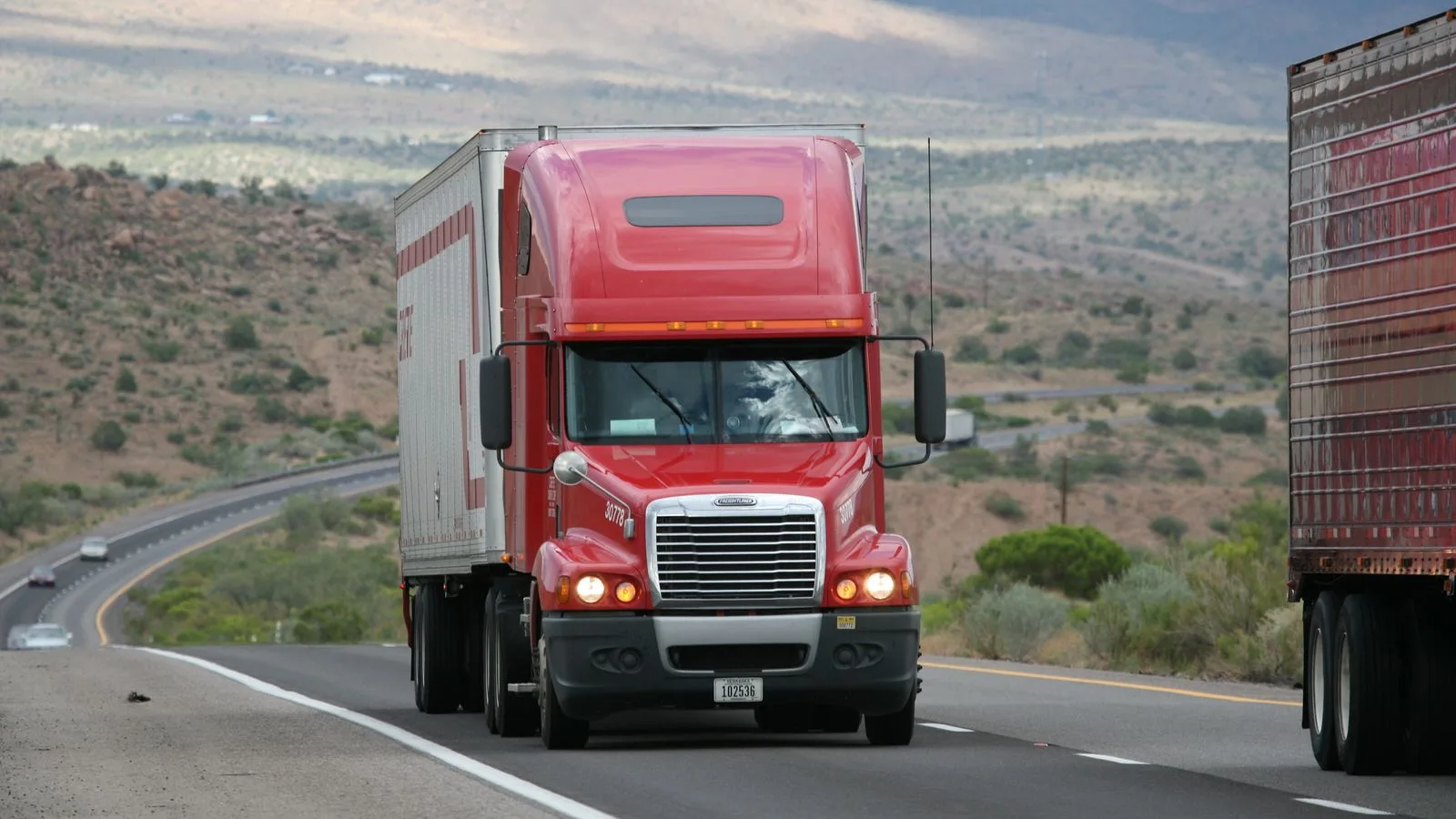
Pflugerville · Truck Accident
Pflugerville Truck Accident Lawyer
A commercial truck crash claim in Pflugerville involves a tractor-trailer or heavy commercial vehicle operating on a Texas freight corridor, most often SH-130, and is governed by both Texas negligence law and the Federal Motor Carrier Safety Regulations, which impose hours-of-service, inspection, and driver-qualification duties on the carrier and its driver. The motor carrier can be liable directly and through respondeat superior, and the federal minimum coverage requirements for commercial vehicles typically exceed personal Texas minimums by a large margin. These cases file in Travis County district court under the same two-year statute of limitations that governs other personal injury claims, but the evidence critical to proving them, ELD records, ECM downloads, and driver-qualification files, cycles out in weeks rather than years. Preserving that data before it is overwritten is the first and often the most consequential step in a Pflugerville truck case.
Why Pflugerville cases are different
Pflugerville's east side feeds SH-130, a tolled six-lane built as a freight bypass around I-35, so eighteen-wheelers running the corridor at posted speeds up to eighty miles per hour are a steady and distinct piece of our truck-crash intake, alongside delivery fleets serving the Dell-and-tech commuter overlay.
FMCSA duties and the SH-130 freight bypass
A commercial truck crash on SH-130 is governed by a body of federal regulation that ordinary passenger-vehicle cases never touch. The Federal Motor Carrier Safety Regulations impose hours-of-service limits, electronic-logging-device record-keeping, driver-qualification files, and vehicle-inspection duties, and a violation of any of them can establish negligence directly. SH-130 exists precisely to pull through-freight off I-35, so it carries long-haul tractor-trailers at toll-road speeds where a fatigued or distracted driver meets the short merge distances at the SH-45 N interchange. The ELD logs, the GPS and routing data, and any in-cab camera footage tell whether the driver was over hours or off-route, but those records sit behind retention windows that begin closing within the first weeks. We send preservation letters fast to lock the data, then read the logs against the corridor's merge geometry to reconstruct what the driver could and should have seen.
Employer liability and commercial policy limits
When the at-fault driver was working a route, the analysis rarely stops at the driver. A motor carrier, or the company whose delivery route the driver was running, can be vicariously liable for the driver's conduct and independently liable for negligent hiring, training, supervision, or maintenance. That matters financially because a commercial auto policy on a regional fleet typically carries limits an order of magnitude above the personal Texas minimums a passenger-vehicle defendant carries, so the realistic recovery on a serious SH-130 truck wreck runs through the company layer. The carrier knows this and moves quickly; trucking defendants routinely retain defense counsel and a rapid-response investigator within hours of a serious crash. That is exactly why the plaintiff-side preservation demands and independent scene documentation need to go out on the same timeline, not weeks later. Higher-energy SH-130 impacts also leave more reliable EDR data to anchor the demand.
More in Pflugerville
Other ways we help Pflugerville injury victims.





Frequently asked
Pflugerville truck accident questions
- Federal Motor Carrier Safety Regulations layer duties onto commercial drivers and carriers that passenger cases never reach, and the available coverage is usually far larger. On SH-130's eighty-mile-per-hour segment the crash energies are higher, the injuries more severe, and the EDR and ELD data more decisive. The carrier defends harder because the stakes are higher, which is why early preservation of logs and gantry footage matters so much.
- Yes. A commercial delivery vehicle opens the employer's commercial auto policy, which typically carries substantially higher limits than a personal Texas minimum. The vehicle's telematics, route software, and any in-cab cameras generate records personal-driver cases do not have. The commercial carrier defends harder than a personal-lines adjuster would, but the recoverable coverage is usually an order of magnitude larger, so the trade is worth it.
- Quickly. ELD and telematics records sit behind standard retention cycles, dashcam and in-cab footage can overwrite within weeks, and CTRMA gantry footage on the SH-130 segment is held only briefly. Because Pflugerville crashes route to Baylor Scott & White on FM-685 and higher-acuity trauma to Dell Seton downtown, medical proof builds over time while the truck data is already cycling out, so preservation letters need to go out in the first week or two.
- Yes, typically under two theories. Respondeat superior makes the carrier vicariously responsible for what its driver does in the course of employment. Independent of that, the carrier can be directly liable for negligent hiring, training, supervision, or maintenance if those failures contributed to the crash. Both theories pull the carrier into the case alongside the driver, and the commercial auto policy covers the carrier's exposure, not just the driver's.
- Federal hours-of-service regulations under 49 C.F.R. Part 395 cap how many hours a commercial driver can operate without rest to prevent fatigue-related crashes. An ELD records the driver's duty status and driving time automatically, so it shows immediately whether the driver was within legal limits when the crash occurred. On SH-130, a long-haul driver using the corridor as an I-35 bypass may have been driving for hours, and a Part 395 violation is direct evidence of negligence that significantly strengthens the case.
- Generally not for the motor carrier's liability exposure. Under 49 C.F.R. section 376.12, a carrier whose operating authority is on the truck remains liable for the driver's conduct even if the driver is classified as an independent contractor. We examine the operating authority, lease agreements, and dispatch records to identify every entity in the chain and the correct policy layer for each. The independent-contractor label does not limit recovery against a carrier that put a driver on SH-130.
Where we work from
Downtown Austin. Pflugerville clients welcome.
Our office is in downtown Austin; we represent Pflugerville-area clients statewide and travel to Pflugerville for case-specific needs (scene visits, medical-records consultations, court appearances). Home and hospital visits when injuries make travel difficult.
Talk to a Pflugerville truck accident lawyer.
Free case review, no obligation. We'll tell you straight whether we can help.