

Laredo · Slip & Fall
Laredo Slip & Fall Lawyer
Premises liability in Texas turns on what the property owner knew or should have known about a hazard, what duty that owner owed to the person on the property, and whether reasonable steps were taken to make the property safe or to warn of the danger. Texas categorizes visitors into three classes — invitee, licensee, and trespasser — and the level of duty owed scales sharply with status. The two-year limitations period under Tex. Civ. Prac. & Rem. Code § 16.003 governs, but the harder fight in most slip-and-fall files is proving notice: that the owner knew or, with reasonable inspection, should have known about the condition that caused the fall.
Why Laredo cases are different
Laredo slip & fall claims turn on Laredo-area roads, courts, and insurers, not generic statewide averages. Here is what shapes a slip & fall case in and around Laredo, and how Cap City handles it.
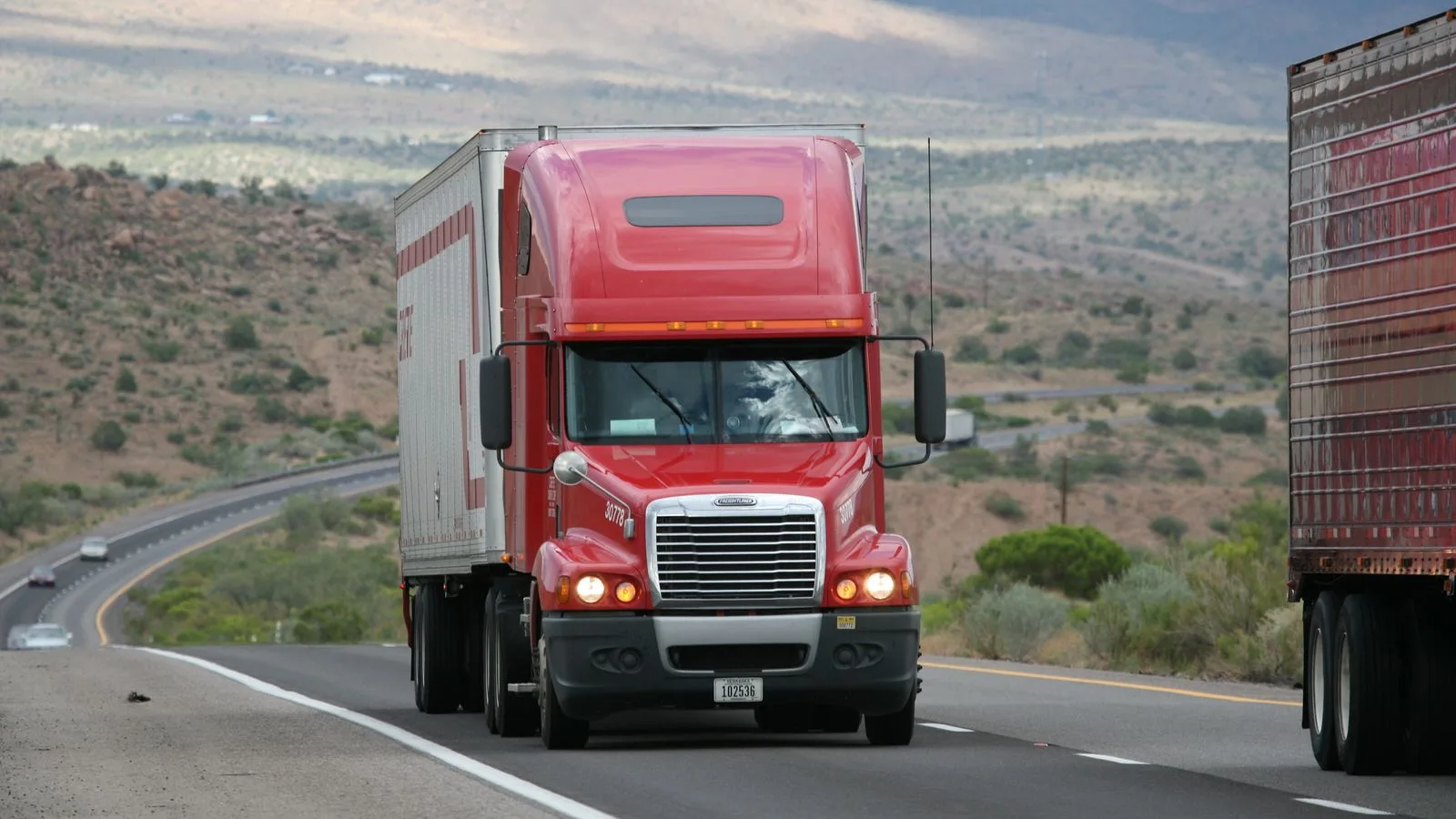
Freight geography is the whole story in Laredo. Northbound trucks clear the World Trade Bridge, then feed onto FM 1472 — Mines Road — the industrial artery lined with warehouses, customs brokers, and transfer yards that connects the crossing to Loop 20 and the I-35 on-ramps. Mines Road carries loaded tractor-trailers, empty bobtails circling back for the next load, and passenger cars belonging to the people who work in those warehouses, all in the same lanes. The result is a collision pattern that does not exist in most Texas cities: heavy-vehicle crashes on an arterial rather than on an interstate, at arterial speeds, with turning movements into and out of yard driveways. Loop 20 (the Bob Bullock Loop) is the eastern bypass and takes the overflow, concentrating merge and rear-end collisions at the I-35 and US-59 interchanges. US-59 runs east toward Freer and George West; US-83 runs the river line north toward Zapata and south into the older neighborhoods. Downtown, Gateway to the Americas and the Juárez-Lincoln bridges drop passenger and pedestrian traffic onto the surface grid around Convent Avenue and San Bernardo, where pedestrian-strike files cluster. Where a crash happened in Laredo tells you almost everything about who the defendant is going to be.
Serious-injury filings out of Laredo go to the Webb County district courts at the courthouse on Victoria Street: the 49th, 111th, 341st, and 406th, assigned by docket draw. Venue under Tex. Civ. Prac. & Rem. Code § 15.002 is proper where the events occurred or where the defendant resides, and for a crash inside Webb County that defaults to Webb County. The complication in this market is federal removal, and it is not a remote possibility; it is the base case for the freight files. The U.S. District Court for the Southern District of Texas, Laredo Division, sits here, and a defendant carrier headquartered in another state (or another country) with more than $75,000 in controversy has both the incentive and the standing to remove. Southern District scheduling, its local rules, and its expert-designation deadlines produce a materially different case timeline than a Webb County state docket. We run the removal analysis before the petition is drafted rather than after, because the answer changes how the pleading is built and which defendants are named first.
More in Laredo
Other ways we help Laredo injury victims.



How we approach slip & fall cases
Invitee, licensee, trespasser — and why the label drives the case
An invitee is on the property for the mutual economic benefit of both parties: a customer in a grocery store, a guest at a hotel, a patient in a clinic. Owners owe invitees the highest duty: to make the premises reasonably safe and to inspect for, warn of, and correct dangerous conditions the owner knew about or, with ordinary care, should have known about. A licensee is on the property with permission but not for mutual benefit: a social guest, a friend stopping by. Owners owe licensees a lower duty: to warn of known dangers and not to injure them by willful, wanton, or grossly negligent conduct. A trespasser is on the property without permission; the only duty owed is not to injure intentionally or by gross negligence. The status determination is often the first and most important fight in the case.
Notice: actual versus constructive, and why it matters
Under Texas case law (CMH Homes v. Daenen, Wal-Mart Stores v. Reece, Wal-Mart Stores v. Gonzalez), the invitee plaintiff has the burden to prove the owner had actual knowledge of the dangerous condition or that the condition existed long enough that the owner should have known about it through reasonable inspection. Insurers and defense lawyers attack notice aggressively. The proof that wins notice cases is documentary: store sweep logs, security camera footage showing how long a spill existed before the fall, employee statements, prior incident reports for the same hazard. Without notice evidence, an otherwise clear liability case can fail at summary judgment.
Frequently asked
Laredo slip & fall questions
- No. Texas premises law requires you to prove the store knew about the hazard or, with reasonable inspection, should have known about it. A puddle that appeared ten seconds before you fell may not support liability; the same puddle that existed for an hour while employees walked past almost certainly does. The most important early move is preserving the store's surveillance footage and sweep logs before the standard retention period runs out, because those documents are often dispositive on the notice question.
- An invitee is on the property for mutual benefit, typically a paying customer or business visitor, and is owed the highest duty: to make the premises reasonably safe and to inspect for and warn of dangerous conditions. A licensee is a permitted visitor not on the property for mutual economic benefit (a social guest, for example) and is owed a duty to warn of known dangers and not to be injured by willful, wanton, or grossly negligent conduct. A trespasser is uninvited and is owed only the duty not to be injured intentionally or by gross negligence. Status is determined by the facts of the visit, not by how the parties later characterize it.
- It matters but it is not a complete defense. A warning that adequately puts an invitee on notice of a specific danger can reduce or eliminate liability, but courts look at whether the warning was actually visible, properly placed, and clearly applicable to the specific hazard that caused the fall. A 'Wet Floor' sign at one end of an aisle for a spill at the other end is not a meaningful warning. Defense counsel routinely overstates the legal effect of these signs at the early-offer stage.
- Often yes, depending on where the fall occurred and what the lease says. Landlords typically retain control of common areas — parking lots, stairwells, walkways, pools — and owe a duty of reasonable care to tenants and guests in those areas. Falls inside a leased unit generally implicate the tenant's control, with exceptions for latent defects the landlord knew about or for items the landlord agreed to maintain. The lease, the property's repair-and-maintenance history, and the specific location of the fall all drive the analysis.
- In the Webb County district courts at the courthouse in Laredo — the 49th, 111th, 341st, or 406th, assigned by docket draw — for any crash arising inside Webb County. The one that matters more in this market is the follow-up question: whether the case stays there. Freight cases with an out-of-state or foreign carrier and more than $75,000 in controversy are strong candidates for removal to the U.S. District Court for the Southern District of Texas, Laredo Division. We evaluate removal exposure before drafting the petition, because a federal timeline changes the case plan.
- Usually yes, but the analysis is different and it starts earlier. The first job is identifying every motor carrier in the chain: the drayage operator that moved the trailer across, the freight broker that placed the load, the trailer's owner or lessor, and the carrier of record on the Mexican side. Each has its own insurance. A policy written for a Mexican-domiciled carrier may exclude US losses or carry limits far below what an American claim is worth, which is exactly why the other parties in the chain matter so much. We do not accept a police report's identification of the responsible party as the end of the inquiry.
Where we work from
Downtown Austin. Laredo clients welcome.
Our office is in downtown Austin; we represent Laredo-area clients statewide and travel to Laredo for case-specific needs (scene visits, medical-records consultations, court appearances). Home and hospital visits when injuries make travel difficult.
Talk to a Laredo slip & fall lawyer.
Free case review, no obligation. We'll tell you straight whether we can help.