
By Cap City Injury Attorneys15 min read
Is Texas an At-Fault State for Car Accidents? How Texas Car Insurance Laws Affect Your Claim
Texas is an at-fault state, but shared responsibility and insurance coverage can affect a car accident claim. Learn how fault and payment work.
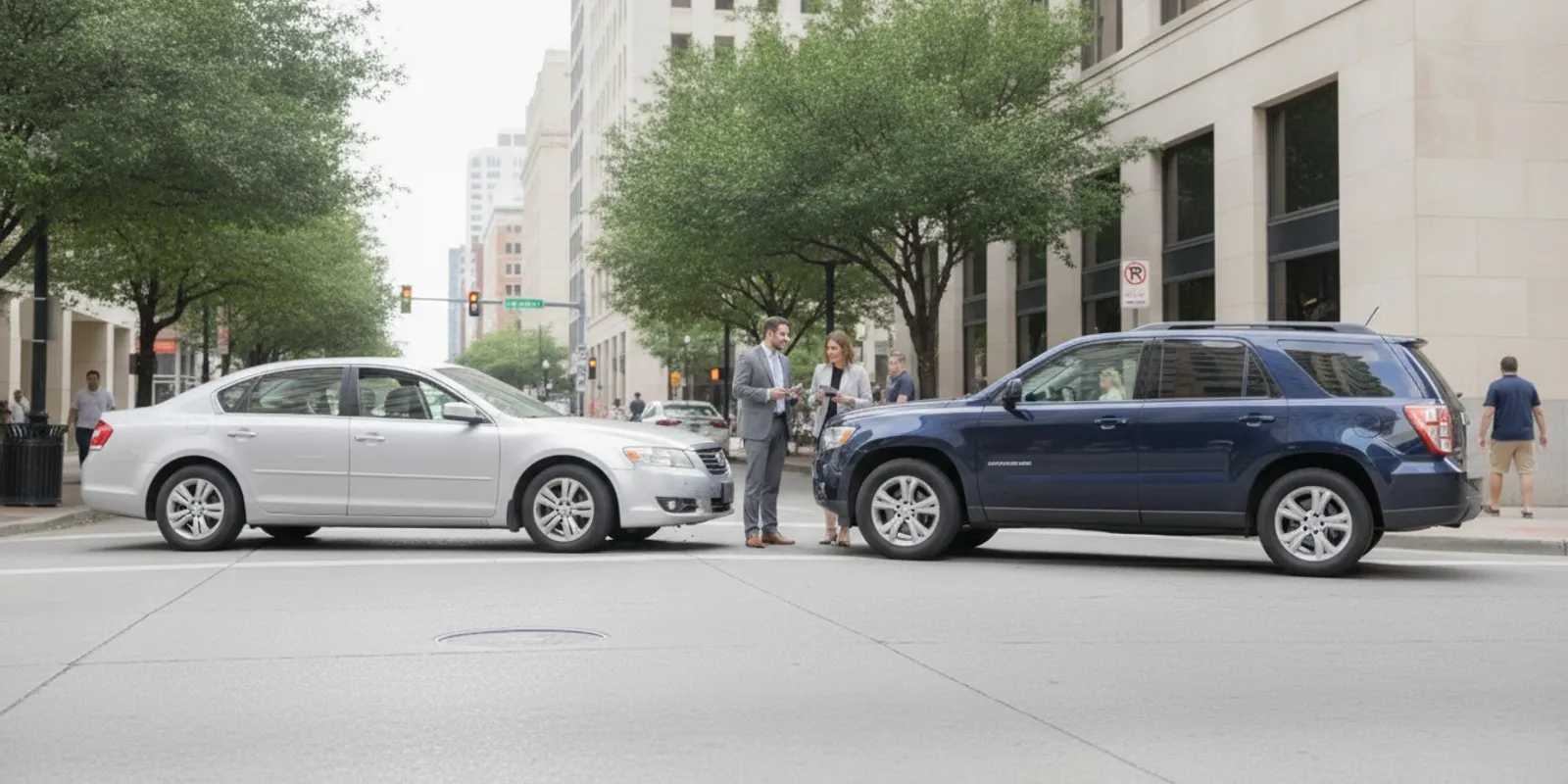
Is Texas an at-fault state for car accidents? Yes. Texas generally requires the driver who caused a crash to pay for the harm they caused, usually through auto liability insurance. But fault can be shared, and your own coverage may also help with certain losses. Here is how the system works and what to consider after a collision.
Call for a consultation to discuss your situation
Is Texas an At-Fault State for Car Accidents?
An at-fault system assigns legal responsibility for a crash. A person injured by another driver may pursue a claim against that driver's liability coverage. The insurer investigates the facts, evaluates the losses, and decides whether it will pay. A claim does not guarantee that the insurer will accept fault or offer enough to cover the losses.
In a no-fault system, drivers typically turn first to their own personal injury protection (PIP) coverage for certain injury-related expenses, regardless of who caused the crash. That does not necessarily mean nobody can bring a claim against another driver; it means the insurance process starts differently and may have limits or thresholds.
Texas is not a no-fault state. It requires drivers to show they can pay for crashes they cause. Most drivers meet this requirement by carrying liability insurance. The Texas Department of Insurance auto insurance guide explains the coverage requirements and common types of auto insurance.
| Question | Texas at-fault approach | Typical no-fault approach |
|---|---|---|
| Whose insurance is usually approached for an injury claim? | The other driver's liability insurer, if that driver caused the crash. | The injured person's own PIP coverage is commonly the first source for covered losses. |
| Does fault matter? | Yes. Responsibility can affect whether a claim is paid and how much can be recovered. | It may matter less for initial PIP benefits, though it can still matter for claims beyond that coverage. |
| Can your own policy help? | Yes. PIP, collision, or uninsured/underinsured motorist coverage may apply depending on the policy and loss. | Yes. Personal coverage is commonly central to initial payments. |
This comparison is general. Insurance rules and policy terms differ by state and by policy, so check the actual documents that apply to your crash. In practical terms, the key distinction is where a claim usually begins: Texas commonly looks to the responsible driver's liability coverage. While a no-fault system commonly starts with the injured person's own qualifying coverage.
Why Does "Is Texas an At-Fault State for Car Accidents?" Matter for Your Claim?
Texas law requires drivers to have a way to pay for injuries and property damage they cause. Texas requires minimum liability coverage for bodily injury and property damage. These are coverage limits, not guaranteed claim values. A serious crash can cause losses above the available policy limits. The consumer resource Automobile Insurance: What Are My Consumer Rights? also describes Texas's minimum coverage amounts.
The required limits separate the maximum payable for bodily injury to one person. The maximum payable for bodily injury in one accident, and the maximum payable for property damage. If several claims compete for a limited total, the available coverage may not match each person's losses. A policy's declarations and terms, not a shorthand label alone, show the actual coverage.
After a collision, there may be several possible sources of payment:
- The other driver's liability coverage: This may pay covered losses if the driver is found responsible, up to the policy limits.
- Your PIP coverage: Texas insurers must offer PIP, and a policyholder who does not want it must reject it in writing. PIP can pay certain medical expenses and a portion of lost income, subject to policy terms and limits, without requiring a decision about fault first.
- Your collision coverage: If you carry it, collision coverage may help pay for repairs to your vehicle, subject to the deductible and policy terms. Your insurer may seek reimbursement from another insurer later.
- Uninsured or underinsured motorist coverage: If you purchased this coverage, it may apply when the responsible driver has no insurance or not enough insurance, subject to its terms.
A claim can involve more than one coverage at once. For example, a driver might use PIP for eligible initial medical expenses while the liability claim is still being investigated. Vehicle damage may be handled under collision coverage or through the other driver's property-damage liability coverage. The policy language, available limits, and facts determine what applies.
It can help to separate three questions that are often blurred together. First, who may be legally responsible? Second, which policy might cover a particular loss? Third, how much of that loss is supported and within the applicable limits? An insurer's decision on one question does not automatically answer the others. You might have evidence that another driver caused the crash but still need to document medical expenses, repair costs, and any other claimed loss.
To understand the broader steps involved in a Texas injury claim, see this overview of Texas injury claims. If vehicle repairs are the main immediate concern, this guide to car accident property-damage questions discusses related issues.
What should you do while fault is being investigated?
Keep your focus on safety and create a clear record of what happened. If you are able, consider these practical steps:
- Call 911 when anyone is hurt or there is an immediate safety concern, and follow instructions from emergency responders.
- Exchange names, contact details, vehicle information, and insurance information. Avoid arguing about fault at the scene.
- Photograph the vehicles, roadway, traffic signals, visible injuries, and relevant conditions, if it is safe to do so.
- Get contact information for witnesses and save the crash report information.
- Seek medical attention for symptoms or injuries and keep copies of visit summaries, bills, and work-absence records.
- Notify your insurer as required by your policy, and keep copies of messages and documents sent to or received from insurers.
Try to describe what you know accurately. Do not guess about speed, distance, or another person's actions if you are unsure. A recorded statement or a quick settlement offer may affect how a claim is handled. So understand what you are being asked to sign or say before moving forward.
Organize the evidence as you collect it. Keep original photos, note when and where each was taken, and save copies in a place you can access later. Write down the names of witnesses and what they personally observed, without asking them to adopt your interpretation. If a vehicle needs repair, photograph the damage first and retain estimates, invoices, and receipts. Keep a simple log of insurer calls, including the date, the person you spoke with, and any requested documents.
When you report the collision, distinguish what you saw from what you infer. For example, "the other car entered the intersection while my light was green" is different from a conclusion about the other driver's legal fault. If you do not know whether a light changed before impact, say so rather than filling in the gap. Accurate, consistent records help an insurer evaluate the claim and help you recall details later.
What Is Modified Comparative Negligence and How Does It Apply in Texas?
Texas uses a modified comparative responsibility rule, often called the 51% bar. A person's recovery can be reduced by their percentage of responsibility for the occurrence. If that person is found to be more than 50% responsible, they generally cannot recover damages from another responsible party under this rule.
In short: If your share of responsibility is 50% or less, your potential recovery is reduced by that percentage. If your share is 51% or more, the rule generally bars recovery. The percentage is not determined just because an insurance adjuster says so; it may be disputed and assessed based on evidence and applicable law.
For a simple illustration, suppose the damages supported by evidence are assigned a 20% share of responsibility. A proportional reduction would leave 80% of the supported damages before considering coverage limits, other legal issues, or case costs. If a person is assigned 51% responsibility, the comparative responsibility bar generally prevents recovery from another party.
This example is only an illustration, not a prediction of any claim. Determining responsibility can involve the actions of multiple drivers and other contributing circumstances. The details of a particular crash matter.
Evidence can affect both whether a person is considered responsible and how large that share might be. Relevant details may include the timing of a turn, the distance between vehicles, visibility, traffic controls, speed, and whether a driver had a reasonable chance to respond. A photograph showing vehicle positions may be useful, but it might not establish what happened immediately before impact. A witness, video, or physical evidence may add context. It is important to preserve evidence that could point in either direction rather than saving only items that seem favorable.
There is also a difference between a preliminary insurance position and a final legal determination. An adjuster may assign a percentage while evaluating a settlement, but that position can be challenged. If the parties cannot resolve the dispute, the evidence and applicable law may be considered in litigation. Avoid treating an initial fault allocation as an unquestionable conclusion.
What Happens If Both Drivers Share Fault in a Texas Accident?
When each driver may have contributed to a crash, the insurers may investigate the conduct of everyone involved. They can review the crash report, photographs, vehicle damage, witness accounts, available video, and other evidence. A police report can be useful, but it is not necessarily the final decision about civil responsibility.
Responsibility might be disputed over questions such as whether a driver was speeding. Failed to yield, changed lanes unsafely, followed too closely, or had time to avoid the collision. A driver's statement is one piece of evidence; it should be considered alongside the full record.
If multiple parties are involved, each party's conduct and role may need to be examined. A passenger, for example, may have a different claim from either driver. More than one insurance policy may also be relevant. Do not assume that two drivers must split responsibility equally just because they were both involved.
Consider a hypothetical lane-change crash. One driver says the other moved into the lane without enough space. The second says the first car was traveling too fast and could have slowed down. Each account raises separate factual questions: where were the vehicles, how quickly did they approach, what could each driver see, and what actions were available? An insurer may compare the accounts with photographs, damage patterns, witness observations, and any available recording. This kind of example shows why simply counting the number of drivers does not establish an equal division of fault.
Keep evidence that can help explain the sequence of events. Save original photos and videos, do not repair or discard damaged items before documenting them when possible, and write down your recollection while it is fresh. If you receive letters or requests from an insurer, keep them and note any response deadlines. Do not ignore a lawsuit or formal legal papers.
For general information about related rules, review this guide to Texas car accident laws. If you are dealing with an insurer's request for information, make a copy of anything you send and keep the envelope or electronic notice showing any deadline.
How Does Being Partially at Fault Affect Your Settlement?
Being partly responsible does not automatically mean there is no claim. Under Texas's comparative responsibility rule, the percentage assigned to you can reduce the amount recoverable if your share is not above the legal cutoff. Insurance limits and the proof supporting each loss can affect the result too.
For instance, if the injured person is found 25% responsible, the proportional amount would be 75% of the supported damages before policy limits and other issues are considered. If the evidence supports a different fault allocation or a different amount of damages, the calculation changes. A number offered by an insurer is not the same as a court finding.
Insurers may disagree about both liability and the value of a claim. Before evaluating an offer, consider what it covers and what remains unresolved. Relevant questions may include:
- Does the offer account for medical treatment already received and reasonably documented expenses?
- Are there ongoing symptoms, recommended follow-up care, or uncertainty about future treatment?
- Does the offer include vehicle damage and any other losses being claimed?
- What fault percentage is the insurer assigning, and what evidence supports that position?
- Would signing a release close the claim, including claims for losses that are not yet clear?
It can be useful to compare an offer with the records that support the claim, not just with a single total. List each expense, identify the document that verifies it, and note whether it has been paid, remains due, or is still being estimated. For vehicle damage, compare the estimate with the actual repair invoice if repairs have taken place. For missed work, keep records showing the time missed and the pay impact. This does not decide what a claim is worth, but it makes gaps and disagreements easier to spot.
Ask the insurer to explain how it reached its proposed fault share and what losses it included. If an offer excludes a category of loss, clarify whether the insurer needs more documentation or disputes that the loss is related to the collision. Keep the response factual and retain copies. A settlement can be final once a release is signed, so read the document carefully and understand which claims and parties it covers before accepting.
Do not assume that liability insurance will pay every bill immediately. A claim can take time to investigate, and a settlement release can have lasting consequences. For questions about representation after a collision, see this information about an Austin personal injury lawyer and an explanation of how contingency-fee injury representation works.
Do You Need a Lawyer Even If You Were Partially at Fault in Texas?
Not every crash requires a lawyer. But getting legal guidance may be useful if there are serious injuries, fault is disputed. Multiple vehicles or parties are involved, the insurer says you share substantial responsibility, or the potential losses may exceed available insurance. A lawyer can review the evidence, explain how comparative responsibility may apply, and discuss the options available in your situation.
It may help to organize these items before seeking advice:
- The crash report number and any report or exchange-of-information form you have.
- Photographs, videos, witness contact details, and notes about the crash.
- Insurance declarations pages, claim numbers, adjuster letters, and settlement offers.
- Medical records, bills, receipts, and records of missed work.
- A brief timeline of calls, treatment, symptoms, and communications with insurers.
Before a consultation, write down the questions that matter most to you. You might ask what evidence could help clarify fault, what policy limits are known, whether other coverage may apply, and what steps should happen next. If you do not have a document, note that rather than delaying the conversation until every record is collected. An organized timeline can also prevent you from having to reconstruct events from memory during a stressful period.
Texas applies deadlines to many injury claims. The relevant deadline can depend on the facts, so do not wait to find out whether time limits may affect your options. If you are unsure how fault or coverage applies, a consultation can help you understand the questions to ask without assuming that every case has the same answer. For an overview of situations in which legal guidance may be useful, see when to consider hiring a car accident lawyer. You can also review these next steps after deciding you need accident-lawyer guidance.
Call for a consultation to discuss your claim
Frequently Asked Questions
Is Texas a no-fault state for car accidents?
No. Texas is an at-fault state. A driver who caused a crash may be responsible for resulting losses, usually through liability insurance, although coverage, fault, and damages can be disputed.
Can I recover money if I was partly at fault in Texas?
Possibly. Texas generally reduces a person's potential recovery by their percentage of responsibility. But a person found more than 50% responsible is generally barred from recovering from another party under the modified comparative responsibility rule.
Does my own insurance pay anything if the other driver caused the crash?
It may. PIP can cover certain medical expenses and lost income under the policy, and collision coverage may help with vehicle repairs. Whether a coverage applies depends on what you purchased and the policy terms.
What is the minimum car insurance required in Texas?
Texas requires minimum liability coverage for bodily injury and property damage, with separate caps for one injured person, one accident, and property damage. Minimum limits may not cover all losses in a serious crash.
Does a police report decide who is at fault?
A report can provide important information, but it does not necessarily decide civil liability by itself. Insurers and, if a dispute proceeds, the court may consider the report along with other evidence.
Texas's at-fault system makes evidence, insurance terms, and each party's share of responsibility important to a car accident claim. Review the available coverage and preserve records that help explain what happened and how the crash affected you.
More on the blog
Keep reading.
10 min read
Catastrophic Injury Lawyer in Austin: Spinal Cord Injury and Permanent Disability Claims
Learn how Texas catastrophic injury claims address spinal cord damage, future care, permanent disability evidence, and compensation after a serious accident.
By Cap City Injury Attorneys
14 min read
Traumatic Brain Injury Lawyer Austin: Costs and Options
Traumatic brain injury lawyer Austin guidance on TBI documentation, long-term costs, Texas damages, insurance questions, and legal options for injured families.
By Cap City Injury Attorneys
Let's talk about your case.
Free case review, no obligation. We'll tell you straight whether we can help.