
A single puddle on a store floor can change your life. Texas property owners have a legal duty to keep their space safe. When they fail to fix known hazards, the law holds them responsible.
Get Your Free Case Review Today , Call (512) 612-3110 or contact us online to speak directly with a Texas trial lawyer about your slip and fall claim.
Texas slip and fall injuries premises liability claims arise when a property owner’s negligence causes a visitor to get hurt on their premises. Under Texas law, owners must keep their property safe and warn guests of hidden hazards like wet floors or broken stairs. You must prove the owner owed you a duty and failed to fix a known hazard that caused your injuries.
Winning a claim requires more than just showing you fell. You must understand how the law defines fault. Start by exploring how these rules apply to your case.
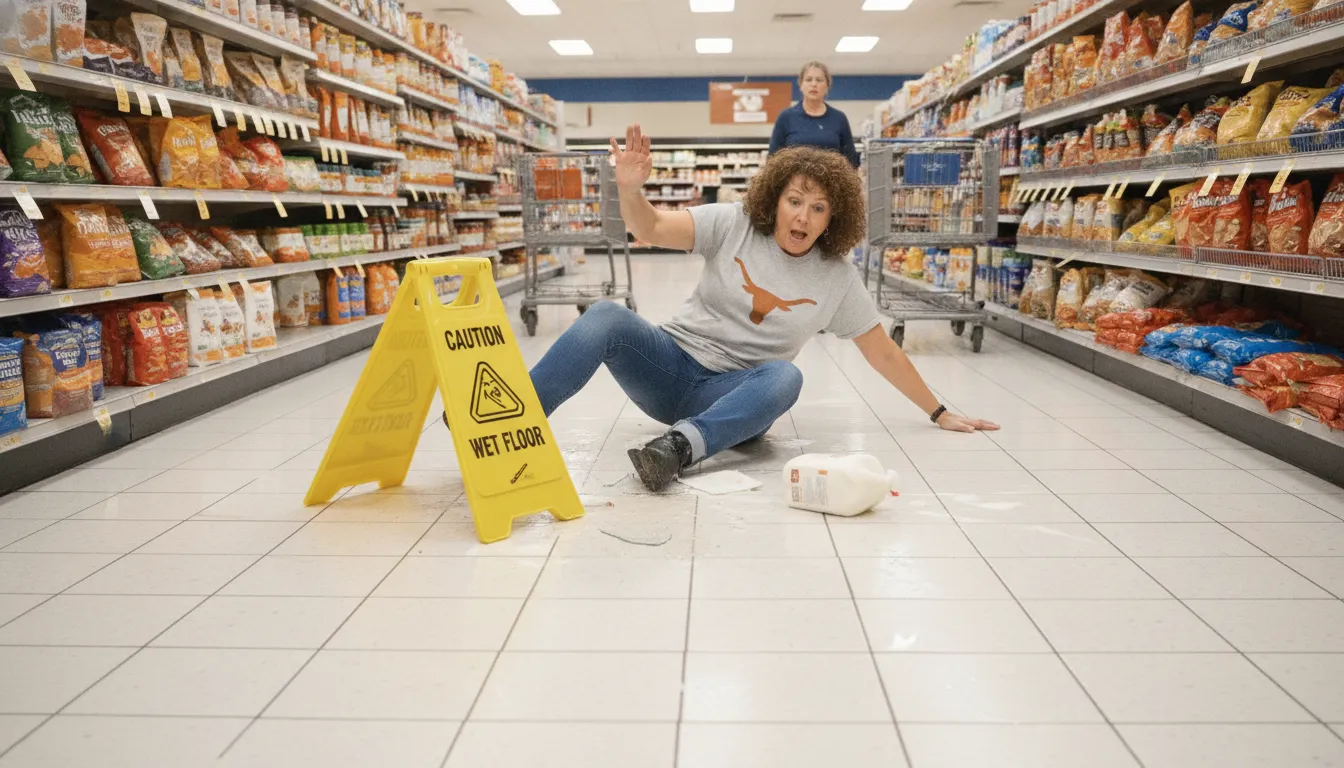
Texas Slip and Fall Injuries Premises Liability: The Legal Foundation for Your Claim
Texas premises liability law holds property owners responsible when unsafe conditions on their land cause injuries to visitors. This duty stems from the principle that owners should keep their property free from hazards that they know about or should reasonably discover.
Premises liability is a key part of Texas law. It holds property owners responsible for injuries that happen on their land due to unsafe conditions. In Texas, these claims fall under the broad branch of negligence. To win a case, you must show the owner failed to meet a legal duty to keep you safe. This duty changes based on why you were on the land. The main goal is to protect people from hidden risks that an owner should have fixed or flagged.
The Four Elements of a Negligence Claim
To get money for your medical bills after a fall, you must prove four key points. First, show the owner owed you a duty of care. Second, prove they broke that duty. Third, you suffered an injury. Fourth, the breach directly caused your injury. Under Tex. Civ. Prac. & Rem. Code Ch. 75, owners have a duty to make their property safe for visitors. If even one of these four parts is missing, your legal claim likely cannot move forward.
Duty of Care and Dangerous Conditions
A duty of care starts when a property has a risky condition that poses a threat. This could be a grocery store spill or a broken stair. The owner must know or should have known about the danger. This is often called “constructive knowledge.” For example. If a store clerk walks past a leak five times but does not mop it, the store may be at fault. They had time to find and fix the risk but failed to do so. Texas courts expect shops to take active steps to find these texas slip and fall injuries before a guest gets hurt.
The Standard of Proof in Texas Courts
In a civil case, you do not have to prove your case “beyond a reasonable doubt.” That rule is for criminal trials. Instead, Texas uses a “preponderance of the evidence” rule. This means you must show it is more likely than not that the owner’s slip-up caused your harm. This bar is lower than a criminal one, but it still needs strong proof. You might use store video, witness notes, or photos of the scene to meet this bar. Proving this link is vital since owners often claim the danger was plain to see. Working with a team that knows texas premises liability rules can help you fight back.
Who Owes You a Duty? Invitees, Licensees, and Trespassers Under Texas Law
Texas law divides visitors into three categories that determine what duty of care a property owner owes you. Invitees (shoppers, customers) receive the highest protection, while licensees (social guests) receive moderate protection and trespassers receive the least.
In Texas, a land owner’s duty to you depends on why you are on their land. The law sorts visitors into three main groups. Your legal rights after a fall change based on which group fits your visit. Knowing your role helps you build a strong case for texas slip and fall injuries premises liability claims.
The highest duty of care for invitees
An invitee is someone the owner wants on the land for business goals. Most shoppers and store guests fall into this group. Owners owe these people the most care. They must look for hidden risks and fix them fast. If they cannot fix a leak or a broken floor, they must warn you about it.
As an invitee, the owner must inspect for spills or trip hazards. If they fail to check their land, they may be at fault. You can learn more about our slip and fall legal services to see how we prove these claims.
Protecting social guests and licensees
A licensee is on the land for their own gain or as a social guest. This group includes friends you visit at their homes. The duty of care here is not as high as it is for store shoppers. The owner does not have to search for hidden dangers. But they must warn you if they know a danger exists.
If an owner knows a rug is loose but says nothing, they may be to blame for your fall. Under Texas law, the owner must not be reckless with your safety. They cannot set traps or leave known risks out in the open. Most social visits fall under this rule, so you must show the owner knew the floor was unsafe.
Trespassers and the attractive nuisance rule
Trespassers are people who enter a land without any right to be there. Owners owe them the lowest duty of care. Owners must only avoid hurting them through gross neglect. But a special rule applies when children are on the land. This is known as the attractive nuisance rule.
Children may not know the risks of a pool or a big machine. If an owner has something on their land that draws kids in, they must keep it safe. They may need to put up a fence or a lock to stop a child from getting hurt. This rule protects young ones even if they did not have the right to be on the land.
Comparison of Visitor Categories Under Texas Law
| Visitor Type | Definition | Duty Owed | Example |
|---|---|---|---|
| Invitee | On property for business purposes. | Highest. Inspect and remedy all hazards. | Shopper in a retail store. |
| Licensee | On property for own purposes with consent. | Moderate. Warn of known concealed dangers. | Social guest at a friend home. |
| Trespasser | No permission to be on property. | Lowest. No liability except gross negligence. | Person on fenced construction site. |
What Counts as a Hazardous Condition on Texas Property?
A hazardous condition is any defect on a property that poses an unreasonable risk of harm to visitors that the owner knew about or should have discovered. Texas law requires owners to address these dangers promptly or warn guests about them.
Unsafe spots can hide in plain sight at local stores, offices, or parks. Most property owners in the state have a duty to keep their land safe for guests. When they fail to do so, the risk of a fall grows. Many things can cause these accidents. Finding these risks is the first step in a Texas slip and fall injuries premises liability claim.
Common Dangers on Texas Properties
Wet floors are a top cause of falls. Spills in shop aisles or freshly mopped tiles often lead to slips. If a store owner does not put up a sign, they may be at fault. Poor light also poses a big threat. Dark halls and dim parking lots make it hard to see small items. People can easily trip over things in foot traffic paths when they cannot see the ground clearly.
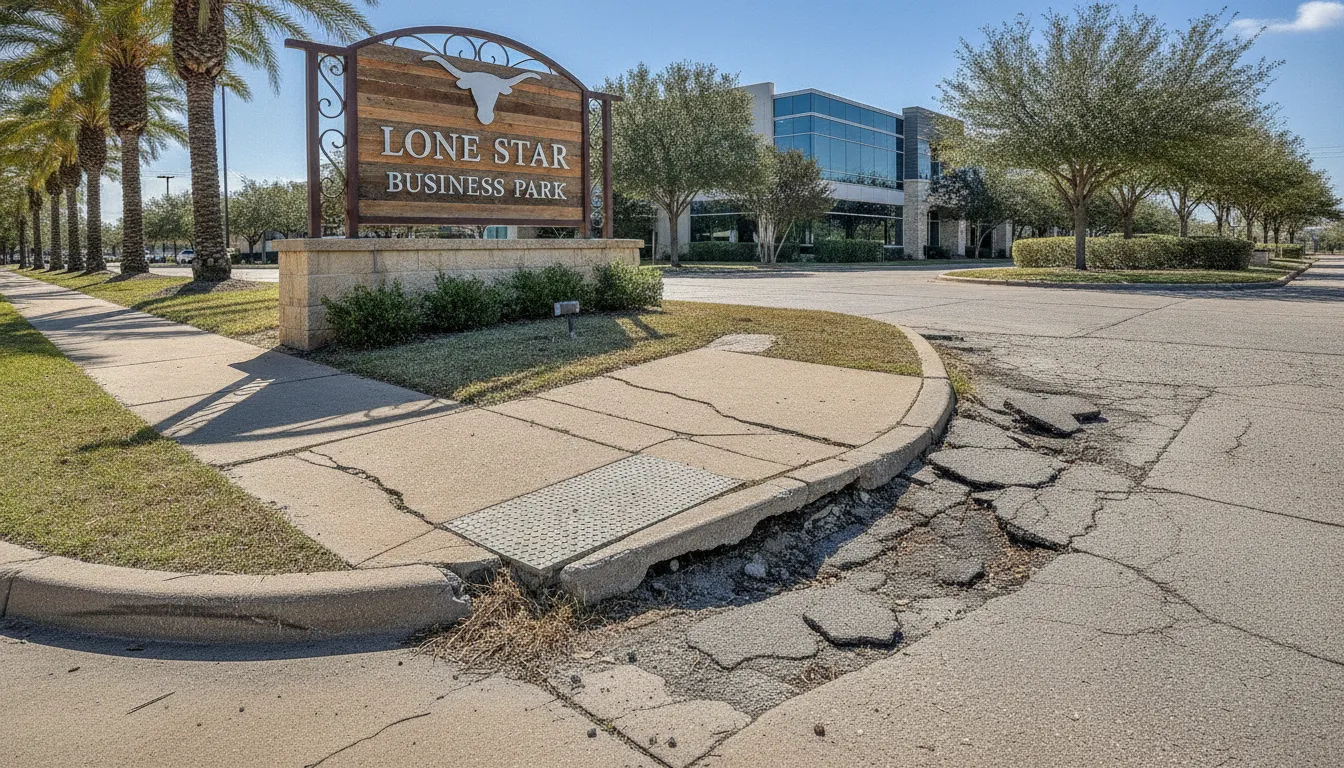
Uneven floors are also common. Broken sidewalks and cracked pavement can catch a shoe and cause a trip. In some cases, unmarked step-offs or hidden holes in the grass lead to a tumble. Indoor spots may have loose rugs or torn carpets that bunch up. These small flaws can cause a person to lose their balance and hit the floor with great force.
Broken stairs or loose handrails can turn a simple walk into a bad fall. Icy parking lots during a rare Texas freeze also lead to many claims. Even spilled chemicals can make a surface slick and dangerous.
Serious Injuries from Fall Accidents
Data from the CDC shows millions of falls occur each year. Thousands result in death. A fall can lead to broken bones and fractures that need surgery. Sprains and strains are also common and can keep you off your feet for weeks.
Head injuries are among the most serious results. Traumatic brain injuries (TBIs) can affect how you think and move. Spinal cord injuries and back pain are other risks. A hard fall can damage the discs in your neck or spine, leading to chronic pain or loss of movement.
Proving Liability for Property Hazards
Under Texas law, a duty of care arises when an unsafe condition poses an unreasonable risk of harm. You must show that the owner knew or should have known about the danger. If a spill sat on the floor for hours without a cleanup, the owner may be liable. But you must be able to prove these facts to get help for your bills.
To win your claim, you must meet the standard of proof. In these civil cases, the standard is a preponderance of the evidence. This means you must show that your version of the facts is more likely than not. It is a lower bar than in a criminal trial, but it still needs strong proof. We help clients gather the evidence they need to show what happened and why it was not their fault.
How Does Texas’s Proportionate Responsibility Law Affect Your Slip and Fall Claim?
Texas follows a modified comparative negligence rule that bars recovery if you are found 51 percent or more at fault for your own fall. If you are less than 51 percent at fault, your damages are reduced by your percentage of fault.
Texas law uses a system called proportionate responsibility to decide who pays for an accident. Under Texas Civil Practice and Remedies Code Section 33.001, the court looks at the actions of everyone involved. This includes both the property owner and the person who fell. In many texas slip and fall injuries premises liability cases, the defense will try to say the victim caused their own harm. This law means that fault is not always all or nothing.
The 51 Percent Bar Rule
Texas has a “modified” rule for fault. You can only get money if you are 50 percent or less to blame for the fall. If a jury finds you are 51 percent at fault, you cannot recover any money. This rule makes it hard for victims to win. Insurance firms use this rule to avoid paying for your medical bills or pain. They will look for any reason to push your fault level over that 50 percent line.
This harsh rule is why the early steps of a case matter so much. If you give a statement without a lawyer, the insurance worker might twist your words to admit fault. They want to push you over that 51 percent line to end your case. We fight to keep the focus on the owner’s failure to fix the dangerous floor.
How Fault Affects Your Final Payout
If you are partly at fault but still below the 51 percent mark, you can still get money. However, the court will reduce your award by your fault level. For example, if your total losses are $100,000 and you are 20 percent at fault, you would get $80,000. This shift in value can change the result of your case. Every point of fault they put on you is money that stays in the insurance company’s pocket.
Many people do not know that even a small amount of fault can cost them thousands. This is why we build a strong case from the start. According to the CDC, millions of people suffer from falls every year. Our goal is to keep your fault level as low as possible. By doing this, we help you get the full value of your claim. This helps cover your doctor visits and lost time at work.
Common Ways Insurance Companies Shift Blame
Store owners often try to save money by blaming the guest. They might look at your shoes to see if they were safe for the floor. They may also check if you were looking at a phone when you fell. If there was a “wet floor” sign nearby, they will say you ignored a clear warning. They want to show that you did not fulfill your own duty to stay safe while walking. This is a common way they try to reduce what they owe you.
They may even look at your health history to shift the blame. They might argue a past injury or dizziness caused your fall. These are tactics to move the blame away from their bad property. You need an expert who knows these moves and how to stop them.
Guests in Texas have a legal duty to watch where they go. You must use basic care to avoid open risks. This is why legal help is so important. We help prove the hazard was hard to see or that the owner failed to warn you. You had every right to expect a safe floor.
Steps to Take After a Slip and Fall to Protect Your Legal Claim
The actions you take in the first hours after a fall can make or break your Texas premises liability case. Gathering evidence, seeking medical care, and reporting the incident promptly are critical to preserving your right to compensation.
The moments after a fall can be scary. You may feel shock or pain, but the steps you take now will affect your legal right to get paid for your harm. In Texas, you must prove that a property owner was at fault for your premises liability claim to succeed. Use this guide to help you build a strong case from the start.
Immediate care and evidence
Your health is the first priority after any accident. Many people try to walk off a fall, but some injuries do not show signs for days. Head trauma or back pain can get worse if you wait to see a doctor. Getting a medical check right away creates a paper trail that links your hurt to the fall. This is vital because insurance firms often try to say you were already hurt before the event.
Once you are safe, focus on the scene. Use your phone to take clear photos and videos of what caused you to fall. Capture the floor, any leaks, bad lights, or missing signs. This visual proof is hard to fight in court. If anyone saw you fall, ask for their name and phone number.
Official reports and preservation
You should tell the property manager or store owner about the fall before you leave. Ask them to write an incident report and give you a copy. If they refuse, make a note of who you spoke with and the time. Avoid saying the fall was your fault. Stick to the facts of what happened and where it took place.
Keep the items you wore during the fall in a safe spot. Do not wash your clothes or wear those shoes again until your case ends. Debris or grease on your soles can be used as proof of a hazard. Likewise, torn clothing shows the force of the impact. These physical items help tell the story of your accident to a jury or an adjuster.
- Seek medical help. Go to a doctor or the ER even if you feel okay. Some fall injuries like brain trauma or internal bleeding do not hurt right away.
- Take photos. Get close-up shots of the hazard and wide shots of the room. This proves the state of the property at the exact time of your fall.
- Report the fall. Notify the manager or owner and get a copy of their report. This creates an official record of when and where the event happened.
- Identify witnesses. Get the names and contact details of anyone who saw the fall or the hazard. Their neutral view can be very strong in a claim.
- Save your gear. Put your shoes and clothes in a bag and do not touch them. These items are key pieces of physical proof.
- Watch your words. Do not give a recorded statement to an insurance firm without a lawyer. They may use your words to lower your payout or deny your claim.
- Talk to a lawyer. Under Texas law, you usually have two years to file a suit. A lawyer ensures you meet all deadlines and protect your rights.
What Damages Are Available in a Texas Premises Liability Case
Texas law allows injured visitors to recover economic damages (medical bills, lost wages) and non-economic damages (pain and suffering) after a slip and fall. Punitive damages may also be available in rare cases of gross negligence.
The goal of a personal injury claim is to make you whole again after a fall. In a texas slip and fall injuries premises liability case, you can seek pay for the losses you faced. These losses are called damages. Texas law lets victims ask for money to cover both clear costs and less clear losses like pain.
Economic damages for clear costs
Economic damages cover the money you lost or spent because of the fall. This includes past and future medical bills. It also covers the pay you lost while you could not work. If your injury stops you from earning as much in the future, you can seek money for lost earning capacity. You must show these costs with bills and pay stubs.
Courts use a standard of proof called the preponderance of the evidence. This means you must show it is more likely than not that the other party is at fault. According to the Texas Civil Practice and Remedies Code, your total pay may change if you share some of the fault. It is vital to track every out-of-pocket cost during your recovery.
Non-economic damages for human losses
Not every loss has a price tag or a bill. Non-economic damages cover the human cost of an accident. This includes physical pain and mental suffering. You can also seek pay for physical impairment or disfigurement. These damages help when an injury keeps you from living your life the way you did before the fall.
Insurance firms often try to pay as little as possible for these losses. This is why having a strong legal team is key. According to Nolo, the defense will use their own lawyers to fight your claim. We work to show how the injury changed your daily life so you get fair pay for your pain.
Punitive damages for gross negligence
In some rare cases, you may seek punitive damages. These are not meant to pay you back for a loss. Instead, they are meant to punish the property owner and stop others from doing the same thing. To get these, you must show the owner acted with gross negligence. This means they knew of a big risk but did not care to fix it.
Most cases do not reach this level, but it is a tool for the most extreme situations. Your case value often depends on policy limits and the clarity of fault. We examine every fact to determine whether these damages apply.
The Two-Year Statute of Limitations: Why Timing Matters in Texas Slip and Fall Cases
Texas gives you just two years from the date of your fall to file a premises liability lawsuit. And the clock starts ticking the moment you hit the ground. Missing this deadline means you lose your right to compensation forever.
Texas law gives you a limited window to take legal action after a fall. Under the Texas Civil Practice and Remedies Code Section 16.003, you must file within two years from the date of your accident. If you miss this date, your claim is legally dead and you will not recover money for your medical bills or lost pay.
Building a strong case takes time. We must find who is at fault and prove your harm. Starting early gives us the best shot at a win before the law shuts the door.
Notice rules for public land
The rules change if you fall on public land like parks or city halls. You often must give a notice of claim within six months. Some Texas cities have even shorter deadlines. Missing this notice can cost you your right to sue.
Some people get more time. This is true for minors or those with a legal disability. The clock might not start until they turn 18. But you should not count on these rules. It is safer to contact a lawyer right away. We can check your dates and keep your claim alive.
The need for fast action
Time also erodes your proof. The site of your fall will not stay the same. Owners fix stairs and clean up spills. Store cams also overwrite footage. Most shops only keep video for a few weeks. If you wait, that proof may be gone for good. Witnesses also forget details as time goes by.
When we start fast, we can lock in critical facts by acting quickly.
- Getting store video before it is gone.
- Talking to witnesses while their stories are fresh.
- Taking photos of the exact hazard that caused the fall.
- Checking for other safety issues on the property.
This helps us show why you were hurt. In Texas law, speed is your best friend. Do not let the clock run out on your case.
Frequently Asked Questions
How long do I have to file a slip and fall lawsuit in Texas?
You often have two years from the day of your fall to file a case. This time limit is set by the Texas Civil Practice and Remedies Code. If you miss this two year window, you will likely lose your right to get money for your injuries. Taking action fast helps keep evidence safe and builds a strong case.
Can I still recover damages if I was partially at fault for my fall?
Yes, you can still get money even if you share some blame for the fall. Texas uses a rule called modified comparative negligence. This means your payment will be lower based on your part of the fault. However, you cannot get any money if you are more than 50 percent at fault. If you are 51 percent to blame, the law stops you from winning any funds.
What do I need to prove to win a premises liability claim?
You must show four main things to win your case. First, the owner owed you a duty of care. Second, a dangerous problem existed on the land that the owner knew about or should have known about. Third, the owner failed to fix the problem or warn you. Finally, this failure caused your injuries. A legal team can review your slip and fall claim to help you prove these needed facts.
What types of damages are available in a Texas slip and fall case?
You can seek payment for two types of losses. Economic damages cover real costs like medical bills, lost pay, and future care needs. Non economic damages cover things like pain and suffering or mental stress. In rare cases of gross neglect, you may also seek punitive damages to punish the owner. These funds help you pay for your care and cover the money you lost while away from work.
What should I do immediately after a slip and fall accident?
Seeking medical care right away helps find hidden injuries. Taking photos and videos of the scene documents the hazard that caused the fall. Reporting the fall to the store manager or owner creates an official record of the event. Finally, talking to an attorney before speaking with an insurance agent helps protect your legal rights.
Ready to Act Before Evidence Fades and Secure Your Compensation?
If you wait too long to take action after a slip and fall, vital evidence like store video or witness memory can vanish in days. Insurance firms often build their defense right away to avoid paying for your medical bills and lost wages if they can find any small excuse. Starting your claim now protects the facts and helps you get the money you need to heal while we hold the property owner at fault.
Call (512) 612-3110 or contact us online to speak with a Texas trial lawyer about your slip and fall claim. No win, no fee.
